 : +86-139 0587 7291
 Anglais
 Espagnol
 Russe
Russe Français
 العربية
 Portugais du Brésil
 Ukraïnské
 turc
turc Polonais
 Néerlandais
 Italien
 Indonésien
 shérif
 اردو
اردو አማርኛ
አማርኛ Հայերեն
 ไทย
ไทย Mongol
 فارسی
فارسی Shqip
Shqip Élagueur

Pourquoi les dispositifs de protection contre le courant continu sont essentiels pour les systèmes d'énergie solaire modernes
Table des matières
Basculer
Les systèmes d'énergie solaire fonctionnent en courant continu. Ce courant est puissant, continu et plus difficile à interrompre que le courant alternatif. C'est pourquoi une protection adéquate contre le courant continu est essentielle pour sécurité, la disponibilité du système et les performances à long terme.
Cet article explique le fonctionnement de la protection contre le courant continu, son importance dans les systèmes photovoltaïques modernes et comment les composants appropriés réduisent les risques, les temps d'arrêt et les dommages.
Comprendre l'alimentation CC dans les installations solaires

Les panneaux solaires produisent du courant continu. Contrairement au courant alternatif, le courant continu circule dans un seul sens sans passage par zéro. Cela rend la détection des défauts plus complexe.
À mesure que les systèmes solaires se développent, les niveaux de tension et de courant continu augmentent. Les grandes installations photovoltaïques sur toiture et les centrales électriques fonctionnent souvent en courant continu à 600 V, 1 000 V, voire 1 500 V. Une tension plus élevée améliore le rendement, mais augmente les risques pour la sécurité.
En l'absence de contrôle adéquat, les défauts peuvent entraîner des arcs électriques, des incendies ou des dommages matériels. C’est pourquoi la sécurité des systèmes photovoltaïques dépend de circuits de protection CC bien conçus.
Qu'est-ce qu'un dispositif de protection contre les courants continus ?
Un dispositif de protection contre le courant continu contrôle les conditions électriques anormales. Il limite le courant en cas de défaut, isole les circuits pour la maintenance et détourne les surtensions dangereuses des équipements.
Points clés à retenir :
- Il stoppe le courant excessif avant que des dommages ne surviennent.
- Il permet une isolation sûre pendant le service
- Cela réduit les risques d'incendie et d'électrocution
Chaque fonction protège à la fois les personnes et le matériel.
Pourquoi les défauts en courant continu sont plus dangereux que les défauts en courant alternatif
Le courant alternatif traverse zéro plusieurs fois par seconde. Cela permet d'éteindre naturellement les arcs électriques. Le courant continu, lui, n'y parvient pas.
Lorsqu'un arc électrique en courant continu se forme, il peut persister jusqu'à la coupure complète du circuit. Cet arc prolongé génère une chaleur intense. Dans les systèmes photovoltaïques, cette chaleur peut enflammer l'isolant ou les matériaux environnants.
Les systèmes alimentés par batterie accentuent encore ce risque. L'énergie stockée peut provoquer des défauts instantanément. C'est pourquoi la conception de la protection doit correspondre au comportement en courant continu, et non aux hypothèses du courant alternatif.
Le rôle de la commande de circuit dans la sécurité des systèmes photovoltaïques

Disjoncteur miniature CC pour la protection des chaînes et des branches
Un disjoncteur miniature à courant continu protège les circuits individuels contre les surcharges et les courts-circuits. Il se déclenche lorsque le courant dépasse les limites de sécurité.
Dans les installations solaires, il est souvent installé par chaîne ou branche. Cela évite qu'un défaut n'affecte l'ensemble du système et simplifie le dépannage.
Disjoncteur CC pour la protection du circuit principal
Un disjoncteur à boîtier moulé pour courant continu supporte des niveaux de courant plus élevés. Il protège les lignes d'alimentation principales, les sorties de combinaison et les liaisons de batterie.
Ses réglages de déclenchement ajustables permettent de coordonner la protection. Cela évite les déclenchements intempestifs tout en limitant l'énergie de défaut.
L'isolation sécurisée n'est pas optionnelle dans les systèmes solaires

Isolateur CC pour la maintenance et l'arrêt d'urgence
Un sectionneur CC assure une séparation visuelle et complète du circuit. Ceci est essentiel lors des interventions de maintenance ou en cas d'urgence. Les panneaux photovoltaïques continuent de produire de l'électricité pendant la journée. L'isolation permet aux techniciens de travailler en toute sécurité, sans risque d'exposition au courant.
De nombreuses normes électriques exigent des points d'isolation manuels à proximité des tableaux et des onduleurs. Cela améliore la conformité et la sécurité du chantier.
Protection contre les surtensions dans les environnements solaires extérieurs
Les installations solaires sont exposées à la foudre, aux commutations et aux perturbations du réseau. Ces phénomènes provoquent des surtensions qui se propagent dans les lignes à courant continu.
Un dispositif de protection solaire, tel qu'un parafoudre CC, dévie ces pics de tension vers la terre. Cela protège les onduleurs, les unités de surveillance et les interfaces de communication.
Les surtensions sont brèves mais destructrices. Sans protection, des dommages peuvent survenir silencieusement et réduire la durée de vie du système.
Les fusibles comme ultime ligne de défense
Les fusibles à courant continu interrompent rapidement les courants de défaut extrêmes. Ils sont couramment utilisés dans les chaînes photovoltaïques et les circuits de batteries. Contrairement aux disjoncteurs, les fusibles ne fonctionnent pas par un mouvement mécanique. Ils s'ouvrent par fusion, un procédé efficace même en cas de courant de défaut élevé.
Le choix approprié d'un fusible dépend de sa tension nominale, de son intensité nominale et de son pouvoir de coupure.
Comment fonctionne un système de protection CC complet

La protection est optimale lorsque les appareils sont coordonnés. Chaque composant a un rôle bien défini.
- Les disjoncteurs limitent les surcharges
- Les isolateurs permettent un arrêt en toute sécurité
- Les fusibles gèrent les défauts extrêmes.
- Les dispositifs de protection contre les surtensions gèrent l'énergie transitoire
Ensemble, ils créent une protection multicouche à travers le système.
Respect des normes CEI dans les applications solaires
Les systèmes solaires doivent respecter les normes de sécurité internationales pour fonctionner correctement et réussir les inspections. Ces règles sont établies par la CEI (Commission électrotechnique internationale).
La norme IEC 60898 couvre les disjoncteurs utilisés dans les habitations et les petits systèmes solaires. Il permet de garantir le déclenchement en toute sécurité des disjoncteurs en cas de surintensité ou de court-circuit.
La norme IEC 60947 s'applique aux appareils à courant continu de grande taille, tels que les disjoncteurs et les sectionneurs. Elle vérifie leur capacité à supporter des courants élevés, la chaleur et un fonctionnement répété dans les systèmes solaires.
La norme IEC 61643 est axée sur la protection contre les surtensions. Il garantit que les appareils peuvent supporter la foudre et les surtensions sans endommager les onduleurs ou les batteries.
Le respect de ces normes permet aux systèmes de fonctionner en toute sécurité, de réussir les inspections et de se conformer aux réglementations internationales. Il réduit également les risques lors de l'installation et de l'utilisation à long terme. Certifié CEI Les composants offrent aux installateurs et aux propriétaires du système l'assurance que celui-ci fonctionnera comme prévu en conditions réelles.
Gamme de protections TOSUNLUX CC pour systèmes solaires
TOSUNLUX propose une gamme complète de composants de protection CC pour les systèmes photovoltaïques modernes. Son catalogue est compatible avec les installations résidentielles, commerciales et de production d'électricité.
Les solutions disponibles comprennent DC MCB, disjoncteur à courant continu, interrupteurs d'isolement, des parafoudres et des sectionneurs à fusibles. Ces composants sont conçus pour les niveaux de tension photovoltaïques et les conditions extérieures.
Tous les produits sont conformes aux exigences CEI et s'intègrent facilement dans les boîtes de jonction et les tableaux de distribution.
Choisir la bonne protection pour votre système photovoltaïque
Le choix dépend de la tension, du courant, de la configuration du système et de l'environnement. Un petit système sur toiture diffère d'une grande centrale solaire.
Les concepteurs doivent tenir compte des niveaux de défaut, de l'exposition aux surtensions et de l'accessibilité pour la maintenance. Une coordination adéquate améliore la sécurité et réduit les temps d'arrêt.
Une planification précoce permet d'éviter des rénovations coûteuses ultérieurement.
Conclusion : La construction de systèmes solaires plus sûrs commence par une protection intelligente
L'énergie solaire continue de se développer en termes d'échelle et de complexité. Avec des courants et des tensions continus plus élevés, la protection devient essentielle. Des composants adaptés permettent de réduire les risques, de prolonger la durée de vie du système et de protéger les personnes.
TOSUNLUX contribue à cet objectif avec une gamme complète de solutions de protection contre les surtensions CC conçues pour les systèmes photovoltaïques modernes. Découvrez notre collection et réalisez des installations solaires plus sûres en toute confiance.
Questions fréquemment posées
1. À quoi sert un disjoncteur miniature CC dans les systèmes solaires ?
Il protège les chaînes ou les branches photovoltaïques contre les surcharges et les courts-circuits. Il permet également une commutation manuelle.
2. Pourquoi l'isolation en courant continu est-elle importante ?
Il assure une maintenance sécurisée et un arrêt d'urgence. Les panneaux solaires restent opérationnels pendant la journée.
3. Les systèmes solaires ont-ils besoin d'une protection contre les surtensions ?
Oui. L'exposition aux intempéries augmente les risques de foudre et de coupures de courant. Les surtensions endommagent rapidement les appareils électroniques.
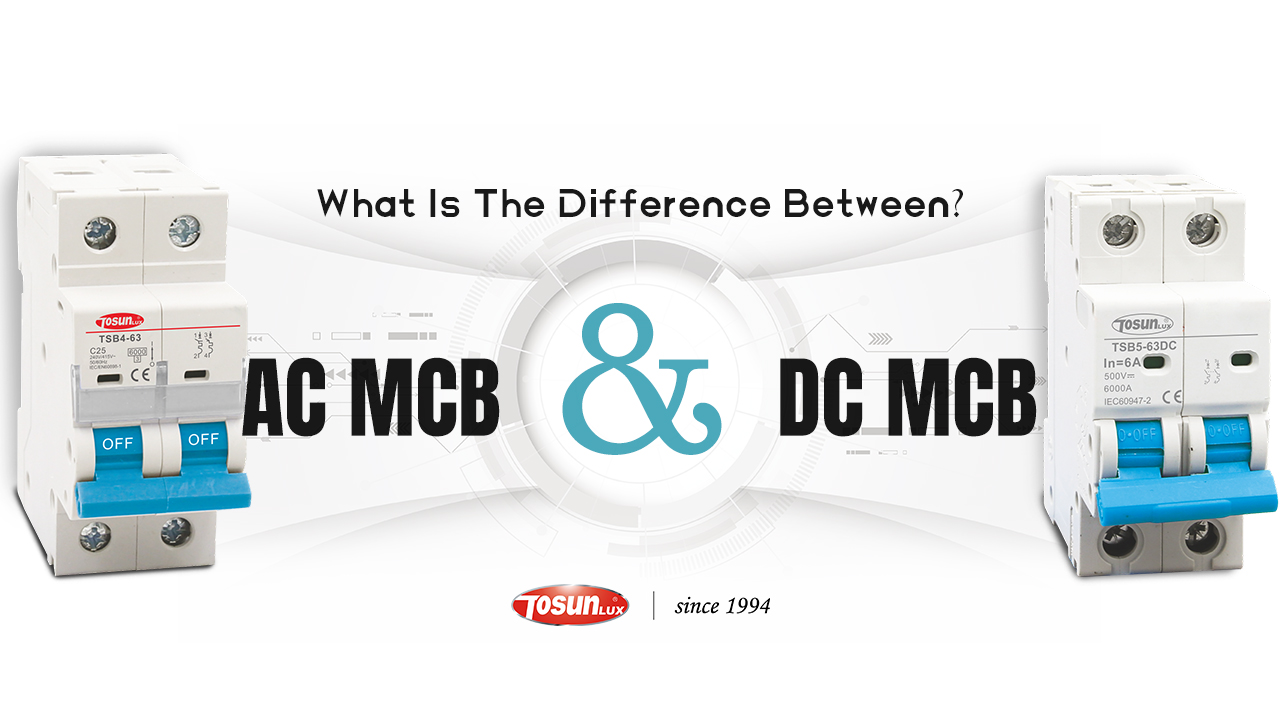
4. Les disjoncteurs CC et CA sont-ils interchangeables ?
Non. Le courant continu se comporte différemment. Les appareils doivent être spécifiquement conçus pour une utilisation en courant continu.
5. À quelle fréquence faut-il inspecter la protection CC ?
Les contrôles visuels doivent être réguliers. Les tests électriques sont effectués conformément aux normes locales et aux conditions du site.
Tél. : +86-577-88671000
E-mail: ceo@tosun.com
Skype : àsunelectric
Wechat : +86-139 6881 9286
WhatsApp : +86-139 0587 7291
Adresse : Salle n° 1001 Wenzhou Fortune Center, Station Road, Wenzhou, Chine
DEMANDER UN DEVIS
Envoyez-nous un WhatsApp