 : +86-139 0587 7291
 Англи
Англи Испани
 Русский
 Франц
Франц العربية
 Португаличууд Бразил
 Українська
 Турк
Турк Польски
 Нидерланд
 италио
 Бахаса Индонез
 हिन्दी
 Арду
Арду አማርኛ
አማርኛ Հայերեն
 ไทย
ไทย Монгол
 فارسی
فارسی Shqip
Shqip Ελληνικά

Хэлхээ таслагчийн хэт халалтад терминалын эргүүлэх хүч нөлөө
Table of Contents
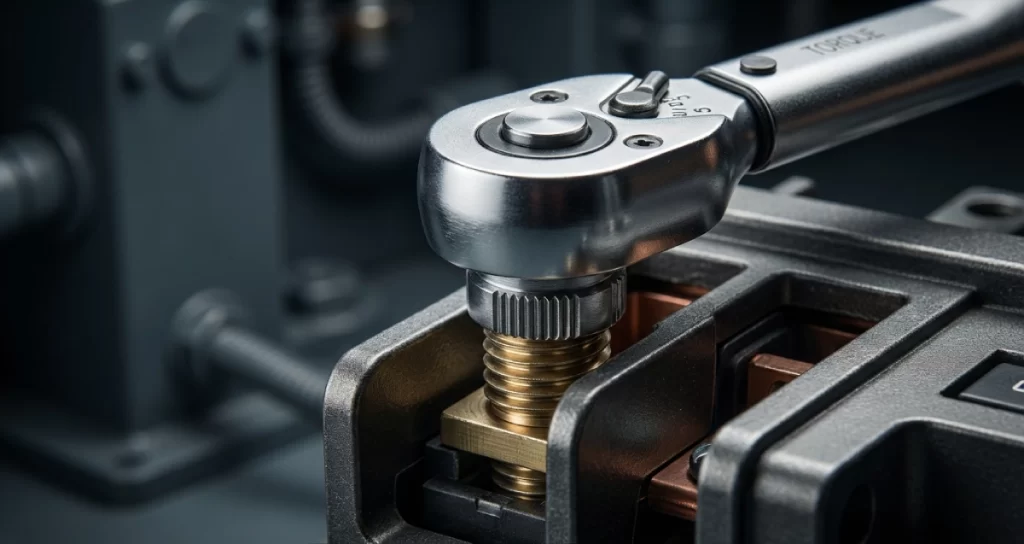
СэлгэхIn the field of electrical engineering, safety is determined by a secure connection and the circuit breaker. During electrical installations, terminal torque is often overlooked. This is defined as the “perfect tightness” of rotational force applied to the terminal screws. When the necessary rotational force is not properly applied, your хэлхээний таслагч is compromised.
According to Joule’s Law, resistance generates heat and increases with the square of the current and the resistance of the connection. This is shown by the formula P = I2R. To prevent rapid overheating, the correct terminal torque should be applied to a circuit breaker.
Real-World Scenarios and Operational Risks
In industrial and commercial electrical systems, engineers may impose safety measures. However, these may contradict certain site conditions. There may also be instances where circuit breaker failures are caused by human factors.
Understanding how proper terminal torque affects the circuit breaker is essential for electrical fire prevention. Below are some real-world scenarios demonstrating the operational risks caused by incorrect terminal torque conditions:
Loose Wiring & Thermal Cycling
In busy factories, the vibrations coming from heavy machinery may cause tightened terminals to loosen. In electricity, when the lug doesn’t make full contact with the terminal, this creates electrical resistance. As resistance increases, so does the temperature. This results in a dangerous loop called “thermal cycling.”
One of the solutions to thermal cycling is to ensure that the initial “preload” on a bolt or screw is correct. Use a calibrated torque wrench and follow the manufacturer’s specific N · m (Newton-meter) or in.lb ratings.
Maintenance Negligence and Checklist Adherence
Technicians may sometimes skip “retightening” during routine inspections. In the absence of a maintenance checklist, a terminal that was tightened five years ago may no longer meet the required specifications due to material creep or environmental stress.
To solve this problem, use torque marking to prevent skipped inspections. Technicians may have accidentally overlooked inspections due to quantity and not out of simple negligence. After a terminal is tightened with a specific torque wrench, use a marking paste to show that it has been inspected.
How Manufacturers Define Torque Values
Manufacturers define torque values through a combination of engineering calculations, extensive material and component testing, and strict adherence to international standards such as IEC 60947-1 or UL 489.
Step 1: Conducting a “Strength Test”
Engineers use a special tool called a “torque wrench” to measure the optimum torque specification. This refers to the exact Newton-meters required. They also test how hard you can pull a wire before it pops out. Also, they test how long the connection stays cool while power runs through it.
Step 2: Torque Requirements
Based on data, a typical 63A MCB might require a tightening torque of 2.0 to 3.5 N . m, depending on the wire gauge. This ensures that there is enough contact between the conductor and the terminal without damaging the screw threads or deforming the terminal cage.
How to Ensure Circuit Breaker Safety
To enhance breaker safety, brands like Tosunlux specify tightening torque values directly on the device. You can also find this in the technical datasheet included with the product.
These safety guidelines ensure that installers and maintenance electricians have immediate access to the required N . m эсвэл lb. in (pound-inch) ratings. Electricians can prevent terminal-based overheating because they follow manufacturer-specific values.
Below are recommended Tosunlux products designed to safeguard your electrical systems against terminal overheating and enhance circuit breaker safety:
1. Thermal Overload Relay
In industrial motor applications, this is your main defense mechanism against overheating. The дулааны хэт ачааллын реле is designed to detect prolonged overcurrent conditions that may lead to gradual temperature increases. This mechanism monitors the thermal state of the circuit and trips the system before terminal temperatures reach critical levels.
2. Molded Case Circuit Breaker (MCCB)
Tosunlux MCCBs are recommended for high-current applications. They are designed to handle significant electrical loads. These units often show clearly defined torque specifications to ensure a gas-tight connection.
They are designed to focus on heat dissipation and to maintain low contact resistance. This helps prevent localized overheating that is common in high-amperage environments.
3. Digital Panel Meter (with Temperature Monitoring)
A digital panel meter incorporated in the түгээлтийн самбар allows real-time monitoring of electrical parameters. These models with added temperature monitoring features help track temperature rises within the panel. By providing clear visual data, maintenance teams can safely identify abnormal heat signatures.
Суурилуулалт, засвар үйлчилгээний зөвлөмжүүд
Here’s what you need to keep in mind on all electrical installation and routine maintenance procedures:
- Initial Install: Use a calibrated torque wrench for every connection. Refer to the required measurements on the included technical documents.
- Verification: Mark tightened screws with a torque seal or paint to visually identify checked terminals. This also helps the next set of inspectors.
- Annual Audit: Perform infrared thermography to detect early-stage overheating before it leads to failure.
By following the scheduled maintenance outlined above, circuit breaker safety will help prevent overheating, fire, and costly damage.
Дүгнэлт
Нэг цэгийн LED гэрэлтүүлгийн шийдлийг хайж байна уу?
30 жилийн баталгаажсан үйлдвэрлэлийн туршлагатай бид танай үйлдвэрлэлийн болон арилжааны гэрэлтүүлгийн бүрэн хэрэгцээг хангах найдвартай түнш юм.
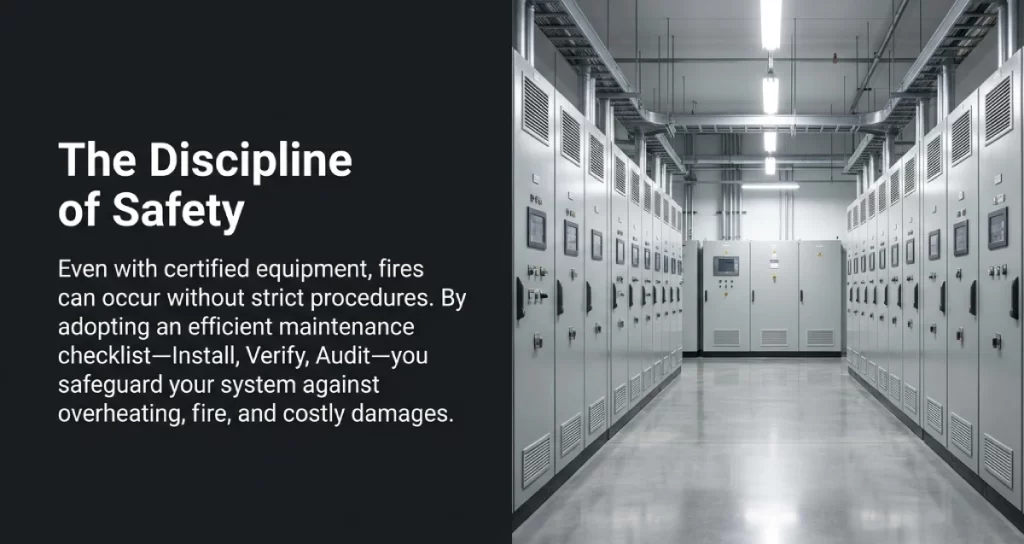
Electrical fire prevention requires disciplined installation habits and adopting an efficient maintenance checklist. Even though your company utilizes certified, calibrated testing equipment, fires can still happen if your maintenance team doesn’t conduct strict maintenance procedures.
Maintaining proper terminal torque is essential to electrical fire prevention and overall electrical safety. It is vital to adhere to manufacturer-specified torque values and implement disciplined maintenance habits, such as following a maintenance checklist.
To prevent resistance-based overheating and “thermal cycling,” make sure to use calibrated tools, incorporate torque marking, and perform annual infrared audits.

Утас: +86-577-88671000
И-мэйл: [email protected]
Skype: tosunelectric
Wechat: +86-139 6881 9286
WhatsApp: +86-139 0587 7291
Хаяг: Өрөө №1001 Wenzhou Fortune Center, Station Road, Wenzhou, China
Үнийн санал хүсэлт гаргах
Бидэнд WhatsApp