Blog

  • Jak zostać dystrybutorem chińskiej marki sprzętu elektrycznego?

    26 września 2025

    To become a distributor for a Chinese electrical brand, you need to research brands, prepare a business plan, and build relationships with manufacturers. The complete process typically takes 6-12 months from initial research to signed agreement. You’ll need $100,000-300,000 in startup capital for most electrical distribution businesses. Why Should You Partner with a Chinese Electrical Brand? Chinese electrical brands offer major advantages for distributors looking to compete effectively in their markets. The biggest benefit is cost savings of 30-50% compared to Western competitors, which Chinese manufacturers achieve through efficient supply chains and large-scale production capabilities. Another major advantage is their focus on technology innovation. Companies like Haier and Gree invest heavily in smart home technology and energy-efficient products, which means you can offer customers the latest products they’re looking for. Manufacturing reliability also ensures that products are always in stock when customers need them. Chinese manufacturers can handle large orders while maintaining steady supply chains, helping you build trust with customers who depend on consistent product availability. What Are the Electrical Distributor Requirements? Becoming an electrical distributor involves meeting several types of requirements that ensure you can operate safely and legally. These fall into three main categories: Hero Product Highlight Electrical Supply Wholesaler Discover a full range of electrical products from a trusted electrical supply wholesaler. TOSUNlux offers circuit breakers, contactors, switches, and more for global markets. View Product What Are the Steps to Become a Distributor for a Chinese Electrical Brand? The distributor process follows five main steps. Each step builds toward a formal […]

    Przeczytaj więcej
  • Kim są niezawodni, kompleksowi dostawcy urządzeń elektrycznych niskiego napięcia w Chinach?

    26 września 2025

    Reliable one-stop suppliers of low voltage electrical supplies in China include TOSUNlux, Shanghai EBASEE Electric Co., Ltd., and CNC Electric. These companies provide complete product ranges, hold international certifications, and support overseas buyers with logistics and technical expertise. What is a one-stop low-voltage electrical supplier? A one-stop low-voltage electrical supplier provides products and services for systems operating at 600 volts or less. These systems are used in homes, offices, factories, and renewable energy projects. The advantage is that buyers can work with a single partner instead of coordinating multiple vendors. Why choose a one-stop supplier for low-voltage projects? Working with a one-stop supplier has several practical benefits that make projects easier to manage. This combination of efficiency, cost savings, and technical expertise makes one-stop suppliers attractive for overseas buyers. What counts as low-voltage in electrical systems? Low voltage generally refers to any system operating at 600 volts AC or below. These systems are essential in: By covering such a wide scope, low-voltage products form the foundation of modern electrical infrastructure. What factors define a reliable supplier? Not all suppliers are equal. Reliability is measured by a mix of product quality, service, and global reach. Checking these factors helps businesses identify suppliers that can support both short-term projects and long-term growth. Who are reliable one-stop low-voltage electrical suppliers in China? Several Chinese companies have built strong reputations as reliable global suppliers. Here are three leaders worth considering. TOSUNlux TOSUNlux has over 30 years of experience in manufacturing and exporting low voltage electrical products. Our catalog covers […]

    Przeczytaj więcej
  • Jak wybrać odpowiednią czułość wyłącznika różnicowoprądowego

    26 września 2025

    The right RCCB sensitivity depends on where it will be used and what level of protection is needed. In general, 30mA RCCBs protect people from electric shock, while 100mA or 300mA RCCBs are better for equipment and fire protection. What is the purpose of RCCB application? An RCCB (Residual Current Circuit Breaker) is designed to trip when it detects leakage current. Unlike MCBs that guard against overloads, RCCBs prevent electrocution and reduce fire risk. They are essential for both residential and industrial systems. What is the difference between 30mA vs 100mA RCCB? The key difference between 30mA vs 100mA RCCB is the balance between human safety and operational stability: If your RCCB keeps tripping unexpectedly, the cause may be a sensitivity mismatch. For more details, review common RCCB tripping issues. When should you use a 30mA RCCB? A 30mA unit should be used when the primary concern is direct human protection. It is ideal for: This sensitivity reacts quickly to small leakage currents that could otherwise cause dangerous shocks. When should you use a 100mA or 300mA RCCB? For industrial buyers, 100mA and 300mA are more practical: RCCB Sensitivity Comparison Table Sensitivity Primary Use Protection Level Typical Application 10mA Very high risk areas Extreme human protection Swimming pools, medical equipment 30mA Residential & commercial Human protection Homes, socket outlets, kitchens, bathrooms 100mA Industrial circuits Mixed: some human, mainly equipment/fire Factories, machinery-heavy lines 300mA Fire & equipment Fire protection Upstream distribution boards, large installations This comparison makes it easier to select the right sensitivity based on […]

    Przeczytaj więcej
  • Typowe zastosowania styczników prądu przemiennego w automatyce przemysłowej

    26 września 2025

    Industrial AC contactor devices switch motors, HVAC equipment, and lighting systems on and off automatically. These electromagnetic switches prevent equipment damage and enable remote operation of high-power electrical loads. Industrial control devices provide safe automation capabilities in manufacturing environments. What Is an Industrial AC Contactor? An industrial AC contactor is an electromagnetic switch that controls high-current electrical circuits. Motor starter contactor applications handle industrial motor control requirements. These devices manage currents from 10A to several hundred amperes. AC magnetic contactor operation uses electromagnetic coils to move contacts. When energized, the coil pulls contacts together to complete circuits. When de-energized, contacts separate to break circuits. Contactors have advantages over manual switches. They allow remote operation from control rooms. Industrial control devices enable automated system integration and safer equipment operation. Hero Product Highlight Professional AC Contactor Manufacturer The High-Quality and Low-Cost Solution for Your AC Motor Switching and Protection Needs View Product Why Do Motors Need Contactor Control? Motor starter contactors are essential for protecting motors from damage during startup and operation. Motors draw high inrush current when starting that can be 6-8 times their normal running current. Standard switches cannot handle these current spikes safely. Motor starter contactors provide controlled starting by handling inrush currents and protecting downstream equipment. They also enable remote motor control from control panels or automation systems. Remote control prevents operator exposure to high-voltage equipment. Key motor control benefits include: TOSUNlux AC unit contactor models provide reliable motor control with current ratings up to 95A for industrial applications. What Are the Main […]

    Przeczytaj więcej
  • Jakie są najlepsze praktyki kontroli jakości i testowania podzespołów elektrycznych?

    26 września 2025

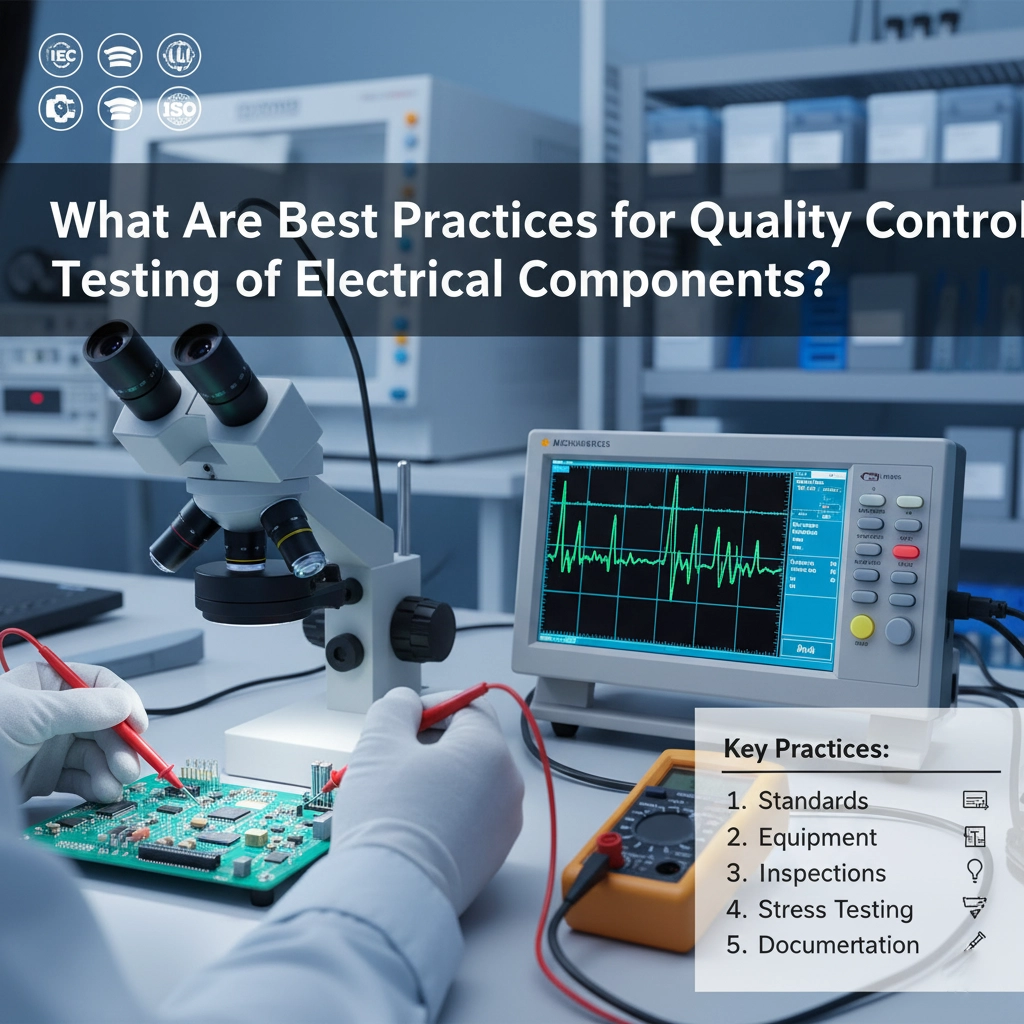
    Quality control and testing of electrical components are crucial for ensuring safety, reliability, and compliance with industry standards. The process involves following electrical testing standards, using reliable electronic testing equipment, and performing regular inspections. These practices help prevent product failures and guarantee consistent performance. Key Practices in Electronic Component Testing 1. Follow Electrical Testing Standards Adhering to recognized standards like IEC, IEEE, and ISO ensures consistency and safety. These benchmarks cover insulation resistance, voltage endurance, and durability. Following them helps manufacturers maintain quality across all electronic components checking processes. 2. Use Reliable Electronic Testing Equipment Investing in accurate tools such as oscilloscopes, multimeters, and LCR meters is essential. Automated test systems reduce human error and provide faster results. High-quality electronic testing equipment ensures reliable and precise measurements. 3. Perform Visual and Functional Inspections Checking for physical defects such as cracks, corrosion, or incorrect labeling is the first step. Functional testing verifies whether a component performs according to specifications. Combining these approaches strengthens the electronic circuit testing process. 4. Conduct Environmental and Stress Testing Electrical components must perform under real-world conditions. Stress tests include exposing components to temperature changes, humidity, and vibrations. These methods reveal weaknesses and help manufacturers improve durability. 5. Maintain Documentation and Traceability Recording all test results ensures compliance and accountability. Using digital tracking or barcodes simplifies recalls if issues arise. Proper documentation supports long-term reliability and adherence to electrical testing standards. FAQs Q1: Why is electronic component testing important? It ensures safety, reliability, and compliance with industry standards, reducing risks of product […]

    Przeczytaj więcej
  • Jakie międzynarodowe certyfikaty powinny mieć produkty elektryczne niskiego napięcia, aby mogły być dopuszczone do obrotu na rynkach światowych?

    26 września 2025

    Low-voltage electrical products require certifications such as CE, CB Scheme, UL, and VDE to ensure safety and compliance with global trade standards. This not only builds consumer confidence but also ensures regulatory compliance and gives manufacturers the opportunity to expand into new markets. Why Do Low-Voltage Products Need Certification? Certifications prove that electrical products meet safety, performance, and quality standards. They protect users from risks such as short circuits, fire, or malfunction. For manufacturers, certifications: For a broader overview of certification systems, check out 5 Major International Certification Bodies. CE and UL certifications are essential for safety and global market access. What Is CE Marking and Why Is It Important? CE marking is mandatory for all electrical products sold in the European Economic Area. It shows compliance with EU directives for safety and environmental protection. Without CE, products cannot legally enter the European market.  For example, Tosunlux’s CE-certified low-voltage circuit breakers meet EU standards for safety and performance. Learn more in The Importance of CE, CB, and VDE Standards. CE marking ensures that low-voltage electrical products meet EU safety and environmental standards. What Is the CB Scheme? The CB Scheme, run by the International Electrotechnical Commission (IEC), helps manufacturers gain approval in multiple countries with a single test. Instead of repeating certifications in each country, one CB report can be accepted by many national bodies. This saves both cost and time. Tosunlux’s modular devices and distribution boxes are examples of products that can benefit from CB Scheme approval for multiple market entry. The CB Scheme […]

    Przeczytaj więcej
  • MCB vs RCCB vs RCBO vs MCCB vs MPCB: Kompletny przewodnik po wyborze B2B

    16 września 2025

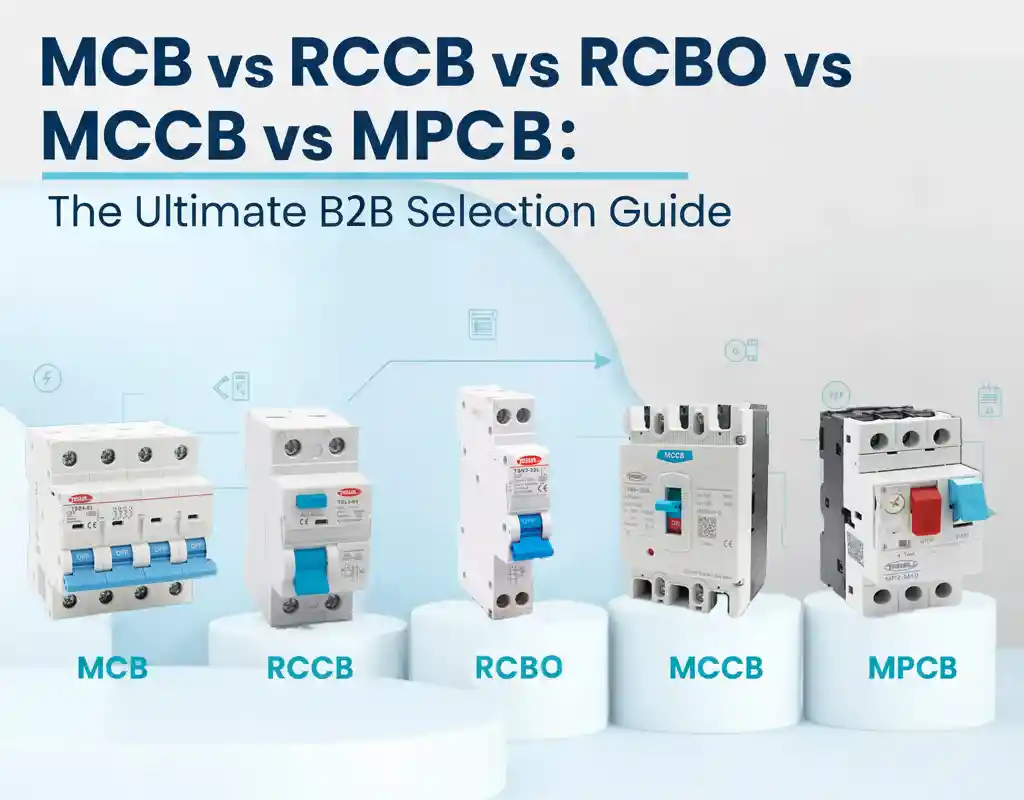
    Key Takeaways Quick Reference Comparison Table Device Type Full Name Primary Function Protects Against Typical Application TOSUNlux Corresponding Series MCB Miniature Circuit Breaker Overcurrent Protection Overload, Short Circuit Residential, Light Commercial TSMCB Series RCCB Residual Current Circuit Breaker Earth Leakage Protection Electric Shock, Earth Fault Wet Locations, Personnel Safety TSRCCB Series RCBO Residual Current Circuit Breaker with Overcurrent Protection Combined Protection Overload, Short Circuit, Earth Leakage Modern Installations, Critical Circuits TSRCBO Series MCCB Molded Case Circuit Breaker High-Current Protection Overload, Short Circuit (High Capacity) Industrial, Commercial Feeders TSMCCB Series MPCB Motor Protection Circuit Breaker Motor-Specific Protection Motor Overload, Phase Loss, Short Circuit Industrial Motors, Pumps TSMPCB Series What is an MCB (Miniature Circuit Breaker)? A miniature circuit breaker (MCB) is an electromechanical device designed to automatically switch off electrical circuits during abnormal conditions, such as overloads or short circuits. It is one of the most commonly used electrical protection devices, serving as a fundamental component in modern electrical installations to protect both wiring systems and connected electrical appliances. Working Principle MCBs operate using a thermal-magnetic trip mechanism: Magnetic Element: An electromagnet responds instantly to short circuit faults, ensuring rapid disconnection. Thermal Element: A bimetallic strip bends when heated by excess current flow, providing protection against sustained overloads. Key Features and Benefits →Explore the complete range of MCB products supplied by TOSUNlux to over 90 countries. What is RCCB (Residual Current Circuit Breaker)? A Residual Current Circuit Breaker (RCCB), also known as a Residual Current Device (RCD), is a critical electrical protection device designed primarily to […]

    Przeczytaj więcej
  • Pozyskiwanie przekaźników od chińskich producentów: przewodnik na lata 2025–2026

    12 sierpnia 2025

    Piękny kraj, jakim są Chiny, to jeden z najlepszych na świecie dostawców oficjalnych przekaźników. Wśród najlepszych chińskich producentów przekaźników znajduje się TOSUN Electric, marka profesjonalnych rozwiązań elektrycznych, a także Xiamen Hongfa Electroacoustic, Sanyou Corporation i Doublecircle Electronics Group, a także wiele innych. W dowolnym momencie działalności w Twojej branży będziesz musiał zapoznać się z listą producentów przekaźników i wybrać ten, który najlepiej odpowiada Twoim potrzebom. Ale jak to zrobić? Dowiedz się z tego przewodnika, którego podsumowanie znajdziesz poniżej: – Dlaczego warto wybierać chińskich producentów przekaźników? – Jak pozyskiwać przekaźniki od chińskich producentów – Trendy w produkcji przekaźników bezpieczeństwa – Czym wyróżnia się TOSUNlux? Dlaczego warto wybierać chińskich producentów przekaźników? Oto główne powody, dla których warto wybrać chińskich producentów przekaźników, niezależnie od miejsca na świecie: Przyjrzyjmy się im bliżej. Zaleca się, aby w pierwszej kolejności wybierać chińskich producentów przekaźników ze względu na ich opłacalną produkcję. Znani są z oferowania wysokiej jakości przekaźników w konkurencyjnych cenach. Oferując rozległe możliwości produkcyjne, zaawansowane technologie i solidne łańcuchy dostaw, gwarantują niezawodność produkcji i terminowość dostaw. Ponadto, producenci ci mogą pochwalić się udokumentowanym doświadczeniem w zakresie innowacji i personalizacji, co pozwala ich klientom zamawiać przekaźniki bezpieczeństwa dostosowane do konkretnych wymagań, co otwiera drogę do poprawy wydajności i przydatności produktów. Wskazówki dotyczące pozyskiwania przekaźników od chińskich producentów. Postępuj zgodnie z tymi praktycznymi wskazówkami i najlepszymi praktykami podczas pozyskiwania przekaźników bezpieczeństwa […]

    Przeczytaj więcej
  • Jak wybrać producenta przekaźników bezpieczeństwa: lista kontrolna zgodności z normami SIL i PL 

    11. sie 2025

    Przekaźniki bezpieczeństwa to urządzenia elektryczne zaprojektowane w celu zapewnienia bezpieczeństwa i niezawodności systemów przemysłowych. Innymi słowy, sprzęt ten przejmuje kontrolę nad pewnymi funkcjami. W momencie wykrycia błędów inicjuje kontrolowane wyłączenie lub inne wstępnie określone działanie bezpieczeństwa, aby zapobiec uszkodzeniu narzędzi i obrażeniom w miejscu pracy. Najczęściej przekaźniki te pochodzą od profesjonalnego producenta urządzeń elektrycznych niskiego napięcia, takiego jak firma TOSUN Electric, z tym sprzętem w katalogu. Ale jak wybrać najlepszych producentów przekaźników bezpieczeństwa? Dowiedz się z tego przewodnika, który zajmie się następującymi krokami: – Oceny ryzyka – Identyfikacja funkcji bezpieczeństwa – Wybór przekaźnika bezpieczeństwa – Konfiguracje i okablowanie – Walidacja i testowanie Ponadto dowiesz się również o liście kontrolnej zgodności SIL i PL. Zacznijmy. Przewodnik krok po kroku po wyborze producenta przekaźnika bezpieczeństwa 1. Przeprowadź ocenę ryzyka Te oceny stanowią podstawę przy wyborze najlepszego przemysłowego przekaźnika bezpieczeństwa. Znajdź producentów przekaźników zabezpieczających, którzy stosują najsurowsze standardy bezpieczeństwa w branży, biorąc pod uwagę stopień potencjalnych obrażeń, częstotliwość i czas trwania narażenia oraz możliwość uniknięcia zagrożenia. 2. Zidentyfikuj funkcje bezpieczeństwa. Po przeprowadzeniu oceny ryzyka należy zidentyfikować funkcję bezpieczeństwa. Te zestawy funkcji bezpieczeństwa obejmują: Należy je określić, aby wiedzieć, które operacje należy kontrolować lub zatrzymać w przypadku wystąpienia problemów. Pamiętaj, że każda funkcja może wymagać określonego rodzaju przekaźnika bezpieczeństwa. 3. Wybierz odpowiedni przekaźnik bezpieczeństwa. Trzeci […]

    Przeczytaj więcej
  • Znalezienie producenta wyłączników automatycznych w Stanach Zjednoczonych: co warto wiedzieć

    10. sie 2025

    W Stanach Zjednoczonych wyłączniki nadprądowe są potrzebne bardziej niż kiedykolwiek, nie tylko w domach, ale także w przemyśle. Dlatego poszukując wydajnych producentów wyłączników nadprądowych na rynku amerykańskim, należy wziąć pod uwagę wiele czynników. Do najlepszych producentów w tym kraju należą Eaton, Siemens, Schneider Electric i General Electric. Prawdą jest jednak, że wiele produktów sprzedawanych w tym kraju jest drogich, dlatego bardziej realne są inne, lepsze opcje, takie jak wybór producenta z innych krajów, takich jak Chiny. Na co zwrócić uwagę, szukając amerykańskich producentów wyłączników nadprądowych? Zacznijmy rozmowę o: – Wiarygodności i certyfikacji producenta – Jakości i trwałości produktów – Technologii i innowacyjności wyłączników nadprądowych – Asortymencie oferowanych produktów – Możliwości personalizacji – Obsługi klienta i serwisu posprzedażowego – Kosztów i cen – Łańcucha dostaw i terminów realizacji – Przyszłościowych rozwiązań i zrównoważonego rozwoju. Najważniejsze informacje o produkcie: Hurtownik artykułów elektrycznych. Odkryj pełną gamę produktów elektrycznych od zaufanego hurtownika artykułów elektrycznych. TOSUNlux oferuje wyłączniki nadprądowe, styczniki, przełączniki i wiele innych produktów na rynki globalne. Zobacz produkt 1. Wiarygodność i certyfikacja producenta. Pierwszym i prawdopodobnie najważniejszym czynnikiem, który należy wziąć pod uwagę, jest to, czy producent wyłączników w Stanach Zjednoczonych spełnia globalne standardy certyfikacji. Wyłączniki najwyższej jakości powinny przechodzić najsurowsze kontrole jakości i testy produktu, aby zapewnić dokładność i bezbłędne działanie, szczególnie w krytycznych momentach. Zdecydowanie zaleca się wybór producentów, którzy uzyskali następujące certyfikaty: CE, UL, IEC i ISO […]

    Przeczytaj więcej
Załadunek...