 : +86-139 0587 7291
 Engels
 Spaans
 Russisch
 Frans
Frans Arabisch
 Braziliaans Portugees
 Oekraïens
 Turks
Turks Pools
Pools Nederlands
 Italiaans
 Indonesisch
 Hindi
Hindi اردو
اردو sjoemelen
 अर्नुहोस्थार्नुहोस्
 ไทย
ไทย Molukken
 فارسی
فارسی Sjiek
Sjiek Edelstenen

MCCB Types Explained: Type B, C, D, K, Z — How Each Works & When to Use Them
Inhoudsopgave
SchakelaarEr zijn verschillende soorten stroomonderbrekers en u moet weten hoe ze werken om ze correct te installeren. Deze stroomonderbrekers zijn gegroepeerd in verschillende typen: type B, type C, type D, type K en type Z. Een type B MCCB schakelt uit wanneer deze een piek van 3 tot 5 keer de nominale stroom ziet, terwijl een type C schakelt uit wanneer deze een piek van 5 tot 10 keer ziet.
Een MCCB is een uitstekend elektrisch beveiligingsapparaat. De behuizing is verzegeld en kan niet worden geopend. Maar net als elk ander elektrisch apparaat, vereist het periodiek onderhoud om goed te kunnen functioneren.
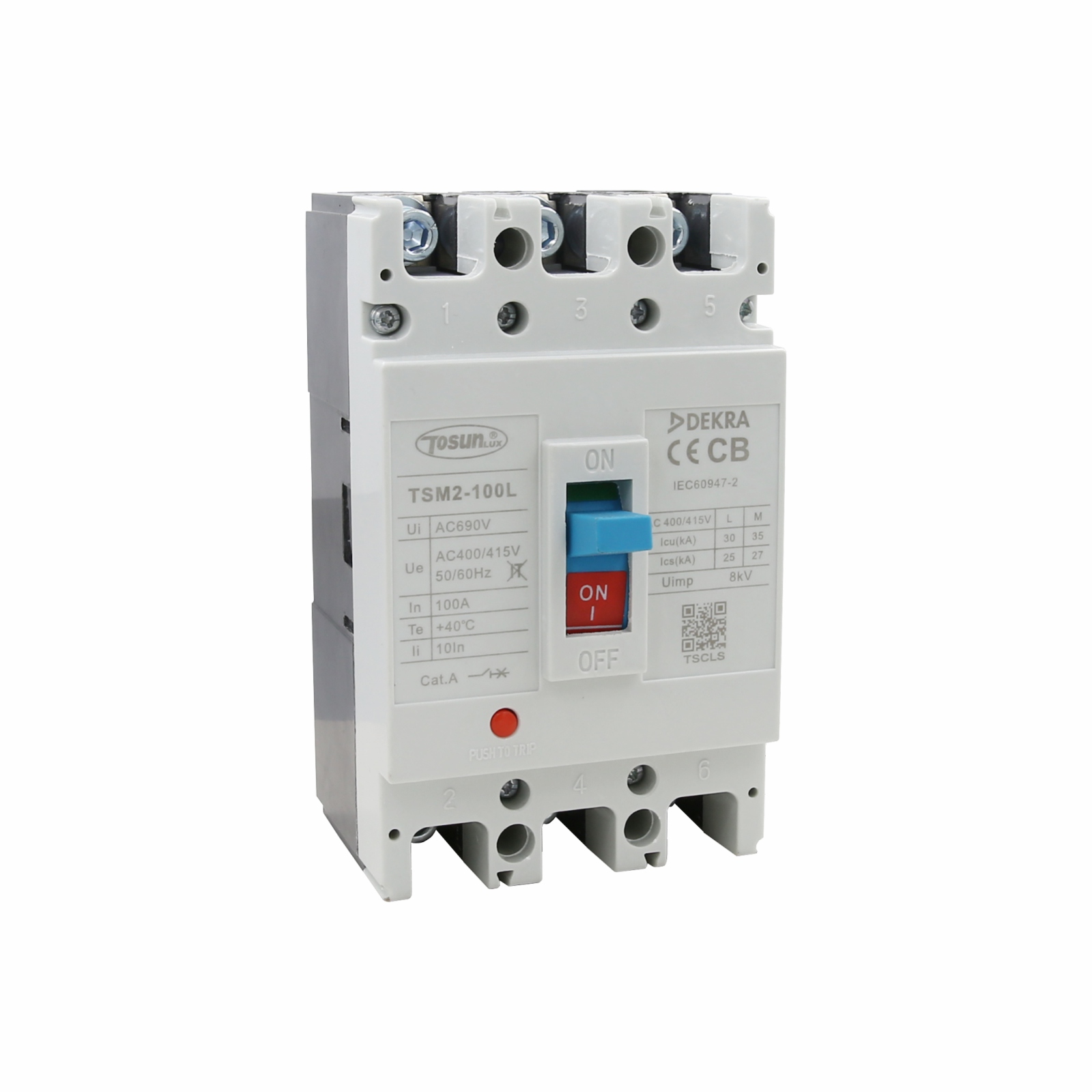
MCCB's kunnen een grote stroom en een kortsluiting aan. Ze hebben ook een beweegbare trip-unit en een korte triptijd. Sommige typen hebben externe AAN/UIT-functies, waardoor ze nuttig zijn in industriële omgevingen waar elektrische schokken een veelvoorkomend gevaar vormen.
Verschillend soorten MCCB's worden gebruikt in verschillende elektrische omgevingen. Als u meer wilt weten over de verschillende soorten MCCB's en hoe ze werken, lees dan dit artikel verder.
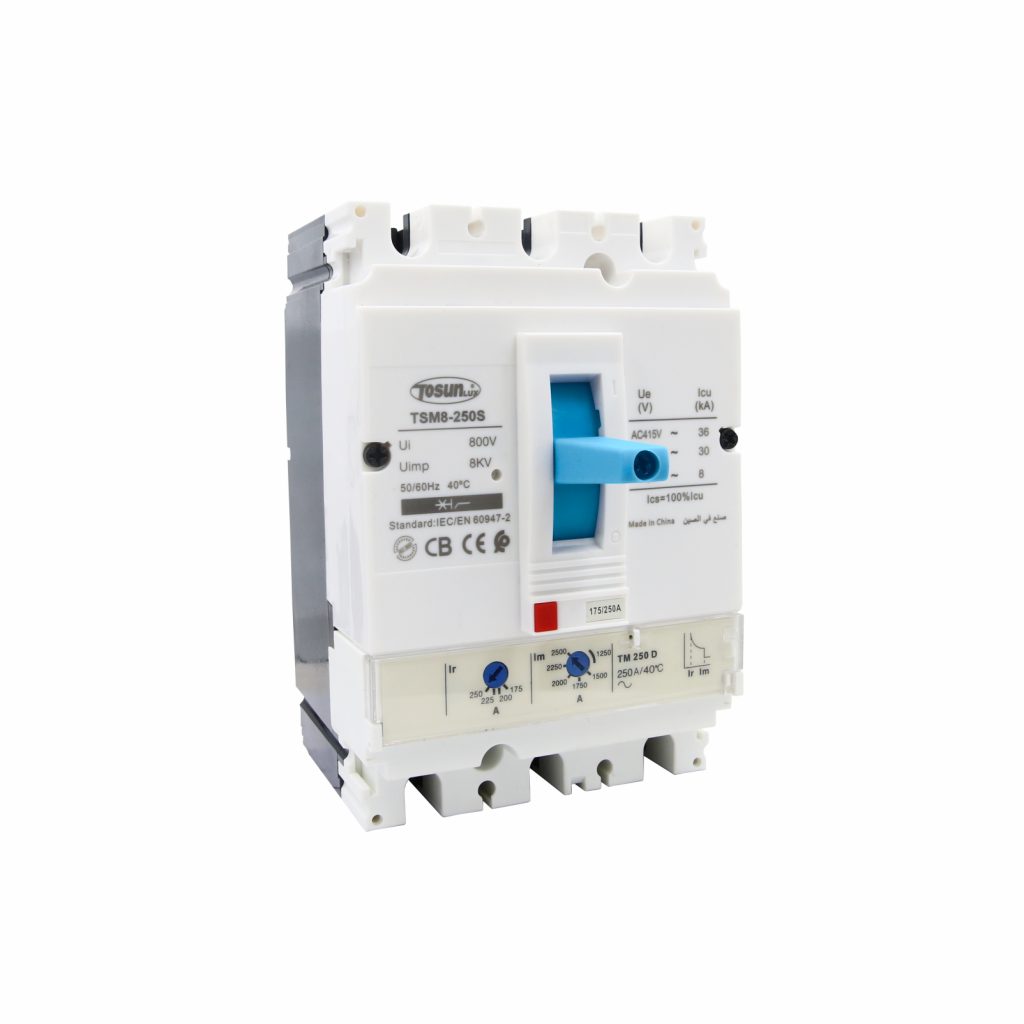
Hoe werkt een MCCB?
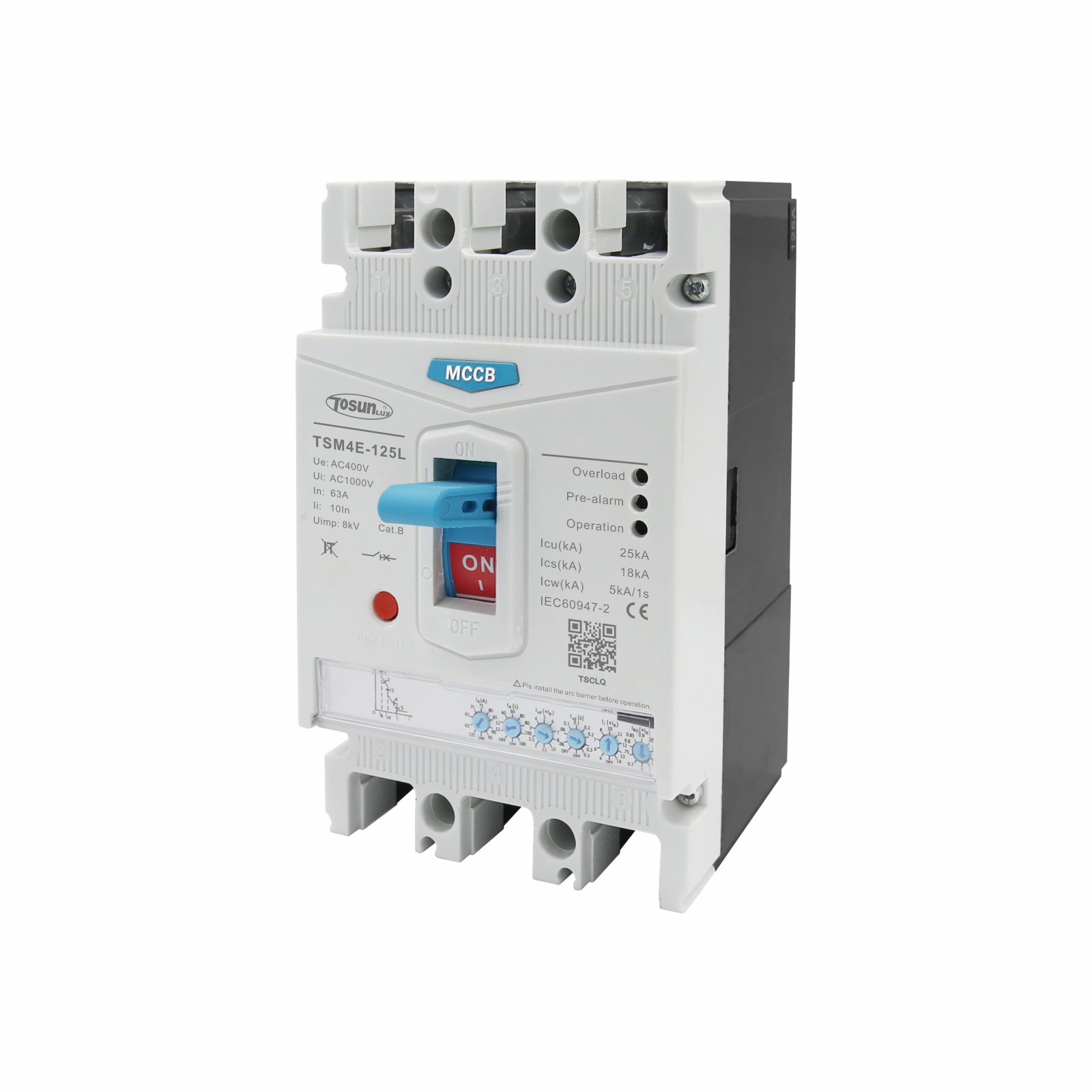
MCCB's zijn ontworpen om automatisch de stroomtoevoer te onderbreken wanneer er een storing wordt gedetecteerd. Ze bestaan uit verschillende belangrijke componenten, zoals de relais-tripping-unit, temperatuurgevoelige componenten zoals de bimetalen strip en boogcontacten. De combinatie van deze functies stelt de MCCB in staat om te reageren op overbelasting en kortsluiting door het defecte circuit snel los te koppelen, wat de elektrische veiligheid waarborgt.
Relais-uitschakeleenheid: Dit is het brein van de MCCB. Het bevat een elektromagnetische spoel en een tripping plunger die de schakelaar activeert wanneer er een storing wordt gedetecteerd. Het systeem kan de schakelaar direct of met vertraging laten trippen, afhankelijk van de ernst van de storing.
Bimetaalstrip: Dit onderdeel zet uit wanneer de stroom de veilige limiet overschrijdt, waardoor het buigt en uiteindelijk de stroomonderbreker activeert. Het helpt beschermen tegen langdurige overbelastingsomstandigheden.
Boogcontacten: These contacts are responsible for interrupting the electrical arc that forms when the breaker trips. Their quick response minimises the risk of fire and further damage.
By using these components, MCCBs provide comprehensive protection in a wide range of electrical systems. For installations requiring adjustable tripping characteristics, the TSM4E Electronic Type Moulded Case Circuit Breaker allows engineers to fine-tune protection settings directly to the circuit’s specific load profile.
MCCB Type Comparison: Tripping Ranges and Applications at a Glance
Selecting the correct MCCB type begins with understanding how each one responds to overcurrent events. The table below summarises the five standard MCCB types, their tripping current ranges, and the applications they are best suited for. Use this as a quick reference before consulting the detailed descriptions that follow.
MCCB Type Comparison: Tripping Ranges and Applications at a Glance
Selecting the correct MCCB type begins with understanding how each one responds to overcurrent events. The table below summarises the five standard MCCB types, their tripping current ranges, and the applications they are best suited for. Use this as a quick reference before consulting the detailed descriptions that follow.
| Type | Trip range | Typical use case | Inrush tolerance |
|---|---|---|---|
| Type B | 3–5× rated current | Residential lighting, small appliances | Laag |
| Type C | 5–10× rated current | Commercial & general industrial (motors, transformers) | Gematigd |
| Type D | 10–20× rated current | Heavy industrial machinery, frequent start/stop | Hoog |
| Type K | 8–12× rated current | Sensitive equipment, dual-cable circuits | Moderate–high |
| Type Z | 2–3× rated current | Telecom, data centers, sensitive electronics | Telecom, data centres, sensitive electronics |
Het kiezen van het juiste type MCCB
De keuze van MCCB hangt af van de specifieke elektrische behoeften van het systeem. Hieronder verkennen we de verschillende typen MCCB's, elk ontworpen om verschillende niveaus van stroom en responstijd te verwerken.
Type B MCCB's
Type B moulded case circuit breakers are designed for residential and light commercial applications where inrush currents are low. They trip at 3 to 5 times the rated current, making them well-suited for protecting lighting circuits, socket outlets, and small household appliances. They trip at 3 to 5 times the rated current. These breakers are ideal for protecting circuits with low inrush currents, such as lighting and small appliances.
Type C MCCB's
Type C MCCBs are the most widely used moulded case circuit breakers in general commercial and industrial settings. With a tripping range of 5 to 10 times the rated current, they handle moderate inrush currents from equipment such as motors, pumps, and transformers without nuisance tripping. They are suitable for general-purpose use in commercial and industrial applications. Type C breakers are commonly used in systems that involve equipment with moderate inrush currents, such as motors and transformers. The TSM2 Moulded Case Circuit Breaker is a dependable Type C-rated solution for commercial and light industrial installations, offering high performance overload and short circuit protection in a compact sealed casing.
Type D MCCB's
Type D moulded case circuit breakers are engineered for heavy industrial environments where large machinery generates high inrush currents on startup. They trip at 10 to 20 times the rated current, providing reliable short circuit protection without interrupting normal operation of equipment like compressors, welding machines, and industrial presses. Type D breakers trip at 10 to 20 times the rated current and are best used in environments where substantial equipment starts and stops frequently. Their higher tolerance to inrush currents makes them ideal for heavy-duty operations. For demanding heavy-duty environments, the TSM9 Moulded Case Circuit Breaker provides robust protection against overload, short circuit, and under-voltage conditions in AC 50/60Hz industrial circuits.
Type K MCCB's
Type K MCCBs offer enhanced protection for circuits carrying sensitive equipment or installations with two cables. Tripping at 8 to 12 times the rated current, they balance tolerance for surge currents with fast response to genuine faults, making them a preferred choice where standard Type C protection is insufficient.They trip at 8 to 12 times the rated current and are often used in settings where more sensitive equipment is involved. Type K breakers are ideal for providing enhanced protection in installations where surge currents are common.
Type Z MCCB's
Type Z moulded case circuit breakers are the most sensitive type available, tripping at just 2 to 3 times the rated current. They are specifically designed to protect delicate electronic equipment in telecommunications infrastructure, data centres, and precision measurement systems where even minor overloads can cause irreversible damage. They are used to protect sensitive electronic equipment, making them suitable for applications like telecommunications and data centers. While they are not as versatile as other types, their ability to react to small overloads makes them an essential component in sensitive circuits.
Betrouwbare MCCB-oplossingen tegen concurrerende prijzen – Vraag vandaag nog uw offerte aan!
Belangrijke overwegingen bij het kiezen van een MCCB
Bij het selecteren van de juiste MCCB moet u rekening houden met de volgende factoren:
- Huidige beoordeling: Zorg ervoor dat de nominale stroomsterkte van de MCCB overeenkomt met de verwachte belasting van het circuit om onnodige uitschakeling of onvoldoende bescherming te voorkomen.
- Toepassingstype: Verschillende typen MCCB's zijn geschikt voor verschillende omgevingen, zoals residentiële, commerciële of industriële omgevingen. Inzicht in uw toepassing helpt u bij het kiezen van de juiste MCCB.
- Reactietijd: Kies een MCCB met de juiste responstijd om ervoor te zorgen dat deze bij overbelasting of kortsluiting direct uitschakelt.
FAQ: Veelgestelde vragen over MCCB's
V1: Wat is het verschil tussen MCCB en MCB?
A1: Hoewel beide dienen om circuits te beschermen tegen overbelasting en kortsluiting, kunnen MCCB's hogere stromen aan en worden ze vaak gebruikt in industriële toepassingen. MCB's worden over het algemeen gebruikt in residentiële en lichte commerciële toepassingen.
V2: Kan een MCCB worden gereset?
A2: Ja, zodra een MCCB tript, kan deze handmatig worden gereset. Het is echter belangrijk om de oorzaak van de trip te onderzoeken voordat u de zekering reset.
Vraag 3: Hoe vaak moeten MCCB's worden onderhouden?
A3: Regelmatig onderhoud is essentieel om ervoor te zorgen dat de MCCB goed werkt. Dit omvat het schoonmaken, controleren op tekenen van slijtage en het verifiëren van de werking van het tripping-mechanisme.
Vraag 4: Waarvoor wordt een Type D MCCB gebruikt?
A4: Type D MCCB's zijn ontworpen voor zware industriële toepassingen waar hoge inschakelstromen gebruikelijk zijn. Ze bieden bescherming voor grote machines en motoren.
Q5: What is the typical lifespan of an MCCB?
A5: Under normal operating conditions, an MCCB can last 20 years or more. However, its mechanical and electrical life is also rated by the number of operations — typically between 10,000 and 25,000 switching cycles depending on the model and manufacturer. Regular maintenance, avoiding repeated short-circuit trips, and operating within the rated current range all contribute to a longer service life.
Q6: Can an MCCB be used as a main switch or isolator?
A6: Yes, many MCCBs are approved for use as a main switch or isolator when they carry the appropriate certification for that function. However, not all MCCBs are rated for isolation duty — always check the product datasheet to confirm whether the unit meets the isolation requirements specified in IEC 60947-2 or the relevant local standard before using it in this role.
Q7: What are the most common causes of MCCB failure?
A7: The most frequent causes include repeated exposure to short-circuit currents beyond the breaker’s rated capacity, mechanical wear from excessive switching operations, moisture or contaminant ingress into the casing, and loose terminal connections that cause localised overheating. Scheduled inspection and testing — including contact resistance checks and insulation resistance testing — help identify early signs of degradation before failure occurs.

Verbetering van de elektrische veiligheid met MCCB's
MCCB's zijn onmisbaar voor het handhaven van elektrische veiligheid in een breed scala aan toepassingen. Door het juiste type voor uw behoeften te selecteren, kunt u de bescherming van elektrische circuits garanderen en het risico op schade of brand verminderen. Regelmatig onderhoud en een correcte installatie verbeteren de betrouwbaarheid en effectiviteit van MCCB's verder.
For a detailed side-by-side breakdown, read our guide on MCCB vs MCB: key differences in current rating, application type, and protection level.
🔎 Aanbevolen leesmateriaal voor MCCB-typen en werkingsprincipes
De verschillende soorten MCCB en hoe ze werken
Leer meer over de verschillende typen MCCB's (Molded Case Circuit Breakers), hun constructie en hoe ze bescherming bieden in elektrische systemen.
Voordelen van het gebruik van laagspanningsschakelaars
Ontdek waarom MCCB's essentieel zijn in laagspanningssystemen en hoe ze de veiligheid en betrouwbaarheid van elektriciteitsdistributie verbeteren.
Uitschakelvermogen versus stroomonderbrekerwaarden
Begrijp hoe u MCCB-waarden en uitschakelcapaciteiten kunt beoordelen om het juiste beschermingsniveau voor uw systeem te kiezen.

Telefoon: +86-577-88671000
E-mailadres: [email protected]
Skype: tosunelectric
WeChat: +86-139 6881 9286
WhatsApp: +86-139 0587 7291
Adres: Kamer nr. 1001 Wenzhou Fortune Center, Station Road, Wenzhou, China
VRAAG EEN OFFERTE AAN
WhatsApp ons