 : +86-139 0587 7291
 ภาษาอังกฤษ
 ภาษาสเปน
 รัสเซีย
 ภาษาฝรั่งเศส
 อาหรับ
 ภาษาโปรตุเกสของบราซิล
 อังการา
 ตุรกี
ตุรกี โปแลนด์
 เนเธอร์แลนด์
 อิตาลี
 ภาษาอินโดนีเซีย
 ฮินดี
ฮินดี อัลดู
อัลดู อัมเบรลล่า
 เชสเชียร์
 ภาษาไทย
 มงโกล
มงโกล วาร์ซี
 ชคิป
ชคิป เอลลิก้า

คำอธิบายเกี่ยวกับประเภทของ MCCB: ประเภท B, C, D, K, Z — วิธีการทำงานและเวลาที่ควรใช้แต่ละประเภท
Table of Contents
สลับเบรกเกอร์วงจรมีหลายประเภท และคุณจำเป็นต้องรู้ว่าเบรกเกอร์แต่ละประเภททำงานอย่างไรจึงจะติดตั้งเบรกเกอร์ได้อย่างถูกต้อง เบรกเกอร์วงจรเหล่านี้แบ่งออกเป็นประเภทต่างๆ ได้แก่ ประเภท B ประเภท C ประเภท D ประเภท K และประเภท Z โดยเบรกเกอร์วงจร MCCB ประเภท B จะทำงานเมื่อพบไฟกระชาก 3 ถึง 5 เท่าของกระแสไฟฟ้าที่กำหนด ในขณะที่เบรกเกอร์ประเภท C จะทำงานเมื่อพบไฟกระชาก 5 ถึง 10 ครั้ง
MCCB เป็นอุปกรณ์ป้องกันไฟฟ้าที่ดีเยี่ยม ตัวกล่องถูกปิดผนึกและไม่สามารถเปิดได้ แต่เช่นเดียวกับอุปกรณ์ไฟฟ้าอื่นๆ จำเป็นต้องได้รับการบำรุงรักษาเป็นระยะเพื่อให้ทำงานได้อย่างถูกต้อง
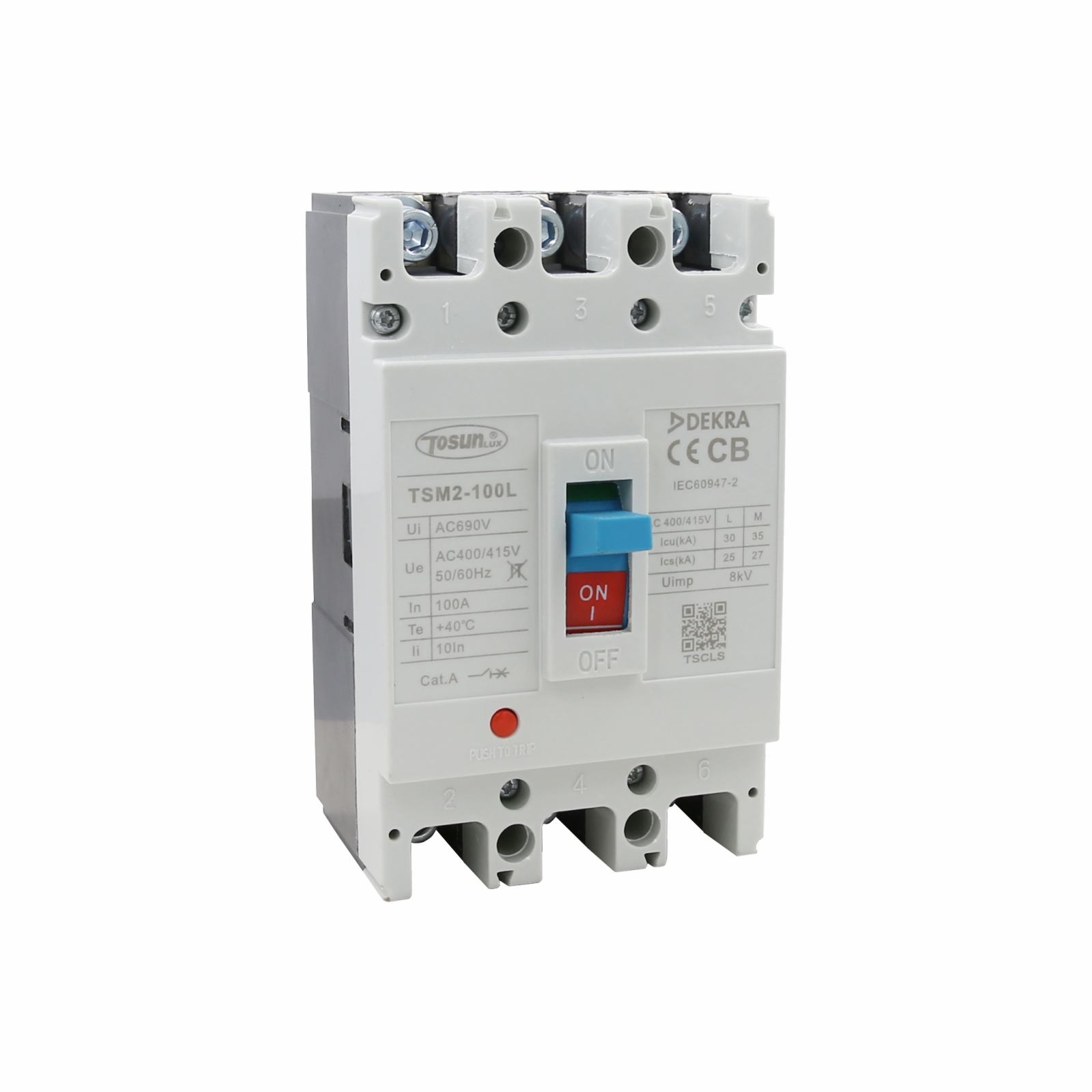
MCCB สามารถรองรับกระแสไฟฟ้าขนาดใหญ่และไฟฟ้าลัดวงจรได้ นอกจากนี้ยังมียูนิตตัดการทำงานแบบเคลื่อนย้ายได้และมีเวลาตัดการทำงานสั้น บางชนิดมีคุณสมบัติเปิด/ปิดจากระยะไกล ทำให้มีประโยชน์ในโรงงานอุตสาหกรรมที่มักเกิดไฟฟ้าช็อต
แตกต่าง ประเภทของ MCCB ใช้ในระบบไฟฟ้าต่างๆ หากคุณต้องการทราบเกี่ยวกับ MCCB ประเภทต่างๆ และการทำงานของมัน โปรดอ่านบทความนี้ต่อ

MCCB ทำงานอย่างไร?
MCCB ออกแบบมาเพื่อหยุดการไหลของไฟฟ้าโดยอัตโนมัติเมื่อตรวจพบความผิดปกติ ประกอบด้วยส่วนประกอบสำคัญหลายส่วน เช่น ชุดตัดการทำงานของรีเลย์ ส่วนประกอบที่ไวต่ออุณหภูมิ เช่น แถบไบเมทัลลิก และหน้าสัมผัสแบบอาร์ค การผสมผสานคุณสมบัติเหล่านี้ทำให้ MCCB ตอบสนองต่อโหลดเกินและไฟฟ้าลัดวงจรได้อย่างรวดเร็วโดยตัดวงจรที่ผิดพลาด ทำให้มั่นใจในความปลอดภัยทางไฟฟ้า
หน่วยตัดการทำงานของรีเลย์:นี่คือสมองของ MCCB ซึ่งประกอบด้วยขดลวดแม่เหล็กไฟฟ้าและลูกสูบที่ทำงานเพื่อกระตุ้นเบรกเกอร์เมื่อตรวจพบความผิดปกติ ระบบสามารถกระตุ้นเบรกเกอร์ได้ทันทีหรือด้วยความล่าช้า ขึ้นอยู่กับความรุนแรงของความผิดปกติ
แถบไบเมทัลลิก:ส่วนประกอบนี้จะขยายตัวเมื่อกระแสไฟเกินขีดจำกัดที่ปลอดภัย ส่งผลให้โค้งงอและทำให้เบรกเกอร์ทำงานในที่สุด ส่วนประกอบนี้จะช่วยป้องกันสภาวะโอเวอร์โหลดที่ยาวนาน
การติดต่อแบบอาร์ค: These contacts are responsible for interrupting the electrical arc that forms when the breaker trips. Their quick response minimises the risk of fire and further damage.
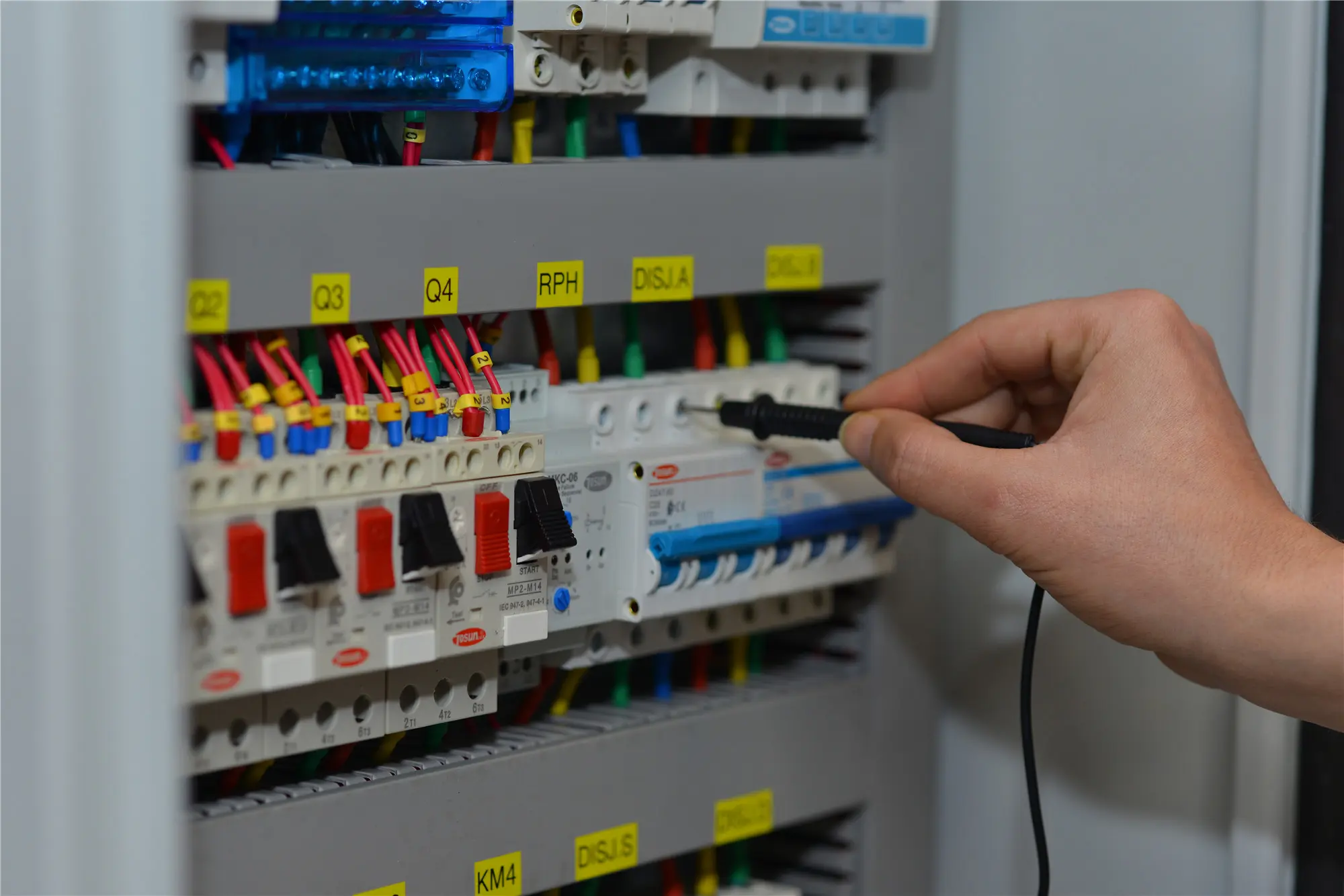
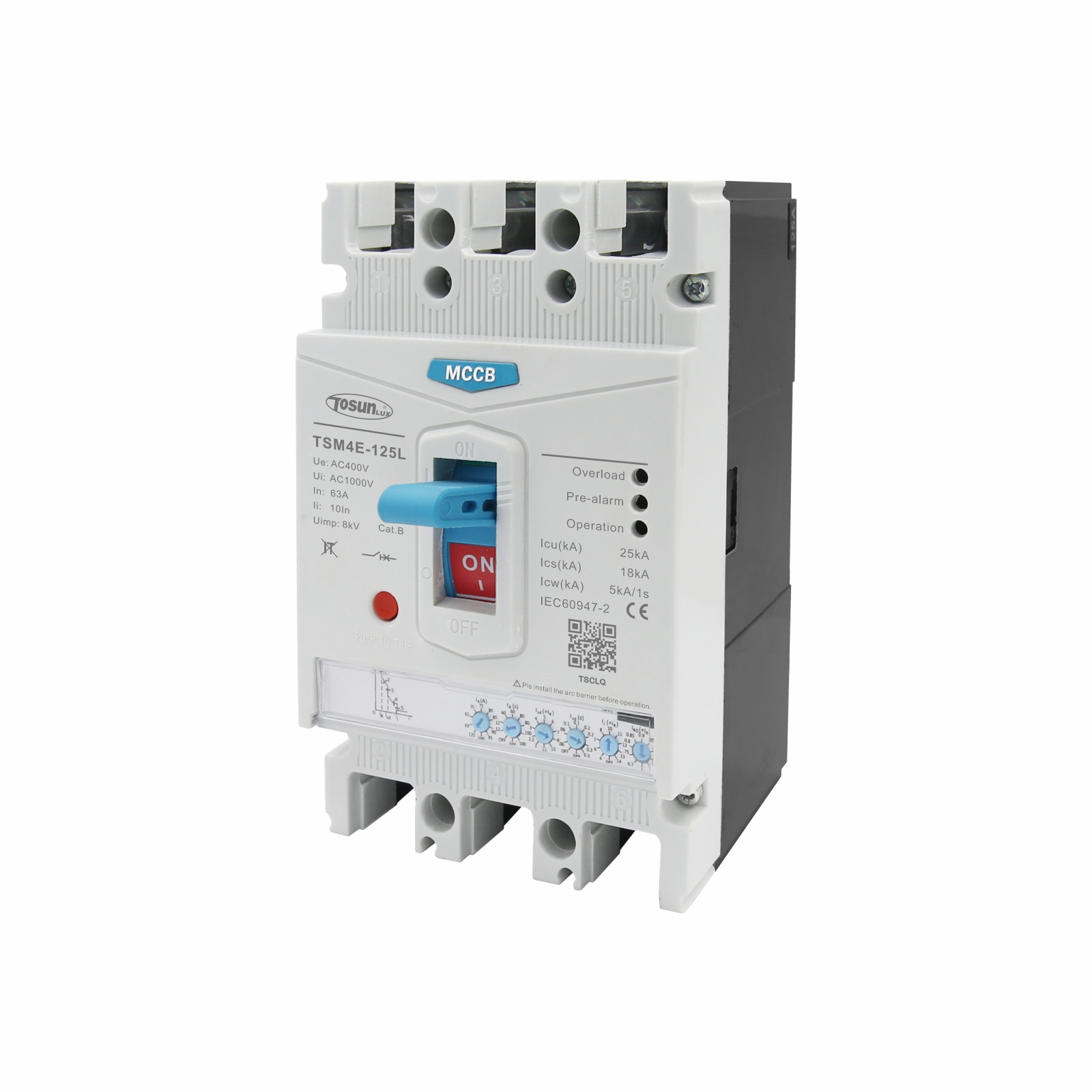
By using these components, MCCBs provide comprehensive protection in a wide range of electrical systems. For installations requiring adjustable tripping characteristics, the TSM4E Electronic Type Moulded Case Circuit Breaker allows engineers to fine-tune protection settings directly to the circuit’s specific load profile.

MCCB Type Comparison: Tripping Ranges and Applications at a Glance
Selecting the correct MCCB type begins with understanding how each one responds to overcurrent events. The table below summarises the five standard MCCB types, their tripping current ranges, and the applications they are best suited for. Use this as a quick reference before consulting the detailed descriptions that follow.
MCCB Type Comparison: Tripping Ranges and Applications at a Glance
Selecting the correct MCCB type begins with understanding how each one responds to overcurrent events. The table below summarises the five standard MCCB types, their tripping current ranges, and the applications they are best suited for. Use this as a quick reference before consulting the detailed descriptions that follow.
| พิมพ์ | Trip range | Typical use case | Inrush tolerance |
|---|---|---|---|
| Type B | 3–5× rated current | Residential lighting, small appliances | ต่ำ |
| Type C | 5–10× rated current | Commercial & general industrial (motors, transformers) | ปานกลาง |
| Type D | 10–20× rated current | Heavy industrial machinery, frequent start/stop | สูง |
| Type K | 8–12× rated current | Sensitive equipment, dual-cable circuits | Moderate–high |
| Type Z | 2–3× rated current | Telecom, data centers, sensitive electronics | Telecom, data centres, sensitive electronics |
การเลือกประเภทของ MCCB ที่เหมาะสม
การเลือกใช้ MCCB ขึ้นอยู่กับความต้องการไฟฟ้าเฉพาะของระบบ ด้านล่างนี้ เราจะมาสำรวจ MCCB ประเภทต่างๆ ซึ่งแต่ละประเภทได้รับการออกแบบมาให้รองรับกระแสไฟและเวลาตอบสนองที่แตกต่างกัน
MCCB ชนิด B
Type B moulded case circuit breakers are designed for residential and light commercial applications where inrush currents are low. They trip at 3 to 5 times the rated current, making them well-suited for protecting lighting circuits, socket outlets, and small household appliances. They trip at 3 to 5 times the rated current. These breakers are ideal for protecting circuits with low inrush currents, such as lighting and small appliances.
MCCB ชนิด C
Type C MCCBs are the most widely used moulded case circuit breakers in general commercial and industrial settings. With a tripping range of 5 to 10 times the rated current, they handle moderate inrush currents from equipment such as motors, pumps, and transformers without nuisance tripping. They are suitable for general-purpose use in commercial and industrial applications. Type C breakers are commonly used in systems that involve equipment with moderate inrush currents, such as motors and transformers. The TSM2 Moulded Case Circuit Breaker is a dependable Type C-rated solution for commercial and light industrial installations, offering high performance overload and short circuit protection in a compact sealed casing.
MCCB ประเภท D
Type D moulded case circuit breakers are engineered for heavy industrial environments where large machinery generates high inrush currents on startup. They trip at 10 to 20 times the rated current, providing reliable short circuit protection without interrupting normal operation of equipment like compressors, welding machines, and industrial presses. Type D breakers trip at 10 to 20 times the rated current and are best used in environments where substantial equipment starts and stops frequently. Their higher tolerance to inrush currents makes them ideal for heavy-duty operations. For demanding heavy-duty environments, the TSM9 Moulded Case Circuit Breaker provides robust protection against overload, short circuit, and under-voltage conditions in AC 50/60Hz industrial circuits.
MCCB ชนิด K
Type K MCCBs offer enhanced protection for circuits carrying sensitive equipment or installations with two cables. Tripping at 8 to 12 times the rated current, they balance tolerance for surge currents with fast response to genuine faults, making them a preferred choice where standard Type C protection is insufficient.They trip at 8 to 12 times the rated current and are often used in settings where more sensitive equipment is involved. Type K breakers are ideal for providing enhanced protection in installations where surge currents are common.
MCCB ชนิด Z
Type Z moulded case circuit breakers are the most sensitive type available, tripping at just 2 to 3 times the rated current. They are specifically designed to protect delicate electronic equipment in telecommunications infrastructure, data centres, and precision measurement systems where even minor overloads can cause irreversible damage. They are used to protect sensitive electronic equipment, making them suitable for applications like telecommunications and data centers. While they are not as versatile as other types, their ability to react to small overloads makes them an essential component in sensitive circuits.
โซลูชัน MCCB ที่เชื่อถือได้ในราคาที่แข่งขันได้ – ขอใบเสนอราคาของคุณวันนี้!
สิ่งที่ควรพิจารณาเมื่อเลือก MCCB
เมื่อเลือก MCCB ที่เหมาะสม ควรพิจารณาปัจจัยต่อไปนี้:
- คะแนนปัจจุบัน:ตรวจสอบให้แน่ใจว่ากระแสไฟของ MCCB ตรงกับโหลดที่คาดว่าจะเกิดขึ้นในวงจรเพื่อหลีกเลี่ยงการสะดุดที่ไม่จำเป็นหรือการป้องกันที่ไม่เพียงพอ
- ประเภทการสมัคร:MCCB ประเภทต่างๆ เหมาะกับสภาพแวดล้อมที่แตกต่างกัน เช่น ที่อยู่อาศัย เชิงพาณิชย์ หรืออุตสาหกรรม การทำความเข้าใจการใช้งานของคุณจะช่วยให้คุณเลือก MCCB ที่เหมาะสมได้
- เวลาตอบสนอง:เลือก MCCB ที่มีเวลาตอบสนองที่ถูกต้องเพื่อให้แน่ใจว่าจะทำงานทันทีในกรณีที่เกิดภาวะโอเวอร์โหลดหรือไฟฟ้าลัดวงจร
คำถามที่พบบ่อย: คำถามที่พบบ่อยเกี่ยวกับ MCCB
Q1: ความแตกต่างระหว่าง MCCB และ MCB คืออะไร?
เอ1:แม้ว่าทั้งสองจะทำหน้าที่ป้องกันวงจรจากโหลดเกินและไฟฟ้าลัดวงจร แต่ MCCB สามารถรองรับกระแสไฟฟ้าที่สูงกว่าได้และมักใช้ในงานอุตสาหกรรม โดยทั่วไป MCB จะใช้ในงานที่อยู่อาศัยและเชิงพาณิชย์ขนาดเล็ก
คำถามที่ 2: สามารถรีเซ็ต MCCB ได้หรือไม่?
เอ2:ใช่ เมื่อ MCCB เกิดการสะดุด ก็สามารถรีเซ็ตได้ด้วยตนเอง อย่างไรก็ตาม สิ่งสำคัญคือต้องตรวจสอบสาเหตุของการสะดุดก่อนรีเซ็ตเบรกเกอร์
คำถามที่ 3: ควรบำรุงรักษา MCCB บ่อยเพียงใด?
เอ3:การบำรุงรักษาตามปกติถือเป็นสิ่งสำคัญเพื่อให้แน่ใจว่า MCCB ทำงานได้อย่างถูกต้อง ซึ่งรวมถึงการทำความสะอาด การตรวจสอบสัญญาณการสึกหรอ และการตรวจสอบการทำงานของกลไกการสะดุด
คำถามที่ 4: MCCB Type D ใช้สำหรับอะไร?
เอ 4:MCCB ประเภท D ได้รับการออกแบบมาสำหรับการใช้งานในอุตสาหกรรมหนักซึ่งมักมีกระแสไฟกระชากสูง โดยจะช่วยปกป้องเครื่องจักรและมอเตอร์ขนาดใหญ่
Q5: What is the typical lifespan of an MCCB?
A5: Under normal operating conditions, an MCCB can last 20 years or more. However, its mechanical and electrical life is also rated by the number of operations — typically between 10,000 and 25,000 switching cycles depending on the model and manufacturer. Regular maintenance, avoiding repeated short-circuit trips, and operating within the rated current range all contribute to a longer service life.
Q6: Can an MCCB be used as a main switch or isolator?
A6: Yes, many MCCBs are approved for use as a main switch or isolator when they carry the appropriate certification for that function. However, not all MCCBs are rated for isolation duty — always check the product datasheet to confirm whether the unit meets the isolation requirements specified in IEC 60947-2 or the relevant local standard before using it in this role.
Q7: What are the most common causes of MCCB failure?
A7: The most frequent causes include repeated exposure to short-circuit currents beyond the breaker’s rated capacity, mechanical wear from excessive switching operations, moisture or contaminant ingress into the casing, and loose terminal connections that cause localised overheating. Scheduled inspection and testing — including contact resistance checks and insulation resistance testing — help identify early signs of degradation before failure occurs.

เพิ่มความปลอดภัยทางไฟฟ้าด้วย MCCB
MCCB เป็นสิ่งจำเป็นสำหรับการรักษาความปลอดภัยทางไฟฟ้าในหลากหลายการใช้งาน การเลือกประเภทที่เหมาะสมกับความต้องการของคุณจะช่วยให้มั่นใจได้ว่าวงจรไฟฟ้าจะปลอดภัยและลดความเสี่ยงต่อความเสียหายหรือไฟไหม้ การบำรุงรักษาเป็นประจำและการติดตั้งอย่างถูกต้องจะช่วยเพิ่มความน่าเชื่อถือและประสิทธิภาพของ MCCB อีกด้วย
For a detailed side-by-side breakdown, read our guide on MCCB vs MCB: key differences in current rating, application type, and protection level.
🔎 ข้อแนะนำในการอ่านเกี่ยวกับประเภท MCCB และหลักการทำงาน
MCCB ประเภทต่างๆ และหลักการทำงาน
เรียนรู้เกี่ยวกับเบรกเกอร์ชนิดต่างๆ (MCCB) โครงสร้าง และวิธีป้องกันระบบไฟฟ้า
ข้อดีของการใช้เบรกเกอร์แรงดันต่ำ
สำรวจว่าเหตุใด MCCB จึงมีความจำเป็นในระบบแรงดันต่ำ และช่วยเพิ่มความปลอดภัยและความน่าเชื่อถือในการจ่ายไฟฟ้าได้อย่างไร
ความสามารถในการตัดวงจรเทียบกับอัตราของเบรกเกอร์
ทำความเข้าใจวิธีการประเมินระดับ MCCB และความสามารถในการตัดไฟเพื่อเลือกระดับการป้องกันที่เหมาะสมสำหรับระบบของคุณ
โทรศัพท์: +86-577-88671000
อีเมล: ceo@tosun.com
Skype: tosunelectric
วีแชท: +86-139 6881 9286
วอตส์แอป: +86-139 0587 7291
ที่อยู่: ห้องเลขที่ 1001 Wenzhou Fortune Center,Station Road, Wenzhou, China
ขอใบเสนอราคา
ติดต่อเราผ่าน WhatsApp