 : +86-139 0587 7291
 Inglese
 Spagnolo
 Russo
Russo Francese
 arabo
arabo Portoghese del Brasile
 Ucraino
 Turco
Turco Polacco
 Paesi Bassi
 Italiano
 Bahasa Indonesia
 Hindi
Hindi اردو
اردو sfacciato
 Հայերեն
 ไทย
ไทย Mongolo
 Fascino
 Squalo
 Ellenico

Tipi di interruttori automatici scatolati (MCCB) spiegati: Tipo B, C, D, K, Z - Come funziona ciascuno e quando utilizzarlo
Indice dei contenuti
Attiva/disattivaEsistono diversi tipi di interruttori automatici e devi sapere come funzionano per installarli correttamente. Questi interruttori automatici sono raggruppati in diversi tipi: tipo B, tipo C, tipo D, tipo K e tipo Z. Un MCCB di tipo B scatta quando rileva una sovratensione da 3 a 5 volte la corrente nominale, mentre un tipo C scatta quando rileva una sovratensione da 5 a 10 volte.
Un MCCB è un eccellente dispositivo di protezione elettrica. Il suo involucro è sigillato e non può essere aperto. Ma come qualsiasi altra apparecchiatura elettrica, richiede una manutenzione periodica per funzionare correttamente.
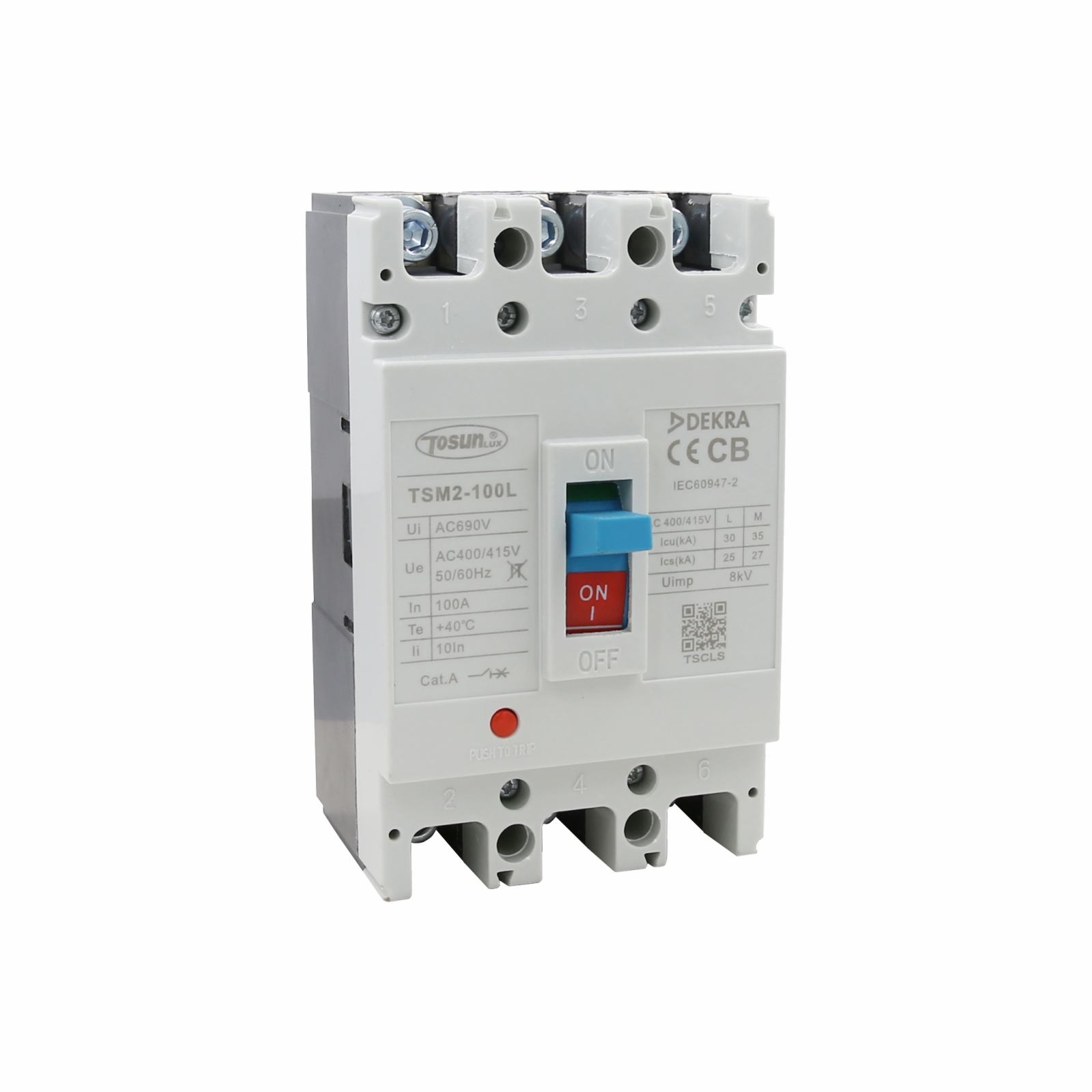
Gli MCCB possono gestire una corrente elevata e un cortocircuito. Hanno anche un'unità di sgancio mobile e un tempo di sgancio breve. Alcuni tipi hanno funzioni di ON/OFF remoto, il che li rende utili in contesti industriali in cui le scosse elettriche sono un pericolo comune.
Diverso tipi di MCCB sono utilizzati in diverse impostazioni elettriche. Se vuoi conoscere i diversi tipi di MCCB e come funzionano, continua a leggere questo articolo.

Come funziona un MCCB?
Gli MCCB sono progettati per interrompere automaticamente il flusso di elettricità quando viene rilevato un guasto. Sono costituiti da diversi componenti chiave, come l'unità di sgancio del relè, componenti sensibili alla temperatura come la striscia bimetallica e contatti ad arco. La combinazione di queste caratteristiche consente all'MCCB di rispondere a sovraccarichi e cortocircuiti scollegando rapidamente il circuito difettoso, garantendo la sicurezza elettrica.
Unità di sgancio del relè: Questo è il cervello dell'MCCB. Include una bobina elettromagnetica e uno stantuffo di sgancio che attiva l'interruttore quando viene rilevato un guasto. Il sistema può far scattare l'interruttore immediatamente o con un ritardo, a seconda della gravità del guasto.
Striscia bimetallica: Questo componente si espande quando la corrente supera il limite di sicurezza, causando la sua piegatura e alla fine facendo scattare l'interruttore. Aiuta a proteggere da condizioni di sovraccarico prolungato.
Contatti ad arco: These contacts are responsible for interrupting the electrical arc that forms when the breaker trips. Their quick response minimises the risk of fire and further damage.
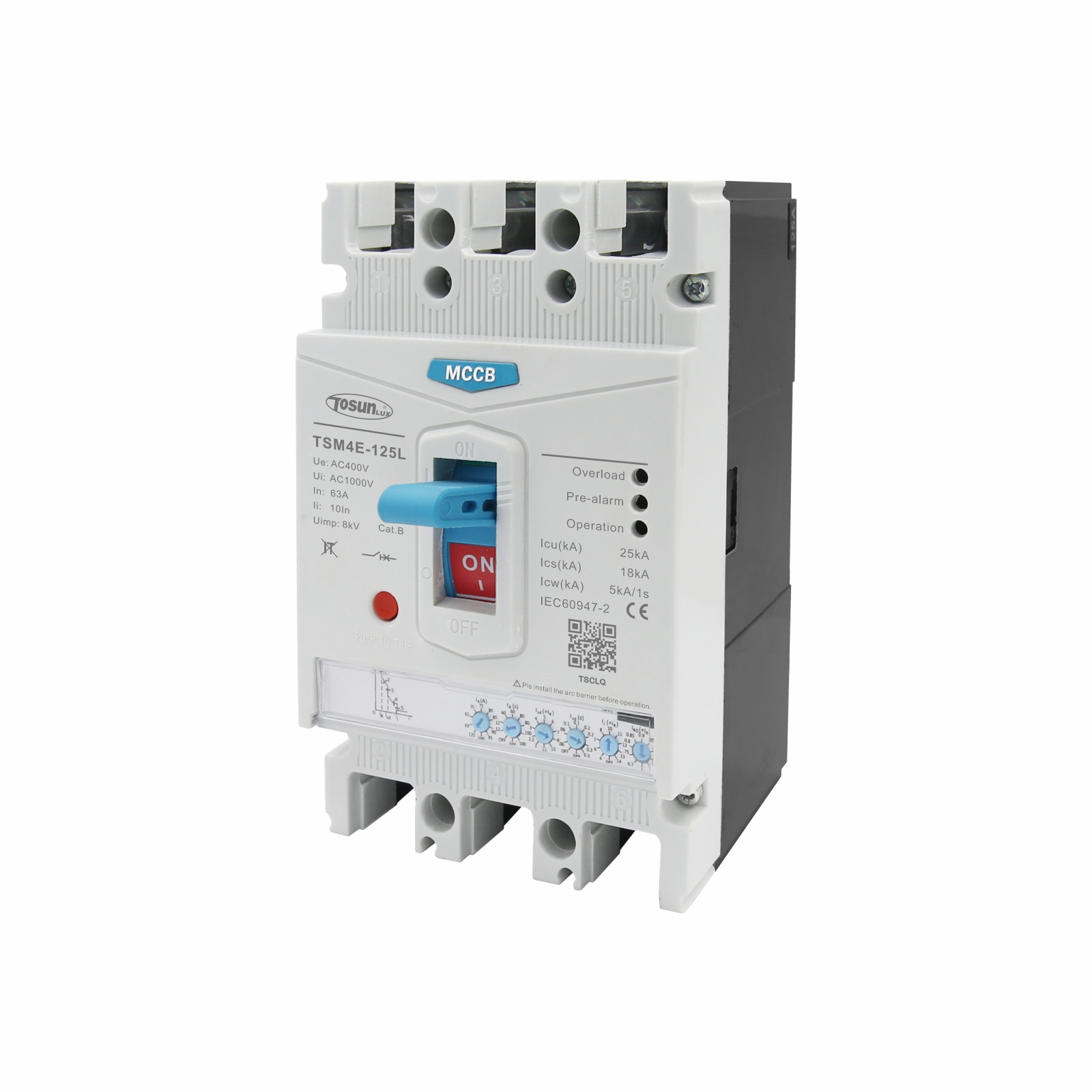
By using these components, MCCBs provide comprehensive protection in a wide range of electrical systems. For installations requiring adjustable tripping characteristics, the TSM4E Electronic Type Moulded Case Circuit Breaker allows engineers to fine-tune protection settings directly to the circuit’s specific load profile.

MCCB Type Comparison: Tripping Ranges and Applications at a Glance
Selecting the correct MCCB type begins with understanding how each one responds to overcurrent events. The table below summarises the five standard MCCB types, their tripping current ranges, and the applications they are best suited for. Use this as a quick reference before consulting the detailed descriptions that follow.
MCCB Type Comparison: Tripping Ranges and Applications at a Glance
Selecting the correct MCCB type begins with understanding how each one responds to overcurrent events. The table below summarises the five standard MCCB types, their tripping current ranges, and the applications they are best suited for. Use this as a quick reference before consulting the detailed descriptions that follow.
| Tipo | Trip range | Typical use case | Inrush tolerance |
|---|---|---|---|
| Tipo B | 3–5× rated current | Residential lighting, small appliances | Basso |
| Type C | 5–10× rated current | Commercial & general industrial (motors, transformers) | Moderare |
| Type D | 10–20× rated current | Heavy industrial machinery, frequent start/stop | Alto |
| Type K | 8–12× rated current | Sensitive equipment, dual-cable circuits | Moderate–high |
| Type Z | 2–3× rated current | Telecom, data centers, sensitive electronics | Telecom, data centres, sensitive electronics |
Scelta del tipo corretto di MCCB
La scelta dell'MCCB dipende dalle specifiche esigenze elettriche del sistema. Di seguito, esploriamo i diversi tipi di MCCB, ciascuno progettato per gestire diversi livelli di corrente e tempo di risposta.
Interruttori MCCB tipo B
Type B moulded case circuit breakers are designed for residential and light commercial applications where inrush currents are low. They trip at 3 to 5 times the rated current, making them well-suited for protecting lighting circuits, socket outlets, and small household appliances. They trip at 3 to 5 times the rated current. These breakers are ideal for protecting circuits with low inrush currents, such as lighting and small appliances.
Interruttori MCCB tipo C
Type C MCCBs are the most widely used moulded case circuit breakers in general commercial and industrial settings. With a tripping range of 5 to 10 times the rated current, they handle moderate inrush currents from equipment such as motors, pumps, and transformers without nuisance tripping. They are suitable for general-purpose use in commercial and industrial applications. Type C breakers are commonly used in systems that involve equipment with moderate inrush currents, such as motors and transformers. The TSM2 Moulded Case Circuit Breaker is a dependable Type C-rated solution for commercial and light industrial installations, offering high performance overload and short circuit protection in a compact sealed casing.
Interruttori MCCB tipo D
Type D moulded case circuit breakers are engineered for heavy industrial environments where large machinery generates high inrush currents on startup. They trip at 10 to 20 times the rated current, providing reliable short circuit protection without interrupting normal operation of equipment like compressors, welding machines, and industrial presses. Type D breakers trip at 10 to 20 times the rated current and are best used in environments where substantial equipment starts and stops frequently. Their higher tolerance to inrush currents makes them ideal for heavy-duty operations. For demanding heavy-duty environments, the TSM9 Moulded Case Circuit Breaker provides robust protection against overload, short circuit, and under-voltage conditions in AC 50/60Hz industrial circuits.
Interruttori MCCB tipo K
Type K MCCBs offer enhanced protection for circuits carrying sensitive equipment or installations with two cables. Tripping at 8 to 12 times the rated current, they balance tolerance for surge currents with fast response to genuine faults, making them a preferred choice where standard Type C protection is insufficient.They trip at 8 to 12 times the rated current and are often used in settings where more sensitive equipment is involved. Type K breakers are ideal for providing enhanced protection in installations where surge currents are common.
Interruttori MCCB tipo Z
Type Z moulded case circuit breakers are the most sensitive type available, tripping at just 2 to 3 times the rated current. They are specifically designed to protect delicate electronic equipment in telecommunications infrastructure, data centres, and precision measurement systems where even minor overloads can cause irreversible damage. They are used to protect sensitive electronic equipment, making them suitable for applications like telecommunications and data centers. While they are not as versatile as other types, their ability to react to small overloads makes them an essential component in sensitive circuits.
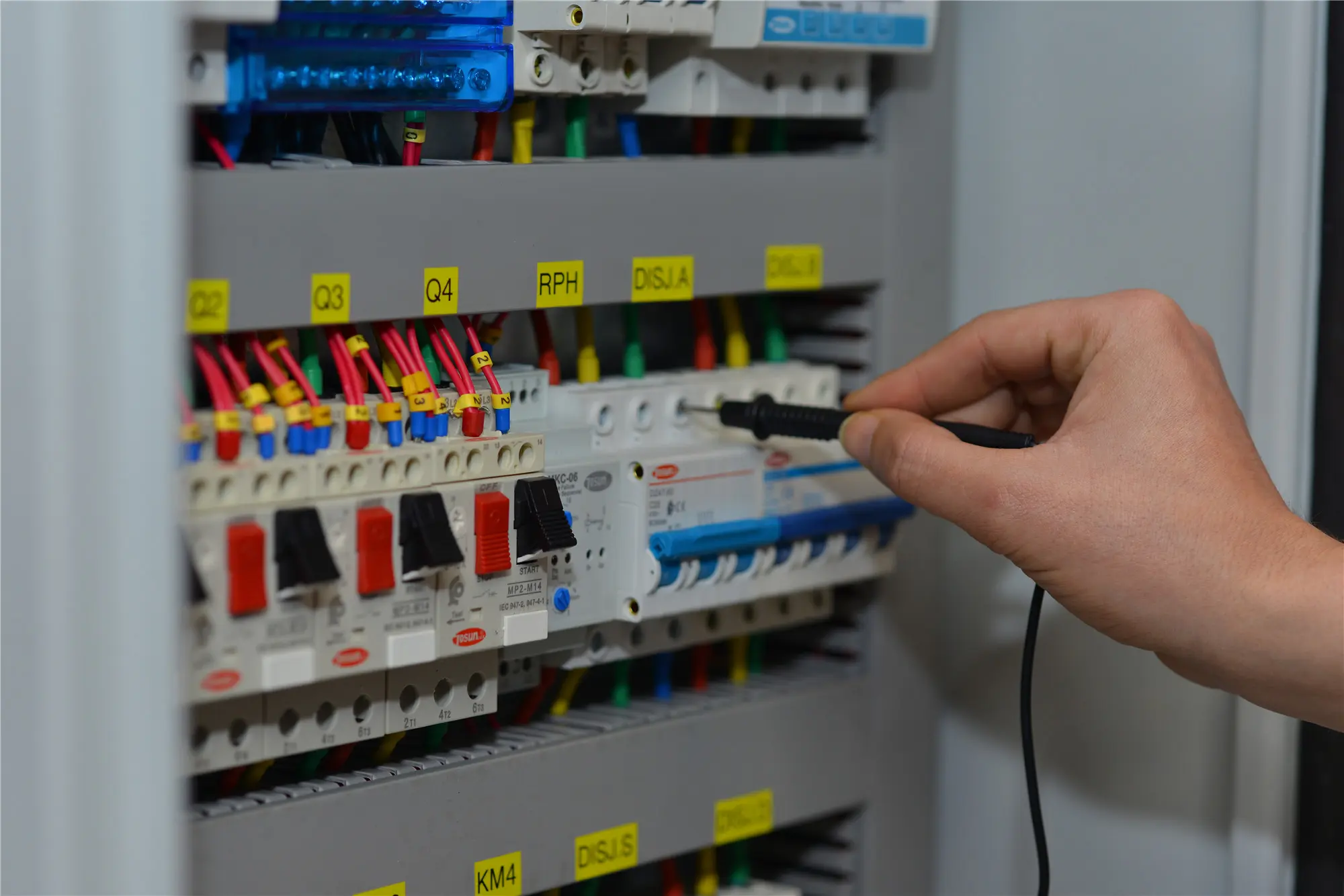
Soluzioni MCCB affidabili a prezzi competitivi: richiedi subito il tuo preventivo!
Considerazioni chiave nella scelta di un MCCB
Quando si seleziona il giusto MCCB, considerare i seguenti fattori:
- Valutazione attuale: Assicurarsi che la corrente nominale dell'MCCB corrisponda al carico previsto del circuito per evitare scatti non necessari o una protezione insufficiente.
- Tipo di applicazione: Diversi tipi di MCCB si adattano a diversi ambienti, come quelli residenziali, commerciali o industriali. Comprendere la tua applicazione ti aiuterà a scegliere l'MCCB appropriato.
- Tempo di risposta: Scegliere un MCCB con il tempo di risposta corretto per garantire che intervenga tempestivamente in caso di sovraccarico o cortocircuito.
FAQ: Domande frequenti sui MCCB
D1: Qual è la differenza tra MCCB e MCB?
A1: Sebbene entrambi servano a proteggere i circuiti da sovraccarichi e cortocircuiti, gli MCCB possono gestire correnti più elevate e sono spesso utilizzati in applicazioni industriali. Gli MCB sono generalmente utilizzati in applicazioni residenziali e commerciali leggere.
D2: È possibile ripristinare un MCCB?
La 2: Sì, una volta scattato un MCCB, è possibile ripristinarlo manualmente. Tuttavia, è importante indagare sulla causa dello scatto prima di ripristinare l'interruttore.
D3: Con quale frequenza è necessario sottoporre a manutenzione gli interruttori magnetotermici?
La A3: La manutenzione regolare è essenziale per garantire il corretto funzionamento dell'MCCB. Ciò include la pulizia, il controllo di eventuali segni di usura e la verifica del funzionamento del meccanismo di sgancio.
D4: A cosa serve un MCCB di tipo D?
La4: Gli MCCB di tipo D sono progettati per applicazioni industriali pesanti in cui sono comuni elevate correnti di spunto. Forniscono protezione per grandi macchine e motori.
Q5: What is the typical lifespan of an MCCB?
A5: Under normal operating conditions, an MCCB can last 20 years or more. However, its mechanical and electrical life is also rated by the number of operations — typically between 10,000 and 25,000 switching cycles depending on the model and manufacturer. Regular maintenance, avoiding repeated short-circuit trips, and operating within the rated current range all contribute to a longer service life.
Q6: Can an MCCB be used as a main switch or isolator?
A6: Yes, many MCCBs are approved for use as a main switch or isolator when they carry the appropriate certification for that function. However, not all MCCBs are rated for isolation duty — always check the product datasheet to confirm whether the unit meets the isolation requirements specified in IEC 60947-2 or the relevant local standard before using it in this role.
Q7: What are the most common causes of MCCB failure?
A7: The most frequent causes include repeated exposure to short-circuit currents beyond the breaker’s rated capacity, mechanical wear from excessive switching operations, moisture or contaminant ingress into the casing, and loose terminal connections that cause localised overheating. Scheduled inspection and testing — including contact resistance checks and insulation resistance testing — help identify early signs of degradation before failure occurs.

Migliorare la sicurezza elettrica con gli MCCB
Gli MCCB sono indispensabili per mantenere la sicurezza elettrica in un'ampia gamma di applicazioni. Selezionando il tipo giusto per le tue esigenze, puoi garantire la protezione dei circuiti elettrici e ridurre il rischio di danni o incendi. Una manutenzione regolare e un'installazione corretta migliorano ulteriormente l'affidabilità e l'efficacia degli MCCB.
For a detailed side-by-side breakdown, read our guide on MCCB vs MCB: key differences in current rating, application type, and protection level.
🔎 Letture consigliate per tipi di MCCB e principio di funzionamento
I diversi tipi di MCCB e come funzionano
Scopri di più sui vari tipi di interruttori scatolati (MCCB), sulla loro costruzione e sul modo in cui forniscono protezione negli impianti elettrici.
Vantaggi dell'utilizzo di interruttori automatici a bassa tensione
Scopri perché gli interruttori magnetotermici differenziali sono essenziali nei sistemi a bassa tensione e come migliorano la sicurezza e l'affidabilità nella distribuzione elettrica.
Capacità di interruzione vs. valori nominali degli interruttori automatici
Scopri come valutare i valori nominali e la capacità di interruzione degli interruttori magnetotermici differenziali per scegliere il livello di protezione più adatto al tuo sistema.
Tel: +86-577-88671000
E-mail: ceo@tosun.com
Skype: tosunelectric
WeChat: +86-139 6881 9286
WhatsApp: +86-139 0587 7291
Indirizzo: Stanza n. 1001 Wenzhou Fortune Center, Station Road, Wenzhou, Cina
RICHIEDI UN PREVENTIVO
Mandaci un messaggio su WhatsApp