 : +86-139 0587 7291
 angielski
 hiszpański
 rosyjski
 francuski
 العربية
 Portugalski w Brazylii
 Ukraiński
 turecki
 Polski
 Holenderski
 Włoski
 Indonezyjski
 indyjski
 Zachód słońca
 Zachód słońca
 Հայերեն
 ไทย
ไทย Mongoł
 Zakończenie
 Szkip
Szkip Grecki

MCCB Types Explained: Type B, C, D, K, Z — How Each Works & When to Use Them
Table of Contents
Dźwignia kolankowaIstnieją różne rodzaje wyłączników i musisz wiedzieć, jak działają, aby je prawidłowo zainstalować. Te wyłączniki są podzielone na różne typy: typ B, typ C, typ D, typ K i typ Z. Wyłącznik MCCB typu B wyłączy się, gdy wykryje przepięcie 3 do 5 razy większe od prądu znamionowego, podczas gdy typ C wyłączy się, gdy wykryje przepięcie 5 do 10 razy.
MCCB to doskonałe urządzenie zabezpieczające elektryczność. Jego obudowa jest szczelna i nie można jej otworzyć. Jednak tak jak każdy inny sprzęt elektryczny, wymaga on okresowej konserwacji, aby działać prawidłowo.
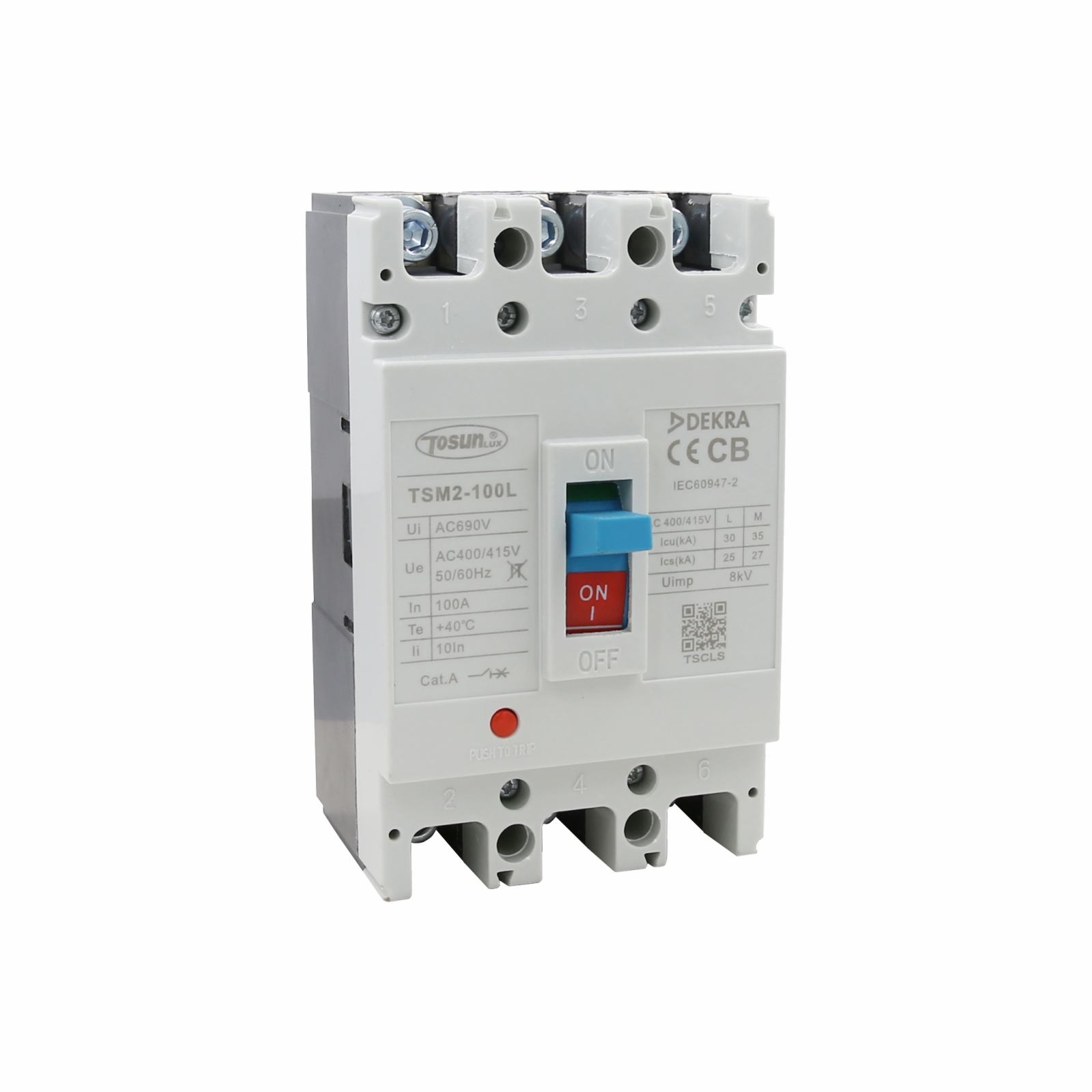
Wyłączniki MCCB mogą obsługiwać duży prąd i zwarcie. Mają również ruchomą jednostkę wyzwalającą i krótki czas wyzwalania. Niektóre typy mają funkcje zdalnego włączania/wyłączania, co czyni je przydatnymi w środowiskach przemysłowych, gdzie porażenia prądem są powszechnym zagrożeniem.
Różny rodzaje wyłączników kompaktowych są używane w różnych ustawieniach elektrycznych. Jeśli chcesz dowiedzieć się o różnych typach wyłączników kompaktowych i ich działaniu, kontynuuj czytanie tego artykułu.

Jak działa MCCB?
Wyłączniki MCCB są zaprojektowane tak, aby automatycznie przerywać przepływ prądu w przypadku wykrycia usterki. Składają się z kilku kluczowych komponentów, takich jak jednostka wyzwalająca przekaźnika, komponenty wrażliwe na temperaturę, takie jak pasek bimetaliczny, oraz styki łukowe. Połączenie tych funkcji pozwala wyłącznikowi MCCB reagować na przeciążenia i zwarcia, szybko odłączając uszkodzony obwód, zapewniając bezpieczeństwo elektryczne.
Jednostka wyzwalająca przekaźnik:To mózg MCCB. Obejmuje on cewkę elektromagnetyczną i tłok wyzwalający, który aktywuje wyłącznik po wykryciu usterki. System może wyzwalać wyłącznik natychmiast lub z opóźnieniem, w zależności od powagi usterki.
Pasek bimetaliczny: Ten element rozszerza się, gdy prąd przekracza bezpieczny limit, powodując jego wygięcie i ostatecznie zadziałanie wyłącznika. Pomaga chronić przed długotrwałymi przeciążeniami.
Kontakty łukowe: These contacts are responsible for interrupting the electrical arc that forms when the breaker trips. Their quick response minimises the risk of fire and further damage.
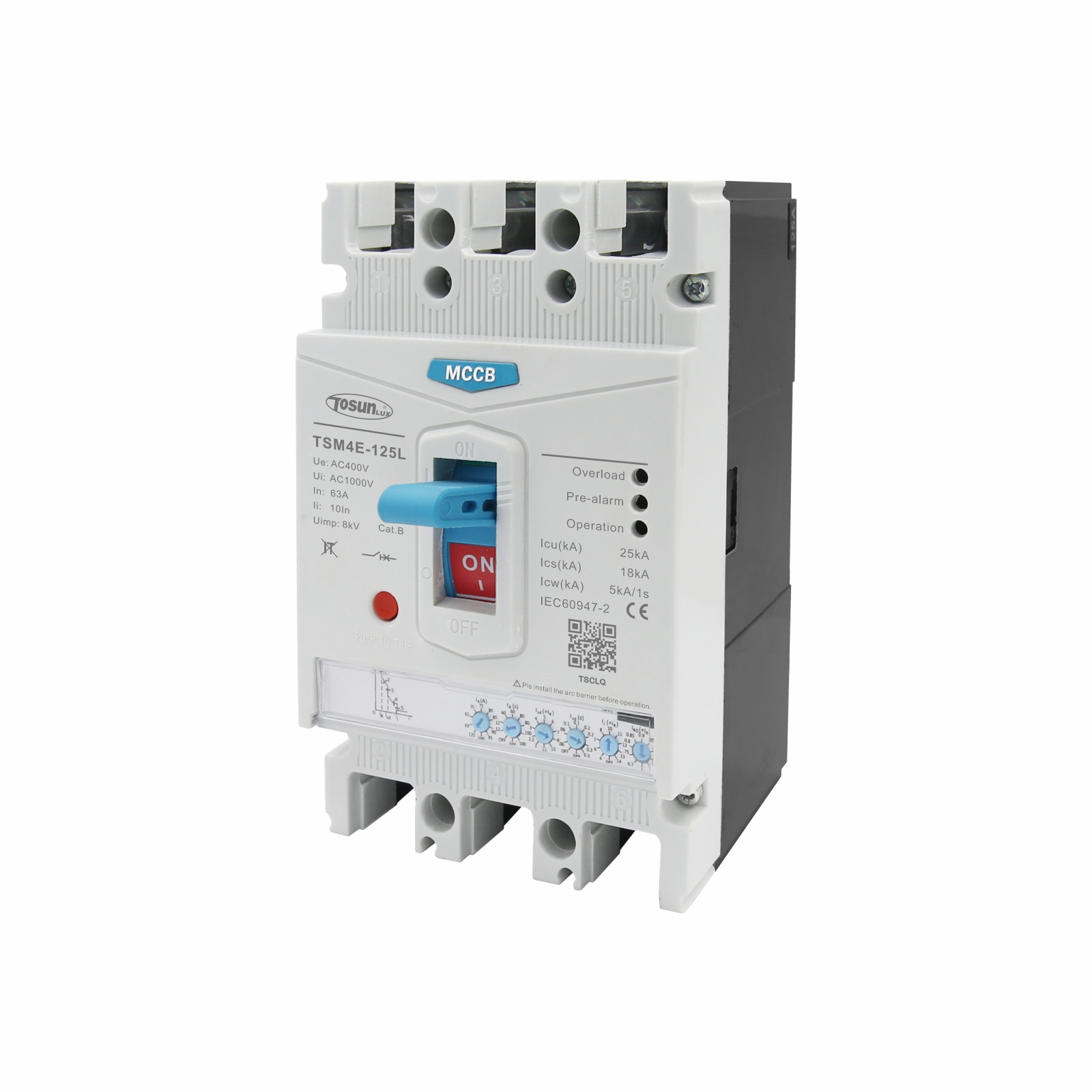
By using these components, MCCBs provide comprehensive protection in a wide range of electrical systems. For installations requiring adjustable tripping characteristics, the TSM4E Electronic Type Moulded Case Circuit Breaker allows engineers to fine-tune protection settings directly to the circuit’s specific load profile.

MCCB Type Comparison: Tripping Ranges and Applications at a Glance
Selecting the correct MCCB type begins with understanding how each one responds to overcurrent events. The table below summarises the five standard MCCB types, their tripping current ranges, and the applications they are best suited for. Use this as a quick reference before consulting the detailed descriptions that follow.
MCCB Type Comparison: Tripping Ranges and Applications at a Glance
Selecting the correct MCCB type begins with understanding how each one responds to overcurrent events. The table below summarises the five standard MCCB types, their tripping current ranges, and the applications they are best suited for. Use this as a quick reference before consulting the detailed descriptions that follow.
| Typ | Trip range | Typical use case | Inrush tolerance |
|---|---|---|---|
| Type B | 3–5× rated current | Residential lighting, small appliances | Niski |
| Type C | 5–10× rated current | Commercial & general industrial (motors, transformers) | Umiarkowany |
| Type D | 10–20× rated current | Heavy industrial machinery, frequent start/stop | Wysoki |
| Type K | 8–12× rated current | Sensitive equipment, dual-cable circuits | Moderate–high |
| Type Z | 2–3× rated current | Telecom, data centers, sensitive electronics | Telecom, data centres, sensitive electronics |
Wybór właściwego typu wyłącznika kompaktowego
Wybór MCCB zależy od konkretnych potrzeb elektrycznych systemu. Poniżej omawiamy różne typy MCCB, z których każdy jest zaprojektowany do obsługi różnych poziomów prądu i czasu reakcji.
Wyłączniki kompaktowe typu B
Type B moulded case circuit breakers are designed for residential and light commercial applications where inrush currents are low. They trip at 3 to 5 times the rated current, making them well-suited for protecting lighting circuits, socket outlets, and small household appliances. They trip at 3 to 5 times the rated current. These breakers are ideal for protecting circuits with low inrush currents, such as lighting and small appliances.
Wyłączniki kompaktowe typu C
Type C MCCBs are the most widely used moulded case circuit breakers in general commercial and industrial settings. With a tripping range of 5 to 10 times the rated current, they handle moderate inrush currents from equipment such as motors, pumps, and transformers without nuisance tripping. They are suitable for general-purpose use in commercial and industrial applications. Type C breakers are commonly used in systems that involve equipment with moderate inrush currents, such as motors and transformers. The TSM2 Moulded Case Circuit Breaker is a dependable Type C-rated solution for commercial and light industrial installations, offering high performance overload and short circuit protection in a compact sealed casing.
Wyłączniki kompaktowe typu D
Type D moulded case circuit breakers are engineered for heavy industrial environments where large machinery generates high inrush currents on startup. They trip at 10 to 20 times the rated current, providing reliable short circuit protection without interrupting normal operation of equipment like compressors, welding machines, and industrial presses. Type D breakers trip at 10 to 20 times the rated current and are best used in environments where substantial equipment starts and stops frequently. Their higher tolerance to inrush currents makes them ideal for heavy-duty operations. For demanding heavy-duty environments, the TSM9 Moulded Case Circuit Breaker provides robust protection against overload, short circuit, and under-voltage conditions in AC 50/60Hz industrial circuits.
Wyłączniki kompaktowe typu K
Type K MCCBs offer enhanced protection for circuits carrying sensitive equipment or installations with two cables. Tripping at 8 to 12 times the rated current, they balance tolerance for surge currents with fast response to genuine faults, making them a preferred choice where standard Type C protection is insufficient.They trip at 8 to 12 times the rated current and are often used in settings where more sensitive equipment is involved. Type K breakers are ideal for providing enhanced protection in installations where surge currents are common.
Wyłączniki kompaktowe typu Z
Type Z moulded case circuit breakers are the most sensitive type available, tripping at just 2 to 3 times the rated current. They are specifically designed to protect delicate electronic equipment in telecommunications infrastructure, data centres, and precision measurement systems where even minor overloads can cause irreversible damage. They are used to protect sensitive electronic equipment, making them suitable for applications like telecommunications and data centers. While they are not as versatile as other types, their ability to react to small overloads makes them an essential component in sensitive circuits.
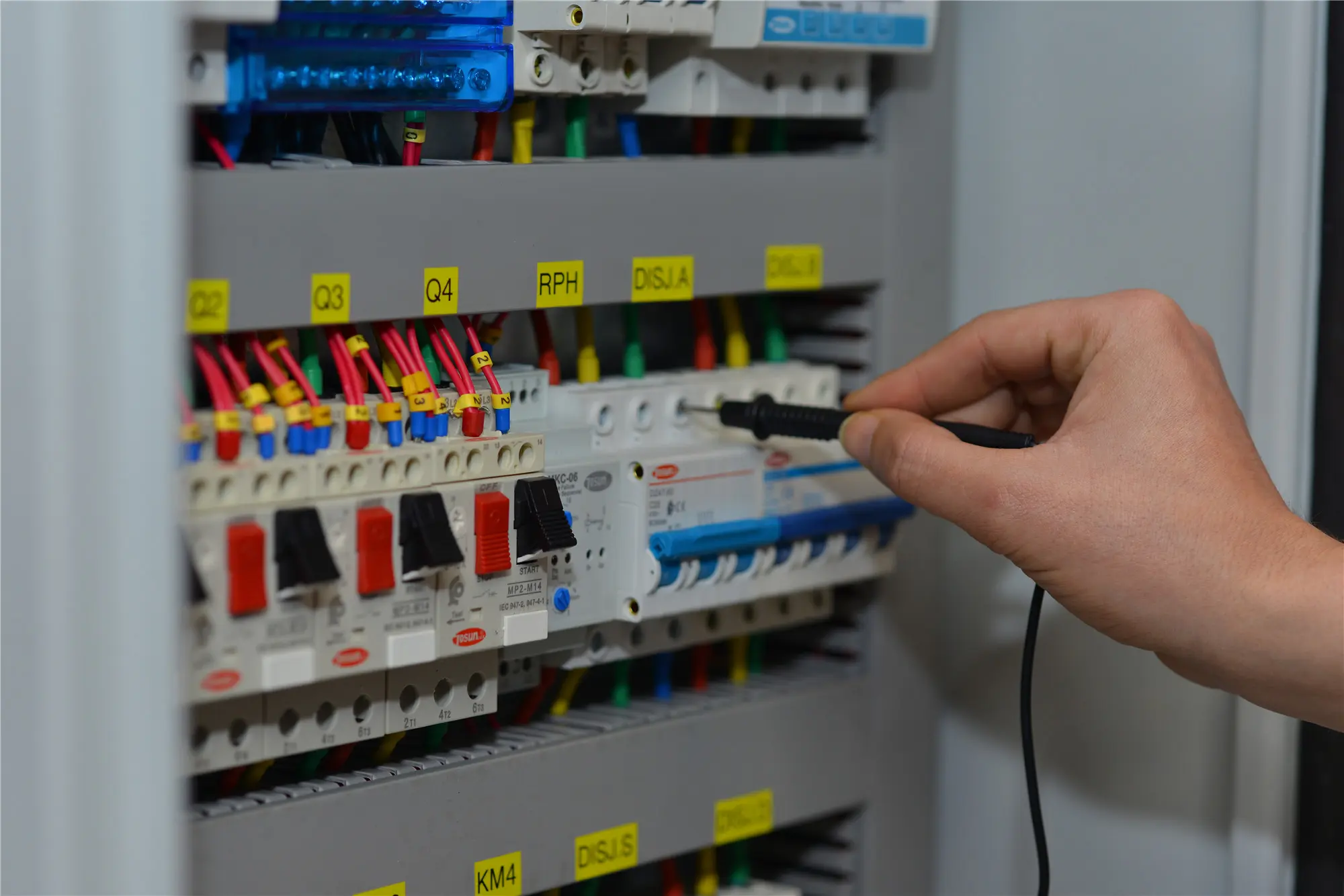
Niezawodne rozwiązania MCCB w konkurencyjnych cenach – poproś o wycenę już dziś!
Kluczowe kwestie przy wyborze MCCB
Przy wyborze właściwego wyłącznika kompaktowego należy wziąć pod uwagę następujące czynniki:
- Obecna ocena: Upewnij się, że prąd znamionowy wyłącznika MCCB odpowiada przewidywanemu obciążeniu obwodu, aby uniknąć niepotrzebnego wyłączenia lub niewystarczającej ochrony.
- Typ aplikacji: Różne typy wyłączników MCCB są odpowiednie dla różnych środowisk, takich jak mieszkalne, komercyjne lub przemysłowe. Zrozumienie zastosowania pomoże Ci wybrać odpowiedni wyłącznik MCCB.
- Czas reakcji:Wybierz wyłącznik kompaktowy z właściwym czasem reakcji, aby mieć pewność, że zadziała on natychmiast w przypadku przeciążenia lub zwarcia.
FAQ: Częste pytania dotyczące MCCB
P1: Jaka jest różnica między MCCB i MCB?
A1:Chociaż oba służą do ochrony obwodów przed przeciążeniami i zwarciami, wyłączniki kompaktowe mogą obsługiwać wyższe prądy i są często używane w zastosowaniach przemysłowych. Wyłączniki kompaktowe są zazwyczaj używane w zastosowaniach mieszkaniowych i lekko komercyjnych.
P2: Czy wyłącznik MCCB można zresetować?
A2: Tak, po zadziałaniu wyłącznika MCCB można go zresetować ręcznie. Ważne jest jednak, aby zbadać przyczynę zadziałania przed zresetowaniem wyłącznika.
P3: Jak często należy konserwować wyłączniki kompaktowe?
A3:Regularne konserwacje są niezbędne, aby zapewnić prawidłowe działanie wyłącznika MCCB. Obejmuje to czyszczenie, sprawdzanie oznak zużycia i weryfikację działania mechanizmu wyzwalającego.
P4: Do czego służy wyłącznik kompaktowy typu D?
A4: Wyłączniki kompaktowe typu D są przeznaczone do ciężkich zastosowań przemysłowych, w których powszechne są wysokie prądy udarowe. Zapewniają ochronę dużych maszyn i silników.
Q5: What is the typical lifespan of an MCCB?
A5: Under normal operating conditions, an MCCB can last 20 years or more. However, its mechanical and electrical life is also rated by the number of operations — typically between 10,000 and 25,000 switching cycles depending on the model and manufacturer. Regular maintenance, avoiding repeated short-circuit trips, and operating within the rated current range all contribute to a longer service life.
Q6: Can an MCCB be used as a main switch or isolator?
A6: Yes, many MCCBs are approved for use as a main switch or isolator when they carry the appropriate certification for that function. However, not all MCCBs are rated for isolation duty — always check the product datasheet to confirm whether the unit meets the isolation requirements specified in IEC 60947-2 or the relevant local standard before using it in this role.
Q7: What are the most common causes of MCCB failure?
A7: The most frequent causes include repeated exposure to short-circuit currents beyond the breaker’s rated capacity, mechanical wear from excessive switching operations, moisture or contaminant ingress into the casing, and loose terminal connections that cause localised overheating. Scheduled inspection and testing — including contact resistance checks and insulation resistance testing — help identify early signs of degradation before failure occurs.

Zwiększanie bezpieczeństwa elektrycznego za pomocą wyłączników kompaktowych
Wyłączniki MCCB są niezbędne do utrzymania bezpieczeństwa elektrycznego w szerokim zakresie zastosowań. Wybierając odpowiedni typ do swoich potrzeb, możesz zapewnić ochronę obwodów elektrycznych i zmniejszyć ryzyko uszkodzenia lub pożaru. Regularna konserwacja i prawidłowa instalacja dodatkowo zwiększają niezawodność i skuteczność wyłączników MCCB.
For a detailed side-by-side breakdown, read our guide on MCCB vs MCB: key differences in current rating, application type, and protection level.
🔎 Zalecana lektura dotycząca typów wyłączników kompaktowych i zasady działania
Różne typy MCCB i sposób ich działania
Poznaj różne rodzaje wyłączników kompaktowych (MCCB), ich budowę i sposób, w jaki zapewniają ochronę w instalacjach elektrycznych.
Zalety stosowania wyłączników niskiego napięcia
Poznaj powody, dla których wyłączniki kompaktowe są niezbędne w systemach niskiego napięcia i w jaki sposób zwiększają bezpieczeństwo i niezawodność dystrybucji energii elektrycznej.
Zdolność wyłączania a wartości znamionowe wyłącznika
Dowiedz się, jak oceniać parametry wyłączników kompaktowych i zdolności wyłączania, aby wybrać odpowiedni poziom ochrony dla swojego systemu.
Telefon: +86-577-88671000
E-mail: ceo@tosun.com
Skype: tosunelectric
WeChat: +86-139 6881 9286
WhatsApp: +86-139 0587 7291
Adres: Pokój nr 1001 Wenzhou Fortune Center, Station Road, Wenzhou, Chiny
POPROŚ O OFERTĘ
Napisz do nas na WhatsAppie