Blog

  • The Impact of Terminal Torque on Circuit Breaker Overheating

    28th Feb 2026

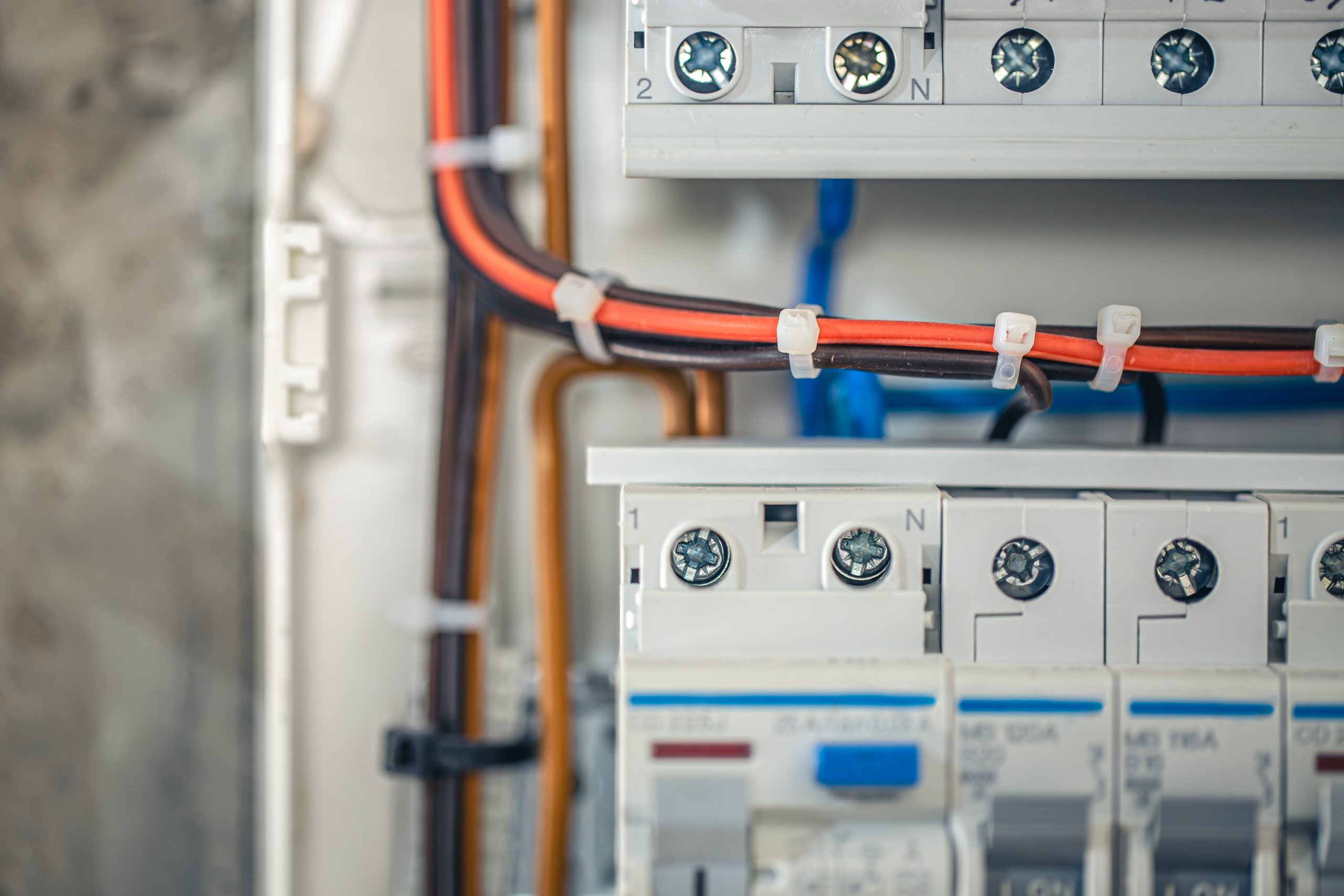
    In the field of electrical engineering, safety is determined by a secure connection and the circuit breaker. During electrical installations, terminal torque is often overlooked. This is defined as the “perfect tightness” of rotational force applied to the terminal screws. When the necessary rotational force is not properly applied, your circuit breaker is compromised.  According to Joule’s Law, resistance generates heat and increases with the square of the current and the resistance of the connection. This is shown by the formula P = I2R. To prevent rapid overheating, the correct terminal torque should be applied to a circuit breaker.  Real-World Scenarios and Operational Risks In industrial and commercial electrical systems, engineers may impose safety measures. However, these may contradict certain site conditions. There may also be instances where circuit breaker failures are caused by human factors.  Understanding how proper terminal torque affects the circuit breaker is essential for electrical fire prevention. Below are some real-world scenarios demonstrating the operational risks caused by incorrect terminal torque conditions: Loose Wiring & Thermal Cycling In busy factories, the vibrations coming from heavy machinery may cause tightened terminals to loosen. In electricity, when the lug doesn’t make full contact with the terminal, this creates electrical resistance. As resistance increases, so does the temperature. This results in a dangerous loop called “thermal cycling.”  One of the solutions to thermal cycling is to ensure that the initial “preload” on a bolt or screw is correct. Use a calibrated torque wrench and follow the manufacturer’s specific N · m  (Newton-meter) or in.lb […]

    Baca selengkapnya
  • Masalah Tripping RCCB dan Cara Memperbaikinya

    27th Feb 2026

    If your RCCB keeps tripping, do this in order: Safety: RCCBs protect against earth leakage and shock risk. Don’t keep “forcing it ON” repeatedly. Residual current circuit breakers tripping problems can result from issues like moisture, faulty wiring, or damaged appliances. Fixing these problems involves steps such as resetting the breaker, inspecting wiring, and testing devices. If you’ve ever wondered why your RCCB trips unexpectedly, this guide is here to help. TSL3-63 Residual Current Circuit Breaker TSL3-63 Residual Current Circuit Breaker The TSL3-63 RCCB provides enhanced protection against overload and short-circuit faults in AC electrical circuits, ensuring safety in various industrial and residential applications. View Product Troubleshooting Flow Step A — When does it trip? Step B — Quick isolation test (safe, homeowner-level) If you find the device that triggers the trip, repair or replace it. Step C — When to stop DIY and call an electrician Electricians can use leakage current meters and insulation testers to pinpoint hidden faults. Why Residual Current Circuit Breakers Trip Moisture often causes ground faults by allowing current to leak through wet or damaged wiring. This issue is common in areas like bathrooms, kitchens, or outdoor circuits. Moisture can cause earth leakage, leading to RCCB tripping to prevent electrical hazards. Start by drying wet areas and sealing conduits to prevent water intrusion. If damage is severe, replacing the cables may be necessary. Frayed wires or loose terminals can cause leakage currents, leading to RCCB tripping. Current flowing through damaged wires can cause imbalances, prompting the RCCB to cut off the power […]

    Baca selengkapnya
  • Circuit Breaker Manufacturing: Why Silver Contacts Matter / Circuit Breaker Manufacturing

    27th Feb 2026

    Electricity is a powerful force that requires a dependable, rigorously tested “emergency shut-off valve.” In circuit breaker manufacturing, manufacturers focus on building a device that cuts off power if it senses too much electricity. The circuit breaker acts as a defense mechanism for electrical systems. If the power is not interrupted at the right time, a simple overload can result in a fire.  Standard metals often fail when electrical switching happens due to extreme thermal and mechanical stress. Engineers solve this problem by using silver alloy contacts. Silver is conductive, and the alloy strengthens it so it can survive arcing. This article explains the importance of silver alloys in circuit breaker manufacturing.  What Are Electrical Contacts? Electrical contacts are physical points in an electrical system where a circuit meets. They are composed of two conductive pieces that touch. This action allows power to flow and separates to stop it. The role of the circuit breaker is to keep the contacts pressed together. It also triggers a mechanism (separator) during a power surge, so the contacts will pull apart.  A Dual Responsibility Contacts have a dual responsibility when it comes to electrical safety. When closed, they must remain in contact and carry a stable current without overheating. On the other hand, when they are open, they must withstand the force of an electrical arc.  Inherent Industrial Challenges In circuit breaker manufacturing, the choice of material is one of the most critical decisions. Heat generation and mechanical wear are two of the problems that a contact may […]

    Baca selengkapnya
  • Selecting the Right Data Center Breaker for Continuous Power Availability

    26th Feb 2026

    In today’s modern-day digital economy, a data center is the most valuable system. A poorly designed breaker system can shut down an entire data center due to a minor fault.  While most establishments use generators and UPS systems, Tier III and Tier IV facilities demand uptime standards of 99.982% and 99.995% availability. This is why circuit breakers play a vital role in the data center breaker system. This article discusses the different circuit breakers that you can choose from depending on your industry’s needs. You can select from Miniature Circuit Breakers (MCBs), Molded Case Circuit Breakers (MCCBs), and Air Circuit Breakers (ACBs). You will also learn why selection coordination, power availability, uptimes, and TCC analysis are vital in data center operations.  Real-World Applications of How Establishments Use Data Centers Data centers are the heart of modern global infrastructure. Various industries rely on these facilities to manage and store vast amounts of information. If these data centers are compromised, business continuity and secure operations may also be at risk.  To help you understand the importance of a data center breaker, here are the top three establishments that utilize data centers: Banks and Financial Institutions Every time a customer uses an ATM or a mobile banking app, a data center processes the request in milliseconds. For these establishments, the highest priority is power availability. A few seconds of a power dip could result in lost transactions, corrupted financial records, and security breaches.  Hospitals and Healthcare Providers Hospitals use data centers to store electronic health records (EHR), operate […]

    Baca selengkapnya
  • DC Circuit Breaker Sizing for BESS Energy Storage Systems

    26th Feb 2026

    More and more industries are now shifting towards renewable energy. With this growth, the demand for Battery Energy Storage Systems (BESS) is becoming a technical necessity. Since their main purpose is to stabilize microgrids and manage peak demands, integrating these systems requires a deep understanding of DC protection.  Unlike traditional AC power, direct current (DC) lacks a “zero crossing point” where voltage drops naturally. This may result in electrical arcs that are more difficult to extinguish and may lead to fire and catastrophic damage.  This guide discusses a practical framework for installers and engineers in choosing properly sized DC circuit breakers that comply with international safety standards.  Understanding the Core Sizing Requirements of a DC Circuit Breaker Understanding the core sizing requirements of a DC circuit breaker is vital to the safety and reliability of DC systems. This is applicable in applications such as the Battery Energy Storage System (BESS), where precise selection is crucial.  Unlike traditional AC power, direct current (DC) lacks a “zero crossing point,” making high-energy faults more difficult to extinguish. This could also lead to catastrophic damage or fire.  To ensure your system can safely handle these challenges, evaluate several core sizing requirements such as voltage rating, current sizing, interrupting capacity, and polarity.  Here are the factors to consider in choosing a battery protection component:  1. Voltage Rating The most common error in choosing a BESS design is selecting a breaker based on its average battery voltage. For example, a 48V system often reaches more than 58.4V during peak charge. If […]

    Baca selengkapnya
  • The Complete Guide to Bridge Rectifier – Construction, Working, Advantages (2026 Update)

    26th Feb 2026

    Pelajari tentang penyearah jembatan, konstruksinya, prinsip kerja, dan kelebihannya. Cari tahu bagaimana perangkat ini digunakan dalam berbagai aplikasi seperti catu daya mode sakelar, catu daya linier, dan peralatan pengelasan.

    Baca selengkapnya
  • How Temperature, Altitude and Humidity Affects Circuit Breaker Performance

    25th Feb 2026

    In electrical engineering, a high-performance circuit breaker is essential for system protection against overloads and short circuits. However, many engineers and distributors think that the capacity ratings printed on a breaker’s label apply universally. This may lead to fire hazards if not calculated properly.  Actual circuit breaker performance is not a static value. Standard ratings are calibrated at sea level in a controlled environment with temperatures from 30°C to 40°, as defined by IEC 60947-2. Real-world installations may not match these controlled environments due to a lot of factors, such as ambient temperature, high altitude, and humidity. This article helps you understand how environmental factors trigger “derating,” which is essential for long-term breaker reliability and system safety. Factors to Consider in Temperature Derating  Temperature derating refers to a necessary reduction in a circuit breaker’s functional current rating when conditions differ from calibration standards. Among the factors to consider are temperature, humidity, and high altitude, which affect the breaker’s reliability.  1. Ambient Temperature Most Miniature Circuit Breakers (MCBs) and Molded Case Circuit Breakers (MCCBs) use a thermal-magnetic tripping mechanism. When excess current heats the bimetallic strip, it bends and trips the mechanism.  On the other hand, when the surrounding ambient temperature rises above the standard, the bimetallic strip pre-warps. This causes the breaker to trip at a current lower than its normal rating, known as temperature derating. But, in extremely cold environments, dangerous overcurrents may flow through the breaker because there is not enough heat to deform the strip.  Tosunlux’s solution is to utilize flame-retardant PC […]

    Baca selengkapnya
  • The Importance of MCCB Frame Size in Electrical Panel Layout

    25th Feb 2026

    In the field of industrial electrical systems, the Molded Case Circuit Breaker Frame Size is designed to house the circuit breaker. The size of the frame depends on the physical and mechanical limits of the breaker.  Choosing a Molded Case Circuit Breaker (MCCB) does not only mean matching the voltage and amperage. The entire electrical distribution system relies on the frame to determine its physical integrity, safety, and longevity.  This guide will help you understand MCCB Frame Size and how it relates to the electrical panel design.  What is MCCB Frame Size? An MCCB frame is just like the chassis of the truck. If a truck’s chassis can handle half a ton, you can use it to carry lighter loads that do not exceed half a ton. However, if you carry more than that, even if you tune the engine, the axle will snap.  The MCCB has two main parts: the frame and thetrip unit.  The frame is the physical plastic box that houses the heavy copper parts. It is designed to handle a specific range of heat and electricity without melting or exploding.  The Trip Unit, or the trigger, is the brain inside the box. When it senses too much power, it “flips” the switch to avoid explosions.  Manufacturers designed standard frame sizes with standardized dimensions for different trip units. This means that contractors do not have to change the plastic box every time they change or upgrade the current. Below are the standard sizes according to current: Impact on Enclosure Space and Layout […]

    Baca selengkapnya
  • Push Button Switch Problems and Troubleshooting Guide (Industrial Applications)

    21st Feb 2026

    Pushbutton switches play a vital role in various electrical applications, offering reliable and simple control over electrical circuits. However, over time, these switches can encounter issues that hinder their functionality. In this article, we will delve into common problems faced by pushbutton switches, including wall pushbutton switches, and provide practical solutions to restore their functionality. Push Button Switch Failure in Industrial Environments In tough industrial settings, pushbutton switches are key parts of daily operation. They are used in control panels and motor starters. In these places, they face repeated use, strong vibration, and contact with dust, oil, or moisture. They may control complex machines. They may also be the main control for distribution cabinets. In all cases, these switches must keep good electrical contact so the system works properly. Problems in these settings often come from worn contacts or dirt and moisture getting inside the switch. For example, when emergency stop systems fail, this is not a small problem. It is a serious safety risk. It can stop production and put workers in danger. To reduce downtime and keep equipment running, it is important to choose industrial-grade switches made for heavy use. If you use strong designs and check these switches often, operations stay stable and sudden power loss is less likely. Common Problems of Push Button Switches Pushbutton switches may face four major issues: jamming, intermittent response, arcing, and physical damage. Understanding these problems will help in troubleshooting and maintaining the switches. Sticking or Jamming Buttons Jammed or sticky buttons are a common issue. […]

    Baca selengkapnya
  • Panduan Pemula untuk Menggunakan Kotak Sambungan Tahan Cuaca untuk Kabel Listrik

    11th Feb 2026

    Dalam panduan pemula ini, Anda akan mempelajari apa itu kotak sambungan tahan cuaca, cara memasangnya, dan cara menggunakannya untuk melindungi sambungan listrik Anda dari kondisi cuaca buruk. Ikuti langkah-langkah sederhana ini untuk memastikan kabel listrik Anda aman dan terlindungi di luar ruangan.

    Baca selengkapnya
Memuat...