 : +86-139 0587 7291
 Inglês
 Espanhol
 Russo
Russo Francês
 árabe
árabe Português do Brasil
 Ucraniano
 Turco
Turco polonês
 Neerlandês
 Italiano
 Português Indonésio
 हिन्दी
 اردو
اردو Último
 Հայերեն
 ไทย
ไทย Mongol
 França
 Shqip
Shqip Eloquência

Tipos de disjuntores MCCB explicados: Tipos B, C, D, K, Z — Como cada um funciona e quando usá-los
Table of Contents
AlternarExistem diferentes tipos de disjuntores e você precisa saber como funcionam para instalá-los corretamente. Esses disjuntores são agrupados em diferentes tipos: tipo B, tipo C, tipo D, tipo K e tipo Z. Um MCCB tipo B desarmará quando observar um surto de 3 a 5 vezes a corrente nominal, enquanto um tipo C irá viagem quando vê uma onda de 5 a 10 vezes.
Um MCCB é um excelente dispositivo de proteção elétrica. Seu invólucro é lacrado e não pode ser aberto. Mas, assim como qualquer outro equipamento elétrico, requer manutenção periódica para funcionar corretamente.
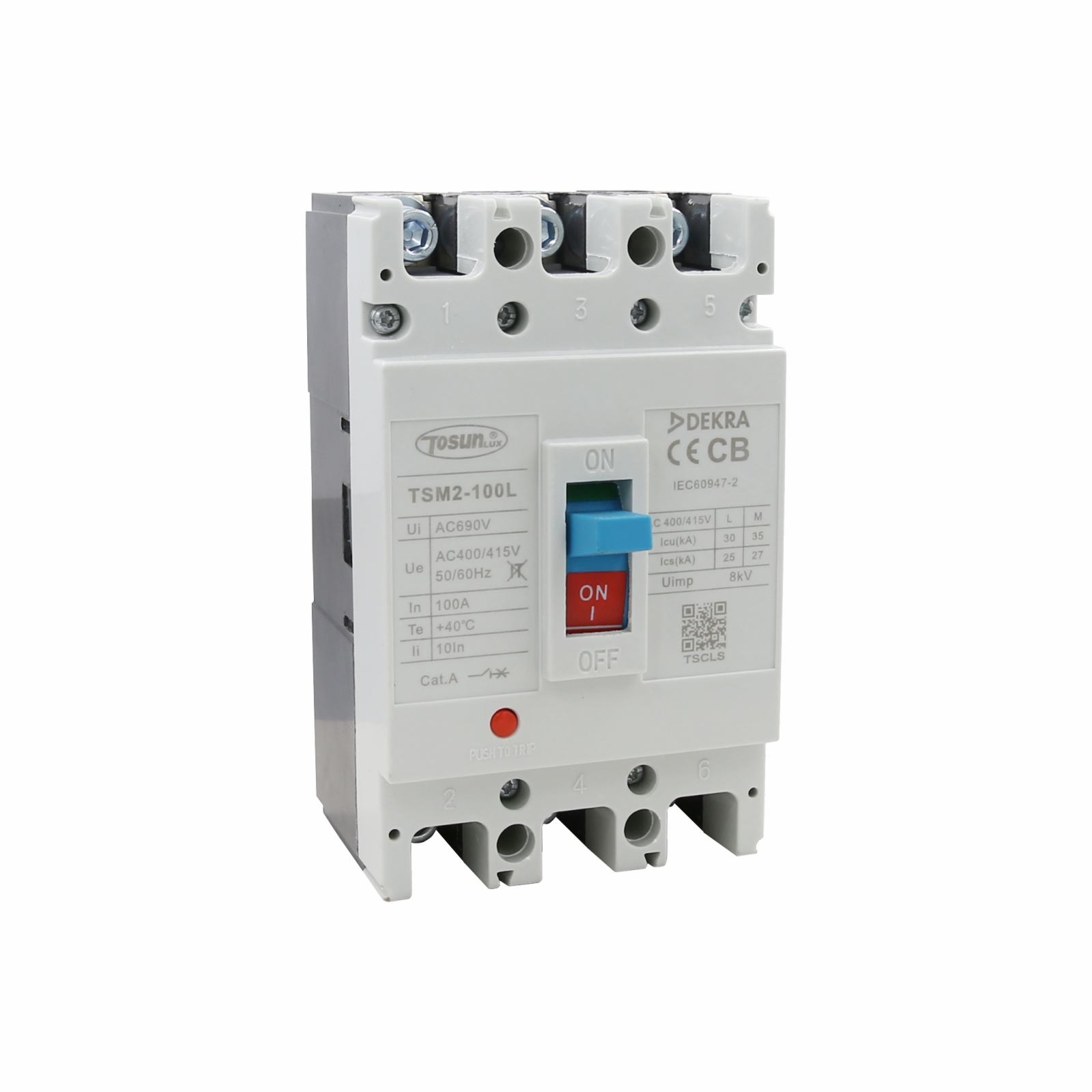
Os MCCBs podem lidar com uma grande corrente e um curto-circuito. Eles também possuem uma unidade de disparo móvel e um curto tempo de disparo. Alguns tipos possuem recursos ON/OFF remotos, o que os torna úteis em ambientes industriais onde choques elétricos são um perigo comum.
Diferente tipos de MCCBs são usados em diferentes configurações elétricas. Se você quiser saber mais sobre os diferentes tipos de MCCBs e como funcionam, continue lendo este artigo.

Como funciona um MCCB?
Os MCCBs são projetados para interromper automaticamente o fluxo de eletricidade quando uma falha é detectada. Eles consistem em vários componentes principais, como a unidade de disparo do relé, componentes sensíveis à temperatura, como a tira bimetálica, e contatos de arco. A combinação desses recursos permite que o MCCB responda a sobrecargas e curtos-circuitos desconectando rapidamente o circuito defeituoso, garantindo a segurança elétrica.
Unidade de disparo de relé: Este é o cérebro do MCCB. Ele inclui uma bobina eletromagnética e um êmbolo de disparo que ativa o disjuntor quando uma falha é detectada. O sistema pode disparar o disjuntor imediatamente ou com atraso, dependendo da gravidade da falha.
Tira Bimetálica: Este componente se expande quando a corrente excede o limite seguro, fazendo com que ele dobre e eventualmente desarme o disjuntor. Ele ajuda a proteger contra condições de sobrecarga prolongadas.
Contatos de arco: These contacts are responsible for interrupting the electrical arc that forms when the breaker trips. Their quick response minimises the risk of fire and further damage.
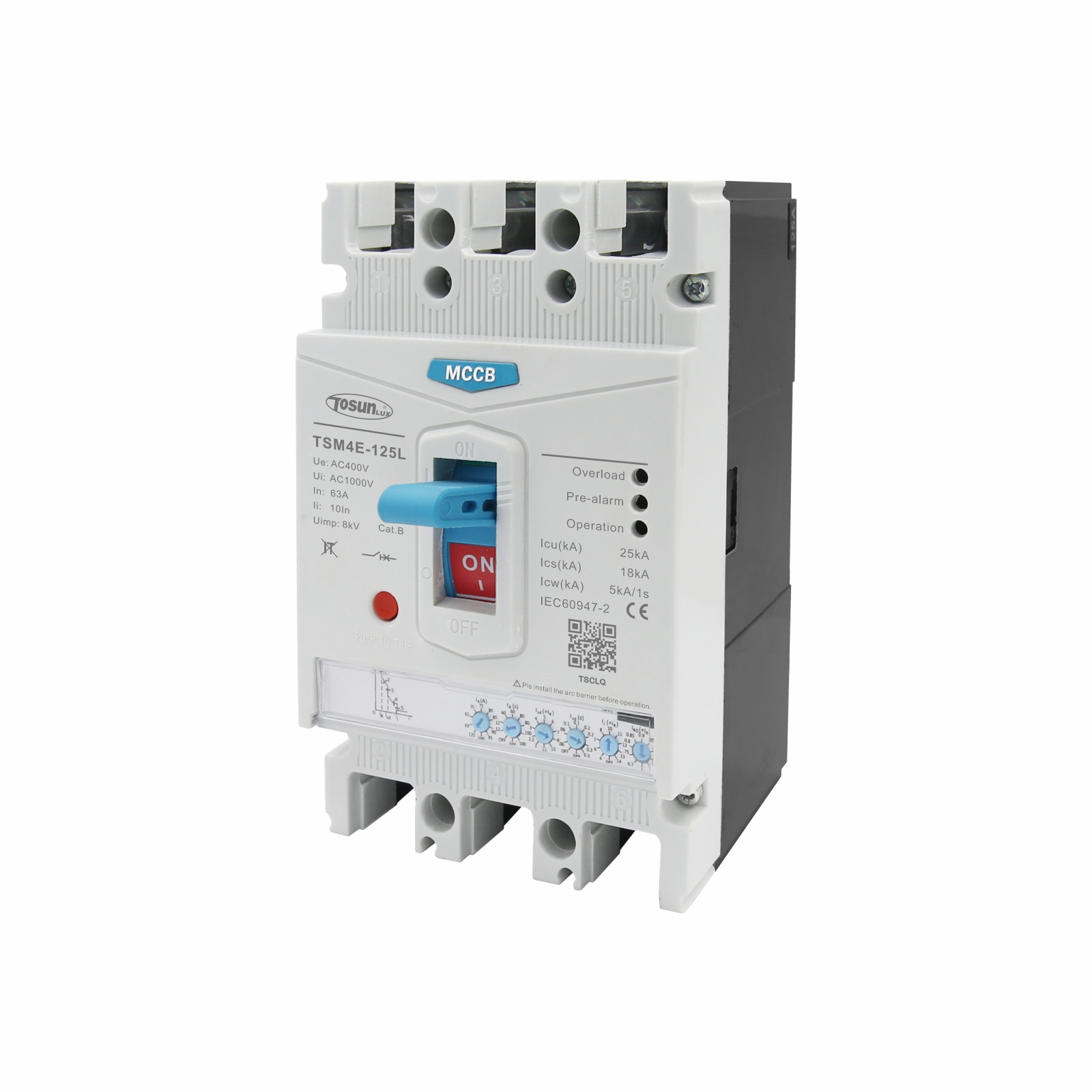
By using these components, MCCBs provide comprehensive protection in a wide range of electrical systems. For installations requiring adjustable tripping characteristics, the TSM4E Electronic Type Moulded Case Circuit Breaker allows engineers to fine-tune protection settings directly to the circuit’s specific load profile.

MCCB Type Comparison: Tripping Ranges and Applications at a Glance
Selecting the correct MCCB type begins with understanding how each one responds to overcurrent events. The table below summarises the five standard MCCB types, their tripping current ranges, and the applications they are best suited for. Use this as a quick reference before consulting the detailed descriptions that follow.
MCCB Type Comparison: Tripping Ranges and Applications at a Glance
Selecting the correct MCCB type begins with understanding how each one responds to overcurrent events. The table below summarises the five standard MCCB types, their tripping current ranges, and the applications they are best suited for. Use this as a quick reference before consulting the detailed descriptions that follow.
| Tipo | Trip range | Typical use case | Inrush tolerance |
|---|---|---|---|
| Tipo B | 3–5× rated current | Residential lighting, small appliances | Baixo |
| Tipo C | 5–10× rated current | Commercial & general industrial (motors, transformers) | Moderado |
| Tipo D | 10–20× rated current | Heavy industrial machinery, frequent start/stop | Alto |
| Tipo K | 8–12× rated current | Sensitive equipment, dual-cable circuits | Moderate–high |
| Tipo Z | 2–3× rated current | Telecom, data centers, sensitive electronics | Telecom, data centres, sensitive electronics |
Escolhendo o tipo certo de MCCB
A escolha do MCCB depende das necessidades elétricas específicas do sistema. Abaixo, exploramos os diferentes tipos de MCCBs, cada um projetado para lidar com diferentes níveis de corrente e tempo de resposta.
MCCBs tipo B
Type B moulded case circuit breakers are designed for residential and light commercial applications where inrush currents are low. They trip at 3 to 5 times the rated current, making them well-suited for protecting lighting circuits, socket outlets, and small household appliances. They trip at 3 to 5 times the rated current. These breakers are ideal for protecting circuits with low inrush currents, such as lighting and small appliances.
MCCBs tipo C
Type C MCCBs are the most widely used moulded case circuit breakers in general commercial and industrial settings. With a tripping range of 5 to 10 times the rated current, they handle moderate inrush currents from equipment such as motors, pumps, and transformers without nuisance tripping. They are suitable for general-purpose use in commercial and industrial applications. Type C breakers are commonly used in systems that involve equipment with moderate inrush currents, such as motors and transformers. The TSM2 Moulded Case Circuit Breaker is a dependable Type C-rated solution for commercial and light industrial installations, offering high performance overload and short circuit protection in a compact sealed casing.
MCCBs tipo D
Type D moulded case circuit breakers are engineered for heavy industrial environments where large machinery generates high inrush currents on startup. They trip at 10 to 20 times the rated current, providing reliable short circuit protection without interrupting normal operation of equipment like compressors, welding machines, and industrial presses. Type D breakers trip at 10 to 20 times the rated current and are best used in environments where substantial equipment starts and stops frequently. Their higher tolerance to inrush currents makes them ideal for heavy-duty operations. For demanding heavy-duty environments, the TSM9 Moulded Case Circuit Breaker provides robust protection against overload, short circuit, and under-voltage conditions in AC 50/60Hz industrial circuits.
MCCBs tipo K
Type K MCCBs offer enhanced protection for circuits carrying sensitive equipment or installations with two cables. Tripping at 8 to 12 times the rated current, they balance tolerance for surge currents with fast response to genuine faults, making them a preferred choice where standard Type C protection is insufficient.They trip at 8 to 12 times the rated current and are often used in settings where more sensitive equipment is involved. Type K breakers are ideal for providing enhanced protection in installations where surge currents are common.
MCCBs tipo Z
Type Z moulded case circuit breakers are the most sensitive type available, tripping at just 2 to 3 times the rated current. They are specifically designed to protect delicate electronic equipment in telecommunications infrastructure, data centres, and precision measurement systems where even minor overloads can cause irreversible damage. They are used to protect sensitive electronic equipment, making them suitable for applications like telecommunications and data centers. While they are not as versatile as other types, their ability to react to small overloads makes them an essential component in sensitive circuits.
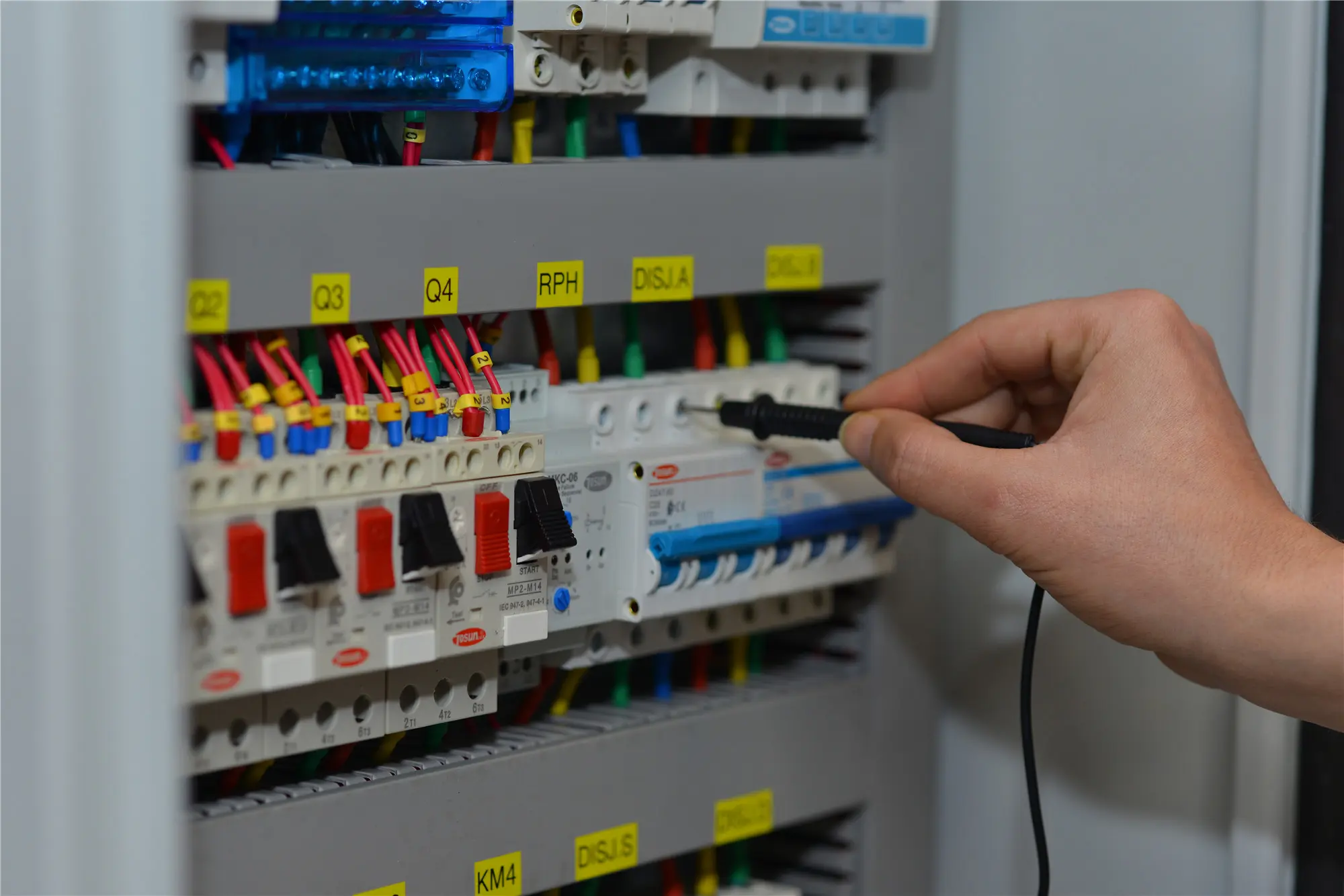
Soluções MCCB confiáveis a preços competitivos – Solicite seu orçamento hoje mesmo!
Principais considerações ao escolher um MCCB
Ao selecionar o MCCB certo, considere os seguintes fatores:
- Avaliação atual: Certifique-se de que a classificação de corrente do MCCB corresponda à carga esperada do circuito para evitar disparos desnecessários ou proteção insuficiente.
- Tipo de aplicação: Diferentes tipos de MCCBs se adaptam a diferentes ambientes, como residenciais, comerciais ou industriais. Entender sua aplicação ajudará você a escolher o MCCB apropriado.
- Tempo de resposta: Escolha um MCCB com o tempo de resposta correto para garantir que ele desarme prontamente durante condições de sobrecarga ou curto-circuito.
FAQ: Perguntas comuns sobre MCCBs
P1: Qual é a diferença entre MCCB e MCB?
A1: Embora ambos sirvam para proteger circuitos de sobrecargas e curtos-circuitos, os MCCBs podem lidar com correntes mais altas e são frequentemente usados em aplicações industriais. Os MCBs são geralmente usados em aplicações residenciais e comerciais leves.
P2: Um MCCB pode ser reiniciado?
A2: Sim, uma vez que um MCCB desarma, ele pode ser reiniciado manualmente. No entanto, é importante investigar a causa do desarme antes de reiniciar o disjuntor.
Q3: Com que frequência os MCCBs devem ser mantidos?
A3: A manutenção regular é essencial para garantir que o MCCB opere corretamente. Isso inclui limpeza, verificação de sinais de desgaste e verificação da função do mecanismo de disparo.
Q4: Para que é usado um MCCB Tipo D?
A4: MCCBs tipo D são projetados para aplicações industriais pesadas onde altas correntes de partida são comuns. Eles fornecem proteção para grandes máquinas e motores.
Q5: What is the typical lifespan of an MCCB?
A5: Under normal operating conditions, an MCCB can last 20 years or more. However, its mechanical and electrical life is also rated by the number of operations — typically between 10,000 and 25,000 switching cycles depending on the model and manufacturer. Regular maintenance, avoiding repeated short-circuit trips, and operating within the rated current range all contribute to a longer service life.
Q6: Can an MCCB be used as a main switch or isolator?
A6: Yes, many MCCBs are approved for use as a main switch or isolator when they carry the appropriate certification for that function. However, not all MCCBs are rated for isolation duty — always check the product datasheet to confirm whether the unit meets the isolation requirements specified in IEC 60947-2 or the relevant local standard before using it in this role.
Q7: What are the most common causes of MCCB failure?
A7: The most frequent causes include repeated exposure to short-circuit currents beyond the breaker’s rated capacity, mechanical wear from excessive switching operations, moisture or contaminant ingress into the casing, and loose terminal connections that cause localised overheating. Scheduled inspection and testing — including contact resistance checks and insulation resistance testing — help identify early signs of degradation before failure occurs.

Melhorando a segurança elétrica com MCCBs
Os MCCBs são indispensáveis para manter a segurança elétrica em uma ampla gama de aplicações. Ao selecionar o tipo certo para suas necessidades, você pode garantir a proteção dos circuitos elétricos e reduzir o risco de danos ou incêndio. A manutenção regular e a instalação adequada aumentam ainda mais a confiabilidade e a eficácia dos MCCBs.
For a detailed side-by-side breakdown, read our guide on MCCB vs MCB: key differences in current rating, application type, and protection level.
🔎 Leitura recomendada para tipos de MCCB e princípio de funcionamento
Os diferentes tipos de MCCB e como funciona
Aprenda sobre os vários tipos de disjuntores em caixa moldada (MCCBs), sua construção e como eles fornecem proteção em sistemas elétricos.
Vantagens de usar disjuntores de baixa tensão
Descubra por que os MCCBs são essenciais em sistemas de baixa tensão e como eles aumentam a segurança e a confiabilidade na distribuição elétrica.
Capacidade de interrupção vs. classificações de disjuntores
Entenda como avaliar as classificações e capacidades de interrupção do MCCB para escolher o nível de proteção correto para seu sistema.
Telefone: +86-577-88671000
E-mail: ceo@tosun.com
Skype: tosunelectric
Wechat: +86-139 6881 9286
WhatsApp: +86-139 0587 7291
Endereço: Sala No.1001 Wenzhou Fortune Center, Station Road, Wenzhou, China
SOLICITE UM ORÇAMENTO
Mande-nos uma mensagem pelo WhatsApp