 : +86-139 0587 7291
 angielski
 hiszpański
 rosyjski
 francuski
 العربية
 Portugalski w Brazylii
 Ukraiński
 turecki
 Polski
 Holenderski
 Włoski
 Indonezyjski
 indyjski
 Zachód słońca
 Zachód słońca
 Հայերեն
 ไทย
ไทย Mongoł
 Zakończenie
 Szkip
Szkip Grecki

Mechaniczny wyłącznik czasowy: rodzaje, sposób użycia i więcej
Table of Contents
Dźwignia kolankowa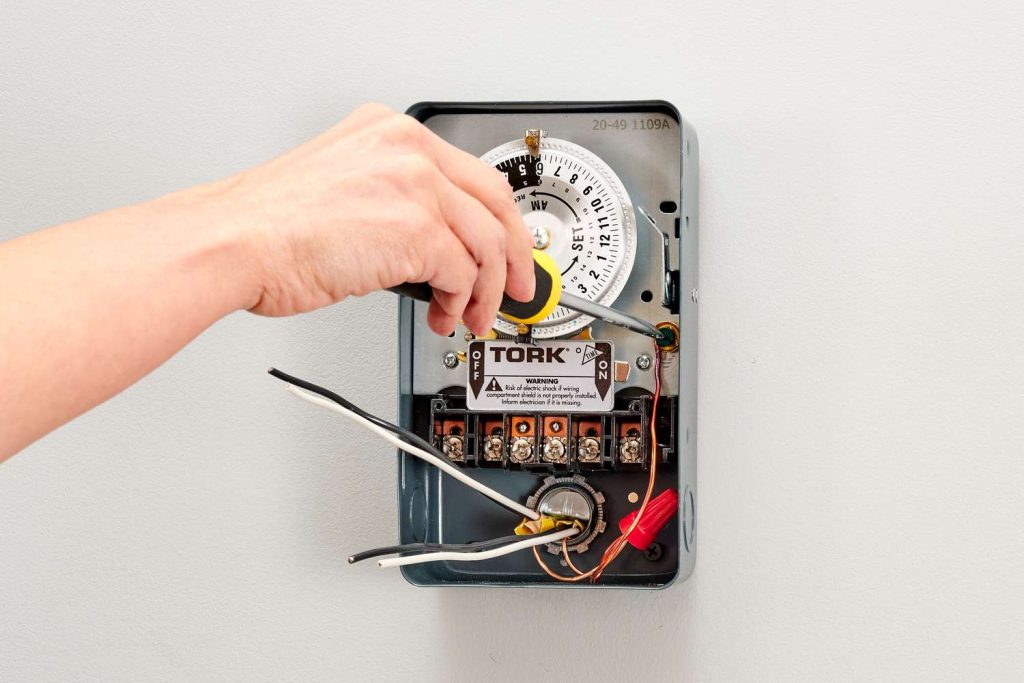
A mechanical timer switch, also referred to as an analog wyłącznik czasowy, to urządzenie czasowe, które wykorzystuje elementy fizyczne, takie jak sprężyny, koła zębate i silniki elektryczne, aby regulować dopływ energii do urządzenia elektrycznego.
Aby dowiedzieć się więcej o tym urządzeniu, zapoznaj się z poniższym praktycznym przewodnikiem.
Jak działa mechaniczny wyłącznik czasowy?
Działa w sposób analogowy i wykorzystuje mechanizmy zegarowe, aby określić, kiedy włączyć lub wyłączyć zasilanie.
Ten typ wyłącznika czasowego konfiguruje się ręcznie poprzez ustawienie pokrętła żądanego odstępu czasu włączania i wyłączania zasilania.
Chociaż mechaniczne wyłączniki czasowe są opłacalne i proste w konfiguracji, mogą być większe i wymagać więcej konserwacji ze względu na wykorzystanie ruchomych części.
Są powszechnie stosowane do zarządzania oświetleniem, sprzętem AGD i innymi urządzeniami elektrycznymi i stanowią ekonomiczny sposób automatyzacji różnych systemów.
Pomimo pojawienia się bardziej skomplikowanych cyfrowych i elektronicznych timerów, mechaniczne wyłączniki czasowe pozostają prostą i niedrogą opcją do nadzorowania oświetlenia i innych urządzeń.
Rodzaje timerów mechanicznych
Mechanical timer switches can be categorized by several factors. Understanding these types helps you choose the right model for your specific application.
By Time Cycle
- 24-Hour Mechanical Timer: The dial completes one full rotation every 24 hours. Best suited for daily routines that repeat the same pattern every day, such as turning porch lights on at dusk and off at dawn. Each pin typically represents a 15-minute block, giving you up to 96 ON/OFF segments per day.
- 7-Day Mechanical Timer: The dial completes one rotation every 7 days, allowing different schedules for weekdays and weekends. Ideal for commercial settings where operating hours vary — for example, a shop sign that needs to stay on later on Fridays and Saturdays.
By Installation Method
- Plug-In Timer: Plugs directly into a standard wall outlet. The appliance then plugs into the timer. No wiring required — ideal for residential use with lamps, fans, aquarium equipment, and small pumps.
- DIN Rail Mounted Timer: Installed inside an electrical panel on a standard DIN rail. Requires a hardwired connection by a qualified electrician. Used in commercial and industrial settings for controlling lighting circuits, irrigation systems, HVAC equipment, and motor-driven machinery.
By Number of Channels
- Single-Channel Timer: Controls one electrical circuit. Sufficient for most residential applications.
- Multi-Channel Timer: Controls two or more independent circuits from a single unit, each with its own ON/OFF schedule. Useful in commercial buildings where multiple systems (e.g., interior lights, exterior signs, ventilation) need independent timing.
By Contact Capacity
- Mechanical timers are rated by the maximum current they can safely switch. Residential plug-in models typically handle 10A–16A, suitable for lighting and small appliances. Industrial DIN rail models — like the TOSUNlux THC-15A — support up to 30A, capable of controlling heavier loads such as pumps, motors, and heating elements.
- When selecting a mechanical timer switch, match the timer’s rated amperage to your load. Connecting a device that draws more current than the timer’s rating will cause overheating and potential failure.
Gdzie stosuje się mechaniczne wyłączniki czasowe
Mechaniczne wyłączniki czasowe to wszechstronne urządzenia używane do różnych celów. Oto zestawienie ich zastosowań i korzyści:
- Sterowanie oświetleniem:Idealny do automatyzacji systemów oświetlenia wewnętrznego i zewnętrznego.
- Zarządzanie urządzeniami:Przydatne do zarządzania urządzeniami takimi jak piekarniki i pompy wodne.
- Sterowanie HVAC:Pomaga w efektywnej regulacji systemów ogrzewania i chłodzenia.
- Opłacalny:Zapewnia niedrogie rozwiązanie do automatyzacji systemów domowych i przemysłowych.
- Przyjazny dla użytkownika:Są znane ze swojej prostoty i łatwości użytkowania, dzięki czemu są dostępne dla każdego.
- Wytrzymały:Zbudowane z myślą o długim okresie użytkowania, oferujące niezawodność w różnych warunkach.
- Zastosowania przemysłowe i domowe:Nadaje się do zastosowań mieszkaniowych i przemysłowych.
Pomimo obecności cyfrowe wyłączniki czasowe, mechaniczne wyłączniki czasowe nadal cieszą się popularnością ze względu na przystępną cenę i prostą obsługę.
Jak używać mechanicznych wyłączników czasowych
Aby wdrożyć timer lub przełącznik analogowy, potrzebny jest istniejący system, niezależnie czy na skalę przemysłową czy prywatną.
Przykładami systemów osobistych są m.in. systemy regulujące pracę silników, filtrów i świateł w akwarium.
Podczas gdy modele cyfrowe pozwalają na precyzyjną regulację co do sekundy, mechaniczne zegary analogowe są przyjazne dla użytkownika, wskazując punkt początkowy i końcowy za pomocą nacięć na okrągłej konstrukcji.
W przełącznikach mechanicznych mogą występować odchylenia + lub – 5 minut.
W przypadku modeli cyfrowych możliwe są plany tygodniowe, dzienne i godzinowe z precyzyjnymi ustawieniami minutowymi, co zapewnia szczegółową kontrolę.
Wybór odpowiedniego typu i modelu timera — cyfrowego lub analogowego — zależy od celu i konkretnych wymagań danego zadania.
Jak ustawić mechaniczny wyłącznik czasowy
Aby skonfigurować mechaniczny wyłącznik czasowy, wykonaj następujące ogólne czynności:
- Podłącz timer do ściany i urządzenie do timera.
- Ustaw pokrętłem aktualną godzinę.
- Press down the pins for the times you want the device to activate, and keep them pulled out for when you want the device to deactivate.
- Jeżeli to możliwe, ustaw timer w trybie „Wł.-Auto.-Wył.”.
- Przełącz przycisk przełącznika ręcznego na ustawienie „Timer”.
Podane kroki mogą się nieznacznie różnić w zależności od konkretnego modelu mechanicznego wyłącznika czasowego.
Ważny: Aby uzyskać dokładne wskazówki, należy zawsze zapoznać się z instrukcją producenta.
Jak naprawić mechaniczny wyłącznik czasowy, który nie działa
Aby rozwiązać problemy z niesprawnym mechanicznym wyłącznikiem czasowym, skorzystaj z poniższych ogólnych kroków rozwiązywania problemów uzyskanych z wyników wyszukiwania:
- Krok 1: Sprawdź ustawienia timera: Sprawdź, czy timer jest ustawiony prawidłowo, gdyż nieprawidłowe ustawienia mogą prowadzić do nieoczekiwanych awarii.
- Krok 2: Sprawdź okablowanie timera:Zapewnij prawidłowe okablowanie i dystrybucję zasilania, upewniając się, że zaciski są luźne i mogą zakłócać przepływ prądu.
- Krok 3: Sprawdź, czy elementy nie są uszkodzone lub zablokowane: Sprawdź timer pod kątem uszkodzonych kół zębatych lub sprężyn, spowodowanych czynnikami takimi jak wiek, brud lub zanieczyszczenia. Nasmaruj zablokowane koła zębate i wymień uszkodzone, jeśli to konieczne.
- Krok 4: Weryfikacja zasilania i bezpieczników: Sprawdź, czy zasilanie jest odpowiednie i czy bezpiecznik nie jest przepalony, ponieważ zbyt niskie napięcie lub przepalony bezpiecznik może mieć wpływ na działanie timera.
- Krok 5: Wymiana baterii: Jeżeli timer korzysta z baterii, wymień je, gdy wyświetlacz stanie się niewyraźny lub timer nie działa prawidłowo.
- Krok 6: Sprawdź ustawienie trymera i przekładni: Sprawdź wyzwalacze i przekładnie pod kątem uszkodzeń lub nieprawidłowego ustawienia. Wyczyść przekładnie i upewnij się, że wyzwalacze są prawidłowo ustawione, aby zapewnić dokładny czas włączania/wyłączania.
Zawsze należy zapoznać się z instrukcją producenta w celu uzyskania szczegółowych informacji na temat rozwiązywania problemów, ponieważ procedura może się różnić w zależności od modelu mechanicznego wyłącznika czasowego.
Najważniejsze wnioski
Analogowe lub mechaniczne timery to urządzenia, które zarządzają pracą maszyn lub systemów elektrycznych, włączając je i wyłączając zgodnie z ustalonym harmonogramem.
Głównym celem jest oszczędzanie energii, co sprawia, że timery są praktycznym wyborem.
Wyłączając urządzenia zużywające energię, gdy nie są potrzebne, nie tylko oszczędzasz prąd, ale również zwiększasz wygodę użytkowania.
Takie przemyślane podejście do sterowania pracą urządzeń przyczynia się zarówno do efektywności energetycznej, jak i profesjonalizmu systemu.
Mechanical Timer Switch vs Digital Timer Switch
Mechanical Timer Switch vs Digital Timer Switch
Both mechanical (analog) and digital timer switches serve the same fundamental purpose — automating when electrical devices turn on and off. However, they differ significantly in how they achieve this. Here is a practical comparison to help you choose the right type.
| Funkcja | Mechaniczny wyłącznik czasowy | Digital Timer Switch |
| Timing Accuracy | ±5 minutes | ±1 second |
| Programming Method | Push physical pins on a dial | Button-based, LCD screen interface |
| Minimum Time Interval | 15 minutes (per pin) | 1 minute or 1 second |
| Number of Programs | Simple daily schedules, budget installations, and environments without reliable power | 8–20+ independent programs |
| Weekday/Weekend Scheduling | Only on 7-day models | Standard on most models |
| Power Outage Behavior | Schedule shifts by outage duration (no battery) | Battery backup retains schedule (typically 3V lithium) |
| Price Range | $5 – $20 (residential); $15 – $50 (industrial) | $15 – $60 (residential); $30 – $120 (industrial) |
| Długość życia | 5–10 years (moving parts wear over time) | 8–15 years (no moving parts) |
| Konserwacja | Periodic cleaning and lubrication of gears | Minimal; battery replacement every 3–5 years |
| Hałas | Faint ticking/clicking from motor and gears | Silent |
| Ease of Setup | Very easy — push pins, no manual needed | Moderate — requires reading the manual to program |
| Najlepszy dla | Simple daily schedules, budget installations, environments without reliable power | Complex multi-program schedules, second-level precision, setups with frequent power outages |
When to Choose Mechanical: If your application follows a simple, repeating daily pattern (e.g., lights on at 6 PM, off at 11 PM every day) and you want the lowest upfront cost with zero programming complexity, a mechanical timer is the practical choice.
When to Choose Digital: If you need different schedules for different days of the week, second-level precision, or the schedule must survive power outages without resetting, a digital timer is worth the extra cost.
TOSUNlux offers both types. The THC-15A digital programmable timer supports 24-hour / 7-day scheduling with a contact capacity of up to 30A, making it suitable for both light and heavy-duty applications.
Rekomendacja produktu

TOSUNlux THC-15A Programmable Timer Switch
Based on the requirements discussed throughout this guide, the TOSUNlux THC-15A is a versatile option that bridges the gap between simple mechanical timers and fully programmable digital controllers.
Key Specifications:
| Specyfikacja | Detail |
| Timer Type | Digital programmable |
| Time Cycle | 24-hour and 7-day scheduling |
| Pojemność kontaktowa | 16A – 30A |
| Minimum Program Interval | 1 minute |
| Number of ON/OFF Programs | Up to 17 per day |
| Montowanie | DIN rail (35mm standard) |
| Power Outage Protection | Built-in lithium battery backup |
| Wyświetlacz | LCD with backlight |
Why It Fits Common Use Cases
- For lighting control: Supports separate weekday and weekend schedules, eliminating the manual adjustment needed with basic mechanical timers.
- For industrial motor control: The 30A contact capacity handles pumps, fans, and motors without requiring an external contactor for loads under 30A.
- For environments with frequent power outages: The battery backup retains your programmed schedule, so you do not need to reset the timer after every blackout.
TOSUNlux also manufactures circuit breakers, contactors, isolating switches, and distribution boards. Visit tosunlux.eu to request a quotation or browse the full product catalog.
Często zadawane pytania
Q1: How long does a mechanical timer switch last?
A well-maintained mechanical timer switch typically lasts 5 to 10 years. Lifespan depends on usage frequency, environmental conditions, and regular maintenance of moving parts like gears and springs. Timers used in dusty or humid environments may require more frequent cleaning to reach their full lifespan.
Q2: Can I use a mechanical timer switch outdoors?
Yes, but you need an outdoor-rated model with an appropriate IP rating — typically IP44 or higher — to protect against moisture and dust. Always install outdoor timers inside a weatherproof enclosure, and avoid direct exposure to rain or sprinkler spray.
Q3: What is the difference between a mechanical and a digital timer switch?
Mechanical timer switches use physical gears and springs with ±5-minute accuracy, while digital timers use electronic circuits for precision down to the second. Mechanical timers are more affordable and easier to set up, while digital timers offer more programming flexibility and battery-backed memory that survives power outages.
Q4: Why is my mechanical timer switch not turning off?
Common causes include stuck or misaligned pins (trippers), worn-out gears, or a faulty switch contact. First check that the pins for OFF periods are fully in the raised position. Then inspect the mechanism for debris or gear damage. If the timer motor is running but the switch does not disengage, the internal contact may be welded shut from switching high-current loads — in this case, replace the timer.
Q5: How do I reset a mechanical timer switch?
Pull all pins (trippers) to the OFF (raised) position, then rotate the dial clockwise until the arrow aligns with the correct current time. After that, push down only the pins for your desired ON periods. Finally, set the mode switch to “Auto” or “Timer” to activate the schedule.
Q6: Can a mechanical timer switch save electricity?
Yes. By automatically turning off devices when they are not needed — such as lights, pumps, and heaters — a mechanical timer can reduce energy waste by 10% to 30%, depending on the application and how many hours per day the device was previously running unnecessarily.
Q7: What is the maximum load for a mechanical timer switch?
Most residential plug-in mechanical timers handle 10A to 16A (approximately 1,150W to 1,840W at 115V, or 2,200W to 3,520W at 220V). Industrial DIN rail models like the TOSUNlux THC-15A support up to 30A. Always check the timer’s rated current on its label before connecting any appliance, and never exceed the stated capacity.

Telefon: +86-577-88671000
E-mail: [email protected]
Skype: tosunelectric
WeChat: +86-139 6881 9286
WhatsApp: +86-139 0587 7291
Adres: Pokój nr 1001 Wenzhou Fortune Center, Station Road, Wenzhou, Chiny
POPROŚ O OFERTĘ
Napisz do nas na WhatsAppie