 : +86-139 0587 7291
 Inglese
 Spagnolo
 Russo
Russo Francese
 arabo
arabo Portoghese del Brasile
 Ucraino
 Turco
Turco Polacco
 Paesi Bassi
 Italiano
 Bahasa Indonesia
 Hindi
Hindi اردو
اردو sfacciato
 Հայերեն
 ไทย
ไทย Mongolo
 Fascino
 Squalo
 Ellenico

Interruttore timer meccanico: tipi, come utilizzare e altro
Indice dei contenuti
Attiva/disattiva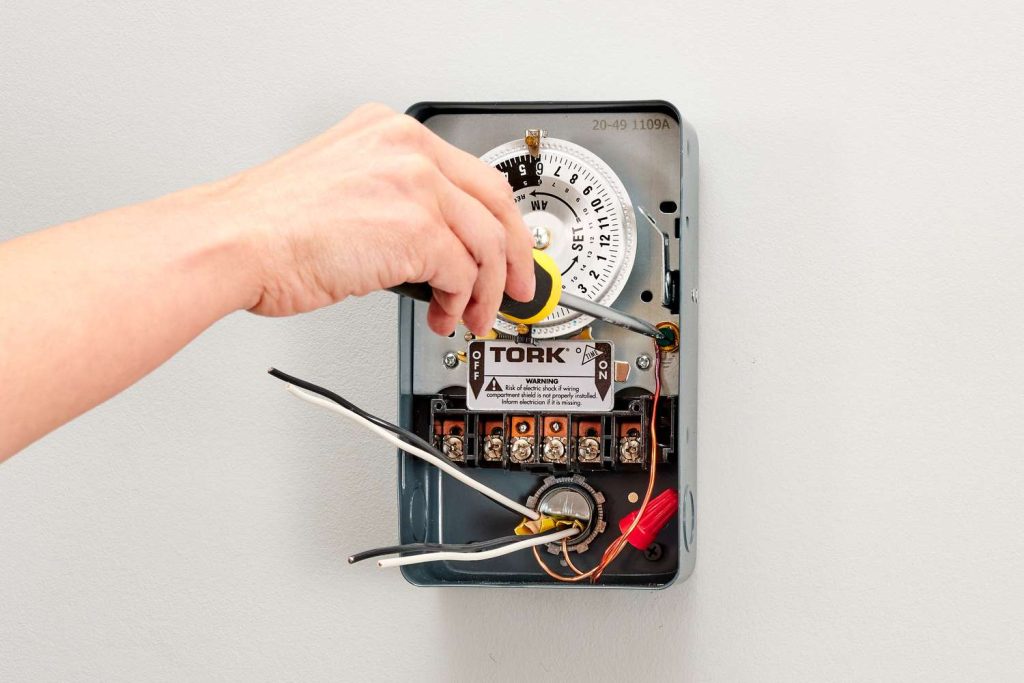
A mechanical timer switch, also referred to as an analog interruttore a tempo, è un dispositivo di temporizzazione che impiega componenti fisici come molle, ingranaggi e motori elettrici per regolare l'alimentazione di un dispositivo elettrico.
Per saperne di più su questo dispositivo, ecco una guida pratica per iniziare.
Come funziona un interruttore temporizzato meccanico?
Funzionando in modo analogico, sfrutta meccanismi di orologeria per determinare quando accendere e spegnere l'alimentazione.
Questo tipo di timer viene configurato manualmente regolando una manopola per impostare l'intervallo di tempo desiderato per l'accensione o lo spegnimento.
Sebbene gli interruttori temporizzati meccanici siano convenienti e semplici da configurare, possono essere più grandi e richiedere maggiore manutenzione a causa dell'utilizzo di parti mobili.
Comunemente utilizzati per gestire l'illuminazione, gli elettrodomestici e altri dispositivi elettrici, rappresentano un mezzo economico per automatizzare vari sistemi.
Nonostante l'avvento di timer digitali ed elettronici più complessi, gli interruttori temporizzati meccanici restano una soluzione semplice ed economica per controllare luci e altri dispositivi.
Tipi di timer meccanici
Mechanical timer switches can be categorized by several factors. Understanding these types helps you choose the right model for your specific application.
By Time Cycle
- 24-Hour Mechanical Timer: The dial completes one full rotation every 24 hours. Best suited for daily routines that repeat the same pattern every day, such as turning porch lights on at dusk and off at dawn. Each pin typically represents a 15-minute block, giving you up to 96 ON/OFF segments per day.
- 7-Day Mechanical Timer: The dial completes one rotation every 7 days, allowing different schedules for weekdays and weekends. Ideal for commercial settings where operating hours vary — for example, a shop sign that needs to stay on later on Fridays and Saturdays.
By Installation Method
- Plug-In Timer: Plugs directly into a standard wall outlet. The appliance then plugs into the timer. No wiring required — ideal for residential use with lamps, fans, aquarium equipment, and small pumps.
- DIN Rail Mounted Timer: Installed inside an electrical panel on a standard DIN rail. Requires a hardwired connection by a qualified electrician. Used in commercial and industrial settings for controlling lighting circuits, irrigation systems, HVAC equipment, and motor-driven machinery.
By Number of Channels
- Single-Channel Timer: Controls one electrical circuit. Sufficient for most residential applications.
- Multi-Channel Timer: Controls two or more independent circuits from a single unit, each with its own ON/OFF schedule. Useful in commercial buildings where multiple systems (e.g., interior lights, exterior signs, ventilation) need independent timing.
By Contact Capacity
- Mechanical timers are rated by the maximum current they can safely switch. Residential plug-in models typically handle 10A–16A, suitable for lighting and small appliances. Industrial DIN rail models — like the TOSUNlux THC-15A — support up to 30A, capable of controlling heavier loads such as pumps, motors, and heating elements.
- When selecting a mechanical timer switch, match the timer’s rated amperage to your load. Connecting a device that draws more current than the timer’s rating will cause overheating and potential failure.
Dove vengono utilizzati gli interruttori temporizzati meccanici
Gli interruttori meccanici a timer sono dispositivi versatili utilizzati per vari scopi. Ecco una ripartizione dei loro usi e vantaggi:
- Controllo dell'illuminazione: Ideale per automatizzare sistemi di illuminazione interna ed esterna.
- Gestione degli elettrodomestici: Utile per gestire elettrodomestici come forni e pompe dell'acqua.
- Controlli HVAC: Aiuta a regolare in modo efficiente i sistemi di riscaldamento e raffreddamento.
- Conveniente: Offre una soluzione conveniente per l'automazione di sistemi domestici e industriali.
- Facile da usare: noti per la loro semplicità e facilità d'uso, che li rendono accessibili a tutti.
- Durevole: Costruito per durare, offre affidabilità in vari contesti.
- Uso industriale e domestico: Adatto sia per applicazioni residenziali che industriali.
Nonostante la presenza di interruttori temporizzati digitali, gli interruttori temporizzati meccanici continuano a essere una scelta popolare grazie alla loro convenienza e alla semplicità di funzionamento.
Come utilizzare gli interruttori temporizzati meccanici
Per implementare un timer o un interruttore analogico, è necessario un sistema esistente, sia su scala industriale che personale.
Esempi di sistemi personali includono la regolazione dei motori, dei filtri e delle luci dell'acquario.
Mentre i modelli digitali consentono regolazioni precise al secondo, gli orologi meccanici analogici sono facili da usare e indicano i punti di inizio e fine con tacche su una struttura circolare.
Negli interruttori meccanici possono verificarsi deviazioni di + o – 5 minuti.
Per i modelli digitali è possibile impostare pianificazioni settimanali, giornaliere e orarie con impostazioni precise ai minuti, garantendo un controllo dettagliato.
La scelta del tipo e del modello di timer più adatti (digitale o analogico) dipende dallo scopo e dai requisiti specifici del compito da svolgere.
Come impostare un interruttore timer meccanico
Per configurare un timer meccanico, seguire questi passaggi generali:
- Collegare il timer alla parete e l'elettrodomestico al timer.
- Regolare la manopola per impostare l'ora corrente.
- Press down the pins for the times you want the device to activate, and keep them pulled out for when you want the device to deactivate.
- Se disponibile, impostare il timer sulla modalità "On-Auto-Off".
- Impostare il pulsante dell'interruttore manuale sulla posizione "Timer".
Questi passaggi potrebbero variare leggermente in base al modello specifico dell'interruttore temporizzato meccanico.
Importante: Per indicazioni precise, consultare sempre le istruzioni del produttore.
Come riparare un interruttore del timer meccanico che non funziona
Per risolvere i problemi con un interruttore meccanico del timer malfunzionante, prendi in considerazione questi passaggi generali per la risoluzione dei problemi derivati dai risultati della ricerca:
- Passaggio 1: verifica delle impostazioni del timer: Verificare che il timer sia impostato correttamente, poiché impostazioni errate possono causare malfunzionamenti imprevisti.
- Passaggio 2: controllare il cablaggio del timer: Garantire il corretto cablaggio e la distribuzione dell'alimentazione, riparando i terminali allentati che potrebbero interrompere il flusso elettrico.
- Fase 3: ispezionare i componenti rotti o bloccati: Esaminare il timer per ingranaggi o molle danneggiati, causati da fattori come età, sporcizia o detriti. Lubrificare gli ingranaggi bloccati e sostituire quelli rotti se necessario.
- Fase 4: Verifica dell'alimentazione e del fusibile: Verificare che l'alimentazione elettrica sia adeguata e che il fusibile non sia bruciato, poiché una tensione insufficiente o un fusibile bruciato possono compromettere il funzionamento del timer.
- Fase 5: Sostituzione della batteria: Se il timer funziona a batterie, sostituirle se il display non è chiaro o se il timer non funziona correttamente.
- Fase 6: esaminare l'allineamento del tripper e degli ingranaggi: Ispezionare i tripper e gli ingranaggi per danni o disallineamenti. Pulire gli ingranaggi e assicurare il corretto allineamento dei tripper per una temporizzazione on/off precisa.
Per una procedura completa di risoluzione dei problemi, consultare sempre le istruzioni specifiche del produttore, poiché la procedura può variare a seconda del modello di interruttore temporizzato meccanico.
Conclusione chiave
I timer analogici o meccanici sono dispositivi che gestiscono il funzionamento di macchine o sistemi elettrici, accendendoli e spegnendoli in base a una programmazione prestabilita.
L'obiettivo primario è il risparmio energetico, per cui i timer rappresentano una scelta pratica.
Disattivando i dispositivi che consumano energia quando non sono necessari, non solo risparmi elettricità, ma aumenti anche la comodità per l'utente.
Questo approccio deliberato al controllo del funzionamento del dispositivo contribuisce sia all'efficienza energetica che alla professionalità del sistema.
Mechanical Timer Switch vs Digital Timer Switch
Mechanical Timer Switch vs Digital Timer Switch
Both mechanical (analog) and digital timer switches serve the same fundamental purpose — automating when electrical devices turn on and off. However, they differ significantly in how they achieve this. Here is a practical comparison to help you choose the right type.
| Caratteristica | Interruttore temporizzatore meccanico | Digital Timer Switch |
| Timing Accuracy | ±5 minutes | ±1 second |
| Programming Method | Push physical pins on a dial | Button-based, LCD screen interface |
| Minimum Time Interval | 15 minutes (per pin) | 1 minute or 1 second |
| Number of Programs | Simple daily schedules, budget installations, and environments without reliable power | 8–20+ independent programs |
| Weekday/Weekend Scheduling | Only on 7-day models | Standard on most models |
| Power Outage Behavior | Schedule shifts by outage duration (no battery) | Battery backup retains schedule (typically 3V lithium) |
| Price Range | $5 – $20 (residential); $15 – $50 (industrial) | $15 – $60 (residential); $30 – $120 (industrial) |
| Durata | 5–10 years (moving parts wear over time) | 8–15 years (no moving parts) |
| Manutenzione | Periodic cleaning and lubrication of gears | Minimal; battery replacement every 3–5 years |
| Rumore | Faint ticking/clicking from motor and gears | Silent |
| Ease of Setup | Very easy — push pins, no manual needed | Moderate — requires reading the manual to program |
| Ideale per | Simple daily schedules, budget installations, environments without reliable power | Complex multi-program schedules, second-level precision, setups with frequent power outages |
When to Choose Mechanical: If your application follows a simple, repeating daily pattern (e.g., lights on at 6 PM, off at 11 PM every day) and you want the lowest upfront cost with zero programming complexity, a mechanical timer is the practical choice.
When to Choose Digital: If you need different schedules for different days of the week, second-level precision, or the schedule must survive power outages without resetting, a digital timer is worth the extra cost.
TOSUNlux offers both types. The THC-15A digital programmable timer supports 24-hour / 7-day scheduling with a contact capacity of up to 30A, making it suitable for both light and heavy-duty applications.
Raccomandazione del prodotto

TOSUNlux THC-15A Programmable Timer Switch
Based on the requirements discussed throughout this guide, the TOSUNlux THC-15A is a versatile option that bridges the gap between simple mechanical timers and fully programmable digital controllers.
Key Specifications:
| Specificazione | Detail |
| Timer Type | Digital programmable |
| Time Cycle | 24-hour and 7-day scheduling |
| Capacità di contatto | 16A – 30A |
| Minimum Program Interval | 1 minute |
| Number of ON/OFF Programs | Up to 17 per day |
| Montaggio | DIN rail (35mm standard) |
| Power Outage Protection | Built-in lithium battery backup |
| Display | LCD with backlight |
Why It Fits Common Use Cases
- For lighting control: Supports separate weekday and weekend schedules, eliminating the manual adjustment needed with basic mechanical timers.
- For industrial motor control: The 30A contact capacity handles pumps, fans, and motors without requiring an external contactor for loads under 30A.
- For environments with frequent power outages: The battery backup retains your programmed schedule, so you do not need to reset the timer after every blackout.
TOSUNlux also manufactures circuit breakers, contactors, isolating switches, and distribution boards. Visit tosunlux.eu to request a quotation or browse the full product catalog.
Domande frequenti
Q1: How long does a mechanical timer switch last?
A well-maintained mechanical timer switch typically lasts 5 to 10 years. Lifespan depends on usage frequency, environmental conditions, and regular maintenance of moving parts like gears and springs. Timers used in dusty or humid environments may require more frequent cleaning to reach their full lifespan.
Q2: Can I use a mechanical timer switch outdoors?
Yes, but you need an outdoor-rated model with an appropriate IP rating — typically IP44 or higher — to protect against moisture and dust. Always install outdoor timers inside a weatherproof enclosure, and avoid direct exposure to rain or sprinkler spray.
Q3: What is the difference between a mechanical and a digital timer switch?
Mechanical timer switches use physical gears and springs with ±5-minute accuracy, while digital timers use electronic circuits for precision down to the second. Mechanical timers are more affordable and easier to set up, while digital timers offer more programming flexibility and battery-backed memory that survives power outages.
Q4: Why is my mechanical timer switch not turning off?
Common causes include stuck or misaligned pins (trippers), worn-out gears, or a faulty switch contact. First check that the pins for OFF periods are fully in the raised position. Then inspect the mechanism for debris or gear damage. If the timer motor is running but the switch does not disengage, the internal contact may be welded shut from switching high-current loads — in this case, replace the timer.
Q5: How do I reset a mechanical timer switch?
Pull all pins (trippers) to the OFF (raised) position, then rotate the dial clockwise until the arrow aligns with the correct current time. After that, push down only the pins for your desired ON periods. Finally, set the mode switch to “Auto” or “Timer” to activate the schedule.
Q6: Can a mechanical timer switch save electricity?
Yes. By automatically turning off devices when they are not needed — such as lights, pumps, and heaters — a mechanical timer can reduce energy waste by 10% to 30%, depending on the application and how many hours per day the device was previously running unnecessarily.
Q7: What is the maximum load for a mechanical timer switch?
Most residential plug-in mechanical timers handle 10A to 16A (approximately 1,150W to 1,840W at 115V, or 2,200W to 3,520W at 220V). Industrial DIN rail models like the TOSUNlux THC-15A support up to 30A. Always check the timer’s rated current on its label before connecting any appliance, and never exceed the stated capacity.
Tel: +86-577-88671000
E-mail: ceo@tosun.com
Skype: tosunelectric
WeChat: +86-139 6881 9286
WhatsApp: +86-139 0587 7291
Indirizzo: Stanza n. 1001 Wenzhou Fortune Center, Station Road, Wenzhou, Cina
RICHIEDI UN PREVENTIVO
Mandaci un messaggio su WhatsApp