 : +86-139 0587 7291
 Inglés
 Español
 Ruso
Ruso Francés
 árabe
árabe Portugués de Brasil
 Ucraniana
 Turco
Turco Polaco
 Países Bajos
 italiano
 Lenguaje indonesio
 Hindi
Hindi árabe
árabe አማርኛ
አማርኛ Հայերեն
 Sí
Sí Mongol
 فارسی
فارسی Chisme
 Elogio

Interruptor temporizador mecánico: tipos, cómo utilizarlo y más
Tabla de contenidos
Palanca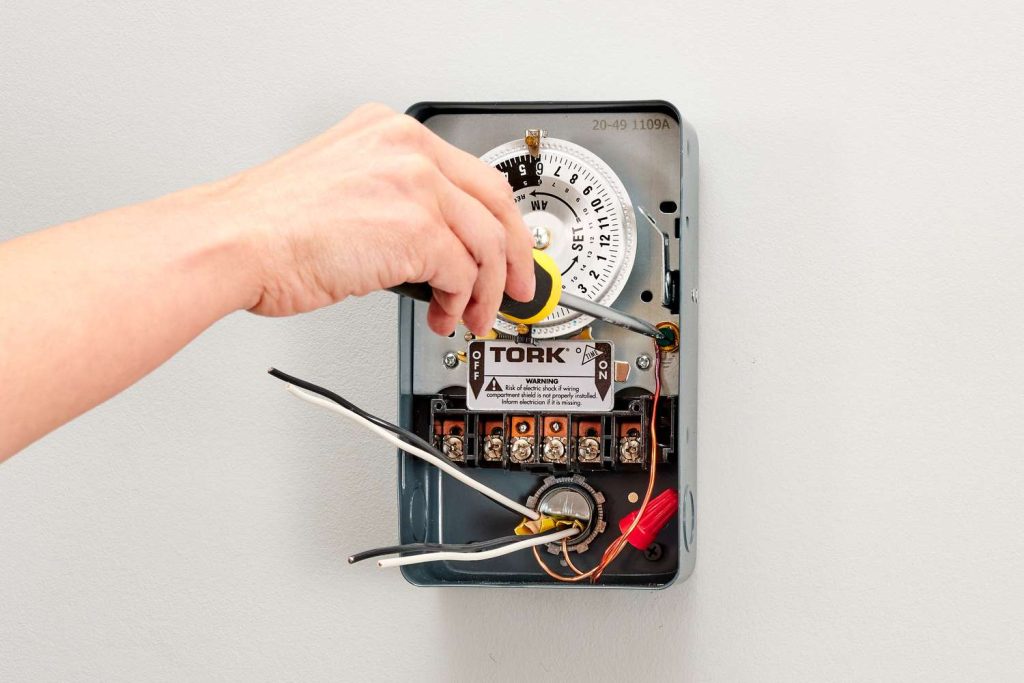
A mechanical timer switch, also referred to as an analog interruptor temporizador, es un dispositivo de sincronización que emplea componentes físicos como resortes, engranajes y motores eléctricos para regular el suministro de energía a un dispositivo eléctrico.
Para saber más sobre este dispositivo, aquí tienes una guía práctica para empezar.
¿Cómo funciona un temporizador mecánico?
Operando de manera analógica, utiliza mecanismos de relojería para determinar cuándo encender y apagar la alimentación.
Este tipo de interruptor temporizador se configura manualmente ajustando una perilla para establecer el intervalo de tiempo deseado para encender o apagar.
Aunque los temporizadores mecánicos son rentables y fáciles de configurar, pueden ser más grandes y requerir más mantenimiento debido a la utilización de piezas móviles.
Comúnmente empleados para gestionar iluminación, electrodomésticos y otros dispositivos eléctricos, ofrecen un medio económico para automatizar varios sistemas.
A pesar de la aparición de temporizadores digitales y electrónicos más complejos, los temporizadores mecánicos siguen siendo una opción sencilla y económica para supervisar las luces y otros dispositivos.
Tipos de temporizadores mecánicos
Mechanical timer switches can be categorized by several factors. Understanding these types helps you choose the right model for your specific application.
By Time Cycle
- 24-Hour Mechanical Timer: The dial completes one full rotation every 24 hours. Best suited for daily routines that repeat the same pattern every day, such as turning porch lights on at dusk and off at dawn. Each pin typically represents a 15-minute block, giving you up to 96 ON/OFF segments per day.
- 7-Day Mechanical Timer: The dial completes one rotation every 7 days, allowing different schedules for weekdays and weekends. Ideal for commercial settings where operating hours vary — for example, a shop sign that needs to stay on later on Fridays and Saturdays.
By Installation Method
- Plug-In Timer: Plugs directly into a standard wall outlet. The appliance then plugs into the timer. No wiring required — ideal for residential use with lamps, fans, aquarium equipment, and small pumps.
- DIN Rail Mounted Timer: Installed inside an electrical panel on a standard DIN rail. Requires a hardwired connection by a qualified electrician. Used in commercial and industrial settings for controlling lighting circuits, irrigation systems, HVAC equipment, and motor-driven machinery.
By Number of Channels
- Single-Channel Timer: Controls one electrical circuit. Sufficient for most residential applications.
- Multi-Channel Timer: Controls two or more independent circuits from a single unit, each with its own ON/OFF schedule. Useful in commercial buildings where multiple systems (e.g., interior lights, exterior signs, ventilation) need independent timing.
By Contact Capacity
- Mechanical timers are rated by the maximum current they can safely switch. Residential plug-in models typically handle 10A–16A, suitable for lighting and small appliances. Industrial DIN rail models — like the TOSUNlux THC-15A — support up to 30A, capable of controlling heavier loads such as pumps, motors, and heating elements.
- When selecting a mechanical timer switch, match the timer’s rated amperage to your load. Connecting a device that draws more current than the timer’s rating will cause overheating and potential failure.
Dónde se utilizan interruptores temporizadores mecánicos
Los temporizadores mecánicos son dispositivos versátiles que se utilizan para diversos fines. A continuación, se detallan sus usos y beneficios:
- Control de iluminación:Ideal para automatizar sistemas de iluminación interior y exterior.
- Gestión de electrodomésticos:Útil para administrar electrodomésticos como hornos y bombas de agua.
- Controles de HVAC:Ayuda a regular los sistemas de calefacción y refrigeración de manera eficiente.
- Económico:Proporciona una solución asequible para automatizar sistemas domésticos e industriales.
- Fácil de usar:Conocidos por su simplicidad y facilidad de uso, haciéndolos accesibles para todos.
- DurableDiseñado para durar, ofrece confiabilidad en diversas configuraciones.
- Uso industrial y doméstico: Adecuado para aplicaciones residenciales e industriales.
A pesar de la presencia de interruptores temporizadores digitalesLos interruptores temporizadores mecánicos siguen siendo una opción popular debido a su asequibilidad y funcionamiento sencillo.
Cómo utilizar interruptores temporizadores mecánicos
Para implementar un temporizador o interruptor analógico, se necesita un sistema existente, ya sea a escala industrial o personal.
Ejemplos de sistemas personales incluyen la regulación de motores, filtros y luces de acuarios.
Mientras que los modelos digitales permiten ajustes precisos hasta el segundo, los relojes mecánicos analógicos son fáciles de usar e indican los puntos de inicio y fin con muescas en una estructura circular.
En los interruptores mecánicos pueden producirse desviaciones de + o – 5 minutos.
Para los modelos digitales, son posibles planes semanales, diarios y horarios con ajustes de minutos precisos, lo que proporciona un control detallado.
La selección del tipo y modelo de temporizador apropiado (digital o analógico) depende del propósito y los requisitos específicos de la tarea en cuestión.
Cómo configurar un temporizador mecánico
Para configurar un temporizador mecánico, siga estos pasos generales:
- Conecte el temporizador a la pared y el aparato al temporizador.
- Ajuste el dial para configurar la hora actual.
- Press down the pins for the times you want the device to activate, and keep them pulled out for when you want the device to deactivate.
- Si está disponible, configure el temporizador en modo "Encendido-Apagado automático".
- Cambie el botón de interruptor manual a la configuración "Temporizador".
Estos pasos pueden variar ligeramente según el modelo específico del temporizador mecánico.
Importante: Consulte siempre las instrucciones del fabricante para obtener una orientación precisa.
Cómo arreglar un temporizador mecánico que no funciona
Para solucionar problemas con un interruptor temporizador mecánico que funciona mal, considere estos pasos generales de solución de problemas derivados de los resultados de la búsqueda:
- Paso 1: verificar la configuración del temporizador: Confirme que el temporizador esté configurado correctamente, ya que una configuración incorrecta puede provocar fallos de funcionamiento inesperados.
- Paso 2: Verifique el cableado del temporizador: Asegúrese de que el cableado y la distribución de energía sean adecuados, solucionando los terminales sueltos que podrían interrumpir el flujo eléctrico.
- Paso 3: inspeccionar si hay componentes rotos o atascados: Examine el temporizador en busca de engranajes o resortes dañados, causados por factores como la edad, la suciedad o los residuos. Lubrique los engranajes atascados y reemplace los rotos si es necesario.
- Paso 4: Verificación de la fuente de alimentación y los fusibles: Confirme que el suministro de energía sea adecuado y verifique si hay un fusible quemado, ya que un voltaje insuficiente o un fusible quemado pueden afectar el funcionamiento del temporizador.
- Paso 5: Reemplazo de la batería: Si el temporizador depende de baterías, reemplácelas si la pantalla no está clara o si el temporizador no funciona correctamente.
- Paso 6: Examine la alineación del disparador y del engranaje: Inspeccione los disparadores y los engranajes en busca de daños o desalineación. Limpie los engranajes y asegure la alineación adecuada de los disparadores para una sincronización precisa de encendido/apagado.
Consulte siempre las instrucciones específicas del fabricante para conocer los pasos completos de solución de problemas, ya que el proceso puede variar según el modelo del interruptor temporizador mecánico.
Conclusión clave
Los temporizadores analógicos o mecánicos son dispositivos que gestionan el funcionamiento de máquinas o sistemas eléctricos, encendiéndolos y apagándolos según un horario predeterminado.
El objetivo principal es la conservación de energía, lo que hace que los temporizadores sean una opción práctica.
Al detener los dispositivos que consumen energía cuando no son necesarios, no sólo se ahorra electricidad sino que también se mejora la comodidad del usuario.
Este enfoque deliberado para controlar el funcionamiento del dispositivo contribuye tanto a la eficiencia energética como a la profesionalidad del sistema.
Mechanical Timer Switch vs Digital Timer Switch
Mechanical Timer Switch vs Digital Timer Switch
Both mechanical (analog) and digital timer switches serve the same fundamental purpose — automating when electrical devices turn on and off. However, they differ significantly in how they achieve this. Here is a practical comparison to help you choose the right type.
| Característica | Interruptor temporizador mecánico | Digital Timer Switch |
| Timing Accuracy | ±5 minutes | ±1 second |
| Programming Method | Push physical pins on a dial | Button-based, LCD screen interface |
| Minimum Time Interval | 15 minutes (per pin) | 1 minute or 1 second |
| Number of Programs | Simple daily schedules, budget installations, and environments without reliable power | 8–20+ independent programs |
| Weekday/Weekend Scheduling | Only on 7-day models | Standard on most models |
| Power Outage Behavior | Schedule shifts by outage duration (no battery) | Battery backup retains schedule (typically 3V lithium) |
| Price Range | $5 – $20 (residential); $15 – $50 (industrial) | $15 – $60 (residential); $30 – $120 (industrial) |
| Esperanza de vida | 5–10 years (moving parts wear over time) | 8–15 years (no moving parts) |
| Mantenimiento | Periodic cleaning and lubrication of gears | Minimal; battery replacement every 3–5 years |
| Ruido | Faint ticking/clicking from motor and gears | Silent |
| Ease of Setup | Very easy — push pins, no manual needed | Moderate — requires reading the manual to program |
| Mejor para | Simple daily schedules, budget installations, environments without reliable power | Complex multi-program schedules, second-level precision, setups with frequent power outages |
When to Choose Mechanical: If your application follows a simple, repeating daily pattern (e.g., lights on at 6 PM, off at 11 PM every day) and you want the lowest upfront cost with zero programming complexity, a mechanical timer is the practical choice.
When to Choose Digital: If you need different schedules for different days of the week, second-level precision, or the schedule must survive power outages without resetting, a digital timer is worth the extra cost.
TOSUNlux offers both types. The THC-15A digital programmable timer supports 24-hour / 7-day scheduling with a contact capacity of up to 30A, making it suitable for both light and heavy-duty applications.
Recomendación de producto

TOSUNlux THC-15A Programmable Timer Switch
Based on the requirements discussed throughout this guide, the TOSUNlux THC-15A is a versatile option that bridges the gap between simple mechanical timers and fully programmable digital controllers.
Key Specifications:
| Especificación | Detail |
| Timer Type | Digital programmable |
| Time Cycle | 24-hour and 7-day scheduling |
| Capacidad de contacto | 16A – 30A |
| Minimum Program Interval | 1 minute |
| Number of ON/OFF Programs | Up to 17 per day |
| Montaje | DIN rail (35mm standard) |
| Power Outage Protection | Built-in lithium battery backup |
| Mostrar | LCD with backlight |
Why It Fits Common Use Cases
- For lighting control: Supports separate weekday and weekend schedules, eliminating the manual adjustment needed with basic mechanical timers.
- For industrial motor control: The 30A contact capacity handles pumps, fans, and motors without requiring an external contactor for loads under 30A.
- For environments with frequent power outages: The battery backup retains your programmed schedule, so you do not need to reset the timer after every blackout.
TOSUNlux also manufactures circuit breakers, contactors, isolating switches, and distribution boards. Visit tosunlux.eu to request a quotation or browse the full product catalog.
Preguntas frecuentes
Q1: How long does a mechanical timer switch last?
A well-maintained mechanical timer switch typically lasts 5 to 10 years. Lifespan depends on usage frequency, environmental conditions, and regular maintenance of moving parts like gears and springs. Timers used in dusty or humid environments may require more frequent cleaning to reach their full lifespan.
Q2: Can I use a mechanical timer switch outdoors?
Yes, but you need an outdoor-rated model with an appropriate IP rating — typically IP44 or higher — to protect against moisture and dust. Always install outdoor timers inside a weatherproof enclosure, and avoid direct exposure to rain or sprinkler spray.
Q3: What is the difference between a mechanical and a digital timer switch?
Mechanical timer switches use physical gears and springs with ±5-minute accuracy, while digital timers use electronic circuits for precision down to the second. Mechanical timers are more affordable and easier to set up, while digital timers offer more programming flexibility and battery-backed memory that survives power outages.
Q4: Why is my mechanical timer switch not turning off?
Common causes include stuck or misaligned pins (trippers), worn-out gears, or a faulty switch contact. First check that the pins for OFF periods are fully in the raised position. Then inspect the mechanism for debris or gear damage. If the timer motor is running but the switch does not disengage, the internal contact may be welded shut from switching high-current loads — in this case, replace the timer.
Q5: How do I reset a mechanical timer switch?
Pull all pins (trippers) to the OFF (raised) position, then rotate the dial clockwise until the arrow aligns with the correct current time. After that, push down only the pins for your desired ON periods. Finally, set the mode switch to “Auto” or “Timer” to activate the schedule.
Q6: Can a mechanical timer switch save electricity?
Yes. By automatically turning off devices when they are not needed — such as lights, pumps, and heaters — a mechanical timer can reduce energy waste by 10% to 30%, depending on the application and how many hours per day the device was previously running unnecessarily.
Q7: What is the maximum load for a mechanical timer switch?
Most residential plug-in mechanical timers handle 10A to 16A (approximately 1,150W to 1,840W at 115V, or 2,200W to 3,520W at 220V). Industrial DIN rail models like the TOSUNlux THC-15A support up to 30A. Always check the timer’s rated current on its label before connecting any appliance, and never exceed the stated capacity.
Teléfono: +86-577-88671000
Correo electrónico: ceo@tosun.com
Skype: tosunelectric
WeChat: +86-139 6881 9286
WhatsApp: +86-139 0587 7291
Dirección: Sala n.º 1001 Wenzhou Fortune Center, Station Road, Wenzhou, China
SOLICITAR PRESUPUESTO
Envíanos un WhatsApp