 : +86-139 0587 7291
 Inglês
 Espanhol
 Russo
Russo Francês
 árabe
árabe Português do Brasil
 Ucraniano
 Turco
Turco polonês
 Neerlandês
 Italiano
 Português Indonésio
 हिन्दी
 اردو
اردو Último
 Հայերեն
 ไทย
ไทย Mongol
 França
 Shqip
Shqip Eloquência

Interruptor mecânico do temporizador: tipos, como usar e muito mais
Índice
Alternar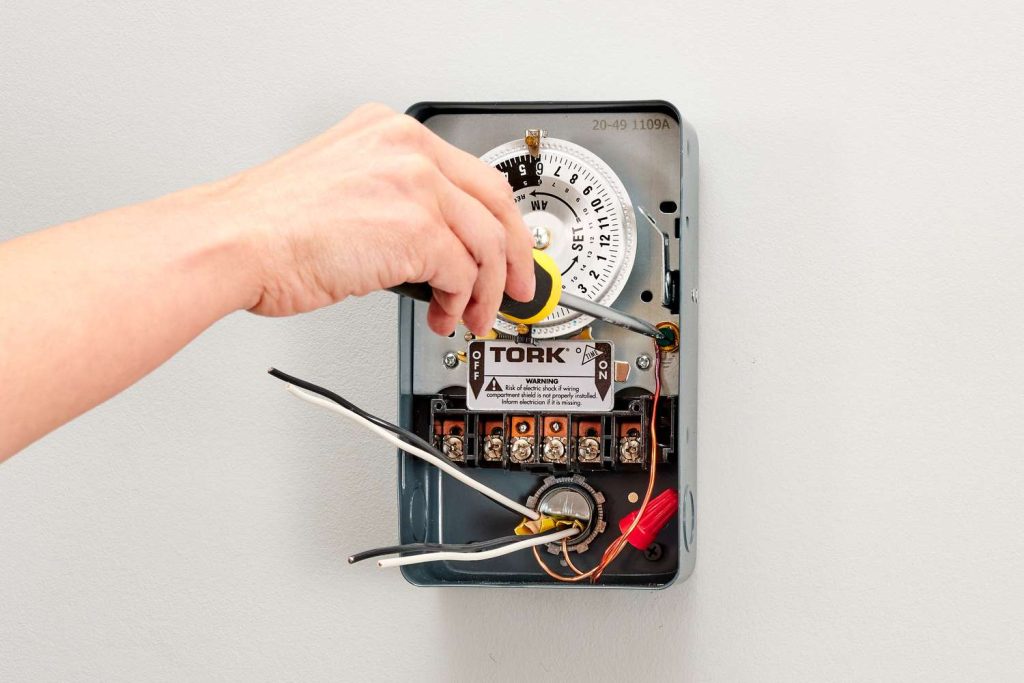
A mechanical timer switch, also referred to as an analog interruptor do temporizador, é um dispositivo de temporização que emprega componentes físicos como molas, engrenagens e motores elétricos para regular o fornecimento de energia a um dispositivo elétrico.
Para saber mais sobre este dispositivo, aqui está um guia prático para começar.
Como funciona um interruptor de temporizador mecânico?
Operando de maneira analógica, ele utiliza mecanismos de relógio para determinar quando ligar e desligar a energia.
Este tipo de temporizador é configurado manualmente ajustando um botão para definir o intervalo de tempo desejado para ligar ou desligar.
Embora os temporizadores mecânicos sejam econômicos e fáceis de configurar, eles podem ser maiores e exigir mais manutenção devido à utilização de peças móveis.
Comumente empregados para gerenciar iluminação, eletrodomésticos e outros dispositivos elétricos, eles oferecem um meio econômico de automatizar vários sistemas.
Apesar do surgimento de temporizadores digitais e eletrônicos mais complexos, os temporizadores mecânicos continuam sendo uma opção simples e econômica para supervisionar luzes e outros dispositivos.
Tipos de temporizadores mecânicos
Mechanical timer switches can be categorized by several factors. Understanding these types helps you choose the right model for your specific application.
By Time Cycle
- 24-Hour Mechanical Timer: The dial completes one full rotation every 24 hours. Best suited for daily routines that repeat the same pattern every day, such as turning porch lights on at dusk and off at dawn. Each pin typically represents a 15-minute block, giving you up to 96 ON/OFF segments per day.
- 7-Day Mechanical Timer: The dial completes one rotation every 7 days, allowing different schedules for weekdays and weekends. Ideal for commercial settings where operating hours vary — for example, a shop sign that needs to stay on later on Fridays and Saturdays.
By Installation Method
- Plug-In Timer: Plugs directly into a standard wall outlet. The appliance then plugs into the timer. No wiring required — ideal for residential use with lamps, fans, aquarium equipment, and small pumps.
- DIN Rail Mounted Timer: Installed inside an electrical panel on a standard DIN rail. Requires a hardwired connection by a qualified electrician. Used in commercial and industrial settings for controlling lighting circuits, irrigation systems, HVAC equipment, and motor-driven machinery.
By Number of Channels
- Single-Channel Timer: Controls one electrical circuit. Sufficient for most residential applications.
- Multi-Channel Timer: Controls two or more independent circuits from a single unit, each with its own ON/OFF schedule. Useful in commercial buildings where multiple systems (e.g., interior lights, exterior signs, ventilation) need independent timing.
By Contact Capacity
- Mechanical timers are rated by the maximum current they can safely switch. Residential plug-in models typically handle 10A–16A, suitable for lighting and small appliances. Industrial DIN rail models — like the TOSUNlux THC-15A — support up to 30A, capable of controlling heavier loads such as pumps, motors, and heating elements.
- When selecting a mechanical timer switch, match the timer’s rated amperage to your load. Connecting a device that draws more current than the timer’s rating will cause overheating and potential failure.
Onde os interruptores mecânicos do temporizador são usados
Interruptores mecânicos de temporizador são dispositivos versáteis usados para vários propósitos. Aqui está uma análise de seus usos e benefícios:
- Controle de luz: Ideal para automatizar sistemas de iluminação interna e externa.
- Gestão de Eletrodomésticos: Útil para gerenciar aparelhos como fornos e bombas de água.
- Controles HVAC: Ajuda a regular sistemas de aquecimento e resfriamento de forma eficiente.
- Custo-beneficio: Fornece uma solução acessível para automatizar sistemas residenciais e industriais.
- Amigo do usuário: Conhecidos por sua simplicidade e facilidade de uso, tornando-os acessíveis a todos.
- Durável: Feito para durar, oferecendo confiabilidade em vários ambientes.
- Uso industrial e doméstico: Adequado para aplicações residenciais e industriais.
Apesar da presença de interruptores de temporizador digital, os interruptores mecânicos de tempo continuam sendo uma escolha popular devido à sua acessibilidade e operação simples.
Como usar interruptores de temporizador mecânico
Para implementar um temporizador ou interruptor analógico, você precisa de um sistema existente, seja em escala industrial ou pessoal.
Exemplos de sistemas pessoais incluem a regulação de motores, filtros e luzes de aquários.
Enquanto os modelos digitais permitem ajustes precisos até o segundo, os relógios mecânicos analógicos são fáceis de usar, indicando os pontos inicial e final com entalhes em uma estrutura circular.
Podem ocorrer desvios de + ou – 5 minutos em interruptores mecânicos.
Para modelos digitais, são possíveis planos semanais, diários e horários com configurações precisas de minutos, proporcionando controle detalhado.
A seleção do tipo e modelo de temporizador apropriado – digital ou analógico – depende da finalidade e dos requisitos específicos da tarefa em questão.
Como definir um temporizador mecânico
Para configurar um temporizador mecânico, siga estas etapas gerais:
- Conecte o cronômetro à parede e o aparelho ao cronômetro.
- Ajuste o dial para definir a hora atual.
- Press down the pins for the times you want the device to activate, and keep them pulled out for when you want the device to deactivate.
- Se disponível, defina o temporizador para o modo “On-Auto-Off”.
- Mude o botão de mudança manual para a configuração “Temporizador”.
Essas etapas podem variar ligeiramente com base no modelo específico do temporizador mecânico.
Importante: Consulte sempre as instruções do fabricante para obter orientações precisas.
Como consertar um temporizador mecânico que não está funcionando
Para resolver problemas com um temporizador mecânico com defeito, considere estas etapas gerais de solução de problemas derivadas dos resultados da pesquisa:
- Etapa 1: verificar as configurações do temporizador: Confirme se o temporizador está configurado corretamente, pois configurações incorretas podem causar mau funcionamento inesperado.
- Etapa 2: verifique a fiação do temporizador: Garanta a fiação e distribuição de energia adequadas, abordando terminais soltos que possam interromper o fluxo elétrico.
- Etapa 3: inspecionar componentes quebrados ou presos: Examine o cronômetro em busca de engrenagens ou molas danificadas, causadas por fatores como idade, sujeira ou detritos. Lubrifique as engrenagens presas e substitua as quebradas, se necessário.
- Etapa 4: verificação da fonte de alimentação e do fusível: Confirme uma fonte de alimentação adequada e verifique se há um fusível queimado, pois a tensão insuficiente ou um fusível queimado podem afetar a operação do temporizador.
- Etapa 5: substituição da bateria: Se o cronômetro usar baterias, substitua-as se o display não estiver claro ou se o cronômetro não estiver funcionando corretamente.
- Etapa 6: examinar o alinhamento do tripper e da engrenagem: Inspecione os trippers e as engrenagens quanto a danos ou desalinhamento. Limpe as engrenagens e garanta o alinhamento adequado dos trippers para obter um tempo liga/desliga preciso.
Sempre consulte as instruções específicas do fabricante para etapas abrangentes de solução de problemas, pois o processo pode variar dependendo do modelo do temporizador mecânico.
Principal vantagem
Temporizadores analógicos ou mecânicos são dispositivos que gerenciam o funcionamento de máquinas ou sistemas elétricos, ligando-os e desligando-os de acordo com uma programação pré-determinada.
O objetivo principal é a conservação de energia, tornando os temporizadores uma escolha prática.
Ao interromper dispositivos que consomem energia quando eles não são necessários, você não apenas economiza eletricidade, mas também aumenta a conveniência do usuário.
Esta abordagem deliberada para controlar a operação do dispositivo contribui tanto para a eficiência energética como para o profissionalismo do sistema.
Mechanical Timer Switch vs Digital Timer Switch
Mechanical Timer Switch vs Digital Timer Switch
Both mechanical (analog) and digital timer switches serve the same fundamental purpose — automating when electrical devices turn on and off. However, they differ significantly in how they achieve this. Here is a practical comparison to help you choose the right type.
| Recurso | Interruptor mecânico do temporizador | Digital Timer Switch |
| Timing Accuracy | ±5 minutes | ±1 second |
| Programming Method | Push physical pins on a dial | Button-based, LCD screen interface |
| Minimum Time Interval | 15 minutes (per pin) | 1 minute or 1 second |
| Number of Programs | Simple daily schedules, budget installations, and environments without reliable power | 8–20+ independent programs |
| Weekday/Weekend Scheduling | Only on 7-day models | Standard on most models |
| Power Outage Behavior | Schedule shifts by outage duration (no battery) | Battery backup retains schedule (typically 3V lithium) |
| Price Range | $5 – $20 (residential); $15 – $50 (industrial) | $15 – $60 (residential); $30 – $120 (industrial) |
| Vida útil | 5–10 years (moving parts wear over time) | 8–15 years (no moving parts) |
| Manutenção | Periodic cleaning and lubrication of gears | Minimal; battery replacement every 3–5 years |
| Barulho | Faint ticking/clicking from motor and gears | Silent |
| Ease of Setup | Very easy — push pins, no manual needed | Moderate — requires reading the manual to program |
| Melhor para | Simple daily schedules, budget installations, environments without reliable power | Complex multi-program schedules, second-level precision, setups with frequent power outages |
When to Choose Mechanical: If your application follows a simple, repeating daily pattern (e.g., lights on at 6 PM, off at 11 PM every day) and you want the lowest upfront cost with zero programming complexity, a mechanical timer is the practical choice.
When to Choose Digital: If you need different schedules for different days of the week, second-level precision, or the schedule must survive power outages without resetting, a digital timer is worth the extra cost.
TOSUNlux offers both types. The THC-15A digital programmable timer supports 24-hour / 7-day scheduling with a contact capacity of up to 30A, making it suitable for both light and heavy-duty applications.
Recomendação de produto

TOSUNlux THC-15A Programmable Timer Switch
Based on the requirements discussed throughout this guide, the TOSUNlux THC-15A is a versatile option that bridges the gap between simple mechanical timers and fully programmable digital controllers.
Key Specifications:
| Especificação | Detail |
| Timer Type | Digital programmable |
| Time Cycle | 24-hour and 7-day scheduling |
| Capacidade de contato | 16A – 30A |
| Minimum Program Interval | 1 minute |
| Number of ON/OFF Programs | Up to 17 per day |
| Montagem | DIN rail (35mm standard) |
| Power Outage Protection | Built-in lithium battery backup |
| Mostrar | LCD with backlight |
Why It Fits Common Use Cases
- For lighting control: Supports separate weekday and weekend schedules, eliminating the manual adjustment needed with basic mechanical timers.
- For industrial motor control: The 30A contact capacity handles pumps, fans, and motors without requiring an external contactor for loads under 30A.
- For environments with frequent power outages: The battery backup retains your programmed schedule, so you do not need to reset the timer after every blackout.
TOSUNlux also manufactures circuit breakers, contactors, isolating switches, and distribution boards. Visit tosunlux.eu to request a quotation or browse the full product catalog.
Perguntas frequentes
Q1: How long does a mechanical timer switch last?
A well-maintained mechanical timer switch typically lasts 5 to 10 years. Lifespan depends on usage frequency, environmental conditions, and regular maintenance of moving parts like gears and springs. Timers used in dusty or humid environments may require more frequent cleaning to reach their full lifespan.
Q2: Can I use a mechanical timer switch outdoors?
Yes, but you need an outdoor-rated model with an appropriate IP rating — typically IP44 or higher — to protect against moisture and dust. Always install outdoor timers inside a weatherproof enclosure, and avoid direct exposure to rain or sprinkler spray.
Q3: What is the difference between a mechanical and a digital timer switch?
Mechanical timer switches use physical gears and springs with ±5-minute accuracy, while digital timers use electronic circuits for precision down to the second. Mechanical timers are more affordable and easier to set up, while digital timers offer more programming flexibility and battery-backed memory that survives power outages.
Q4: Why is my mechanical timer switch not turning off?
Common causes include stuck or misaligned pins (trippers), worn-out gears, or a faulty switch contact. First check that the pins for OFF periods are fully in the raised position. Then inspect the mechanism for debris or gear damage. If the timer motor is running but the switch does not disengage, the internal contact may be welded shut from switching high-current loads — in this case, replace the timer.
Q5: How do I reset a mechanical timer switch?
Pull all pins (trippers) to the OFF (raised) position, then rotate the dial clockwise until the arrow aligns with the correct current time. After that, push down only the pins for your desired ON periods. Finally, set the mode switch to “Auto” or “Timer” to activate the schedule.
Q6: Can a mechanical timer switch save electricity?
Yes. By automatically turning off devices when they are not needed — such as lights, pumps, and heaters — a mechanical timer can reduce energy waste by 10% to 30%, depending on the application and how many hours per day the device was previously running unnecessarily.
Q7: What is the maximum load for a mechanical timer switch?
Most residential plug-in mechanical timers handle 10A to 16A (approximately 1,150W to 1,840W at 115V, or 2,200W to 3,520W at 220V). Industrial DIN rail models like the TOSUNlux THC-15A support up to 30A. Always check the timer’s rated current on its label before connecting any appliance, and never exceed the stated capacity.
Telefone: +86-577-88671000
E-mail: ceo@tosun.com
Skype: tosunelectric
Wechat: +86-139 6881 9286
WhatsApp: +86-139 0587 7291
Endereço: Sala No.1001 Wenzhou Fortune Center, Station Road, Wenzhou, China
SOLICITE UM ORÇAMENTO
Mande-nos uma mensagem pelo WhatsApp